

A practical guide for those wishing to improve gender diversity in mathematical research
by Rosie Evans & Ashleigh Ratcliffe
Rosie Evans and Ashleigh Ratcliffe have written a booklet entitled “What can you do?” which is a practical guide for those wishing to improve gender diversity in the mathematical sciences. It is based on previous events run by The Piscopia Initiative and How to Train your Allies as well as advice from academics across the UK.
Content of the booklet
The booklet offers advice on topics such as effective mentorship, contextualising mathematics courses at undergraduate level and debunking myths about PhD study. The booklet explores how staff and students can support underrepresented genders based on their role and expertise, with the objective to empower those who don’t know how best to help. Each chapter discusses a few themes followed by a space for reflections or a template to fill in. In this blog, we highlight a couple of the chapters and suggest some ways that allies can help within their roles.

Invisible workload
One of the key themes addressed in this booklet is the concept of the “invisible workload” which refers to tasks that are done during a job that are generally classed as “non-promotable”, a term coined by Babcock et al. in their book “The No Club: Putting a stop to women’s dead-end work”. They found that women are more likely to be asked to do service tasks, and have a greater risk to their reputation should they say no. We talk in this chapter about how this applies to those in academia. Tasks like sitting on various panels and committees, having impromptu career chats with students, organising timetabling, often fall on women more heavily. They are tasks that are often worthwhile to the department, and can be time-consuming. However, they are not proportionally accounted for when it comes to progressing your career and can take away valuable time from research.

As a starting point we make a couple of recommendations on raising awareness about the distribution of these tasks. Our suggestions are pitched as individual changes, however this issue is something that needs institutional buy-in to have widespread impact. For example, if women are required to sit on certain committees or interview panels, an ally could complete some of the administrative preparation to reduce the overall time commitment or mental load needed. Furthermore, if a woman is needed, then their role should reflect their specific expertise. The tasks that don’t require specific skills (e.g. writing up meeting notes, booking rooms etc) could be covered by an ally who does not have as many demands on their time.
We noticed when writing this booklet that this “invisible workload” is already present for PhD students. Our community said that they often feel they do a disproportionate amount of (volunteer) service tasks for their universities. We suggest that departments keep track of the service work done by PhD students (talking at careers fairs, being a part of student-staff committees) and consider alternative methods of finding volunteers. For example, a rotating schedule is the fairest way to allocate roles and reduces any unconscious biases sneaking in when asking for volunteers. As an ally, when you need volunteers, we suggest you consider the following: 1) Am I asking the people who I know are most likely to say yes?; 2) Have I asked these people previously?; 3) Is the person I’m asking already committed to other extra-curriculars?
It can be easy to think “they can just say no if they’re busy”, but the research shows that women are less likely to say no and as a PhD student there is the added pressure of fitting into a department where you are the earliest in career stage. The onus should be shifted to the person seeking help rather than on the student to say no.
Contextualising mathematics
We also talk about how lecturers can add context to their modules that will contextualise the way maths has been constructed through history. We spoke to Dr Jamie Mason at Durham University about their experience contextualising their representation theory course last year by providing a brief history when each new mathematician was mentioned. They noted that in representation theory, it was predominantly white, European men who were recorded as making the main advancements and so tried to acknowledge this during the sessions.
“As I progressed through the course, I began to notice that the vast majority of mathematicians were from late 19th or early 20th Century Germany, with a few British or French exceptions. Certainly, they were all men.”
Jamie suggested the following questions to assess your own modules:
- Are there any patterns in the mathematicians in this area (e.g., are they predominantly one gender)?
- In the time frame of these mathematical advancements, were particular groups excluded from mathematics?
They suggested that if there was a mathematician from an underrepresented group at the time, to make sure that they are highlighted in lectures. On our webpages, we suggest a few resources that have already been made where you can find key examples to include.
Jamie also said that when introducing mathematicians, they tried to give interesting (or scandalous) facts about them. There’s more to mathematicians than just their work, and so acknowledging their wider life can open up discussions about the ethical considerations of mathematics.
“Adding a contextual narrative will help students realise that the mathematics they learn was not developed in a vacuum, but influenced by the time and place of the society. I hope that this helps them become more conscientious and well-rounded students.”
We provide a template table for lecturers to use to log the mathematicians that are mentioned within their courses, to help them spot patterns and think about how this could be addressed in lectures.

Breaking barriers
Other chapters in the booklet cover things you can do for a student and for a member of staff, with a key theme around career building and navigating a research career.
A key aim of the Piscopia Initiative is to raise awareness of the PhD option for students of a gender minority in the mathematical sciences. A barrier to entry, even with sufficient grades and research interest, is a lack of knowledge as to what a research career looks like. To attempt to fill this gap, Piscopia hosts information events for students to find out these details. Piscopia also hosts PiWORKS, a monthly seminar series aimed at undergraduates and masters students to see different areas of research and showcase the work of women and underrepresented gender researchers, and their routes into research.
We acknowledge that opportunities can arise due to who you know or are introduced to. Sharing of information, opportunities and networks is invaluable, especially to first generation PhD students and minoritised groups. However, there is a caveat that just because something is aimed at a certain group, it does not mean you should send it to everyone belonging to that group. We suggest that you should send opportunities thoughtfully, especially if you think the person would be a good fit. It’s a great confidence boost for anyone to hear that a colleague thinks they are worthy of some new opportunity or prize, so try to be specific in your recommendations where possible.
We suggest building a spreadsheet of opportunities (not necessarily limited to specific groups, but make note of requirements where necessary), and provide a template to get you started. By building your awareness of opportunities outside of your own field or expertise means that niche grants and opportunities are more likely to reach the researchers that may benefit most from them.
How to access
A downloadable version of the booklet is available on both of our websites (The Piscopia Initiative | How to Train Your Allies), alongside a list of useful related resources and a HTML version of the booklet. Upon request, we can also provide a printable version.
About the initiatives
How to Train your Allies is a group founded in 2022, who create resources to support staff and students to be effective allies within their departments. Their website has materials about how to be an ally on both an individual scale as well as promoting allyship to your institution via an interactive workshop.
Website: https://sites.google.com/view/how-to-train-your-allies
Contact: howtotrainyourallies@gmail.com
The Piscopia Initiative was founded in 2019 and is a nationwide network of women and underrepresented genders with 16 committees at UK universities. Piscopia aims to improve gender diversity in mathematical research by highlighting role models, creating a supportive network to ask questions, encouraging a culture of belonging and hosting events to encourage more women and underrepresented genders to apply for a PhD.
Website: https://piscopia.co.uk/
Contact: piscopiainitiative@gmail.com
About the authors

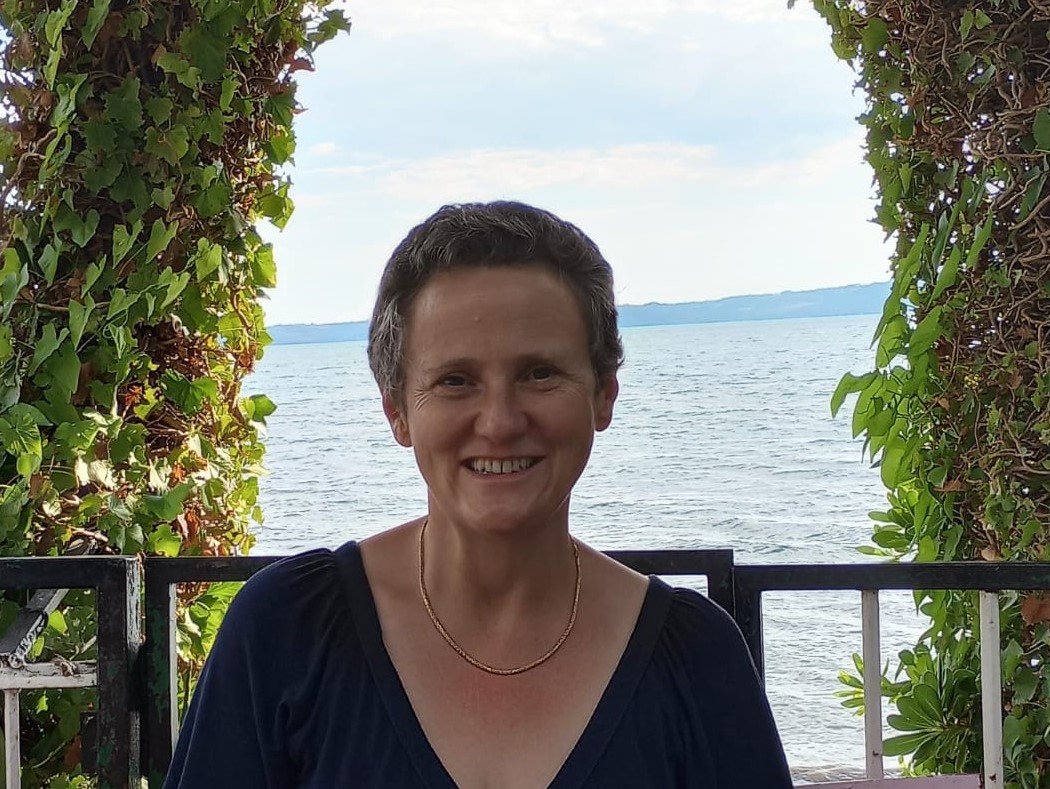
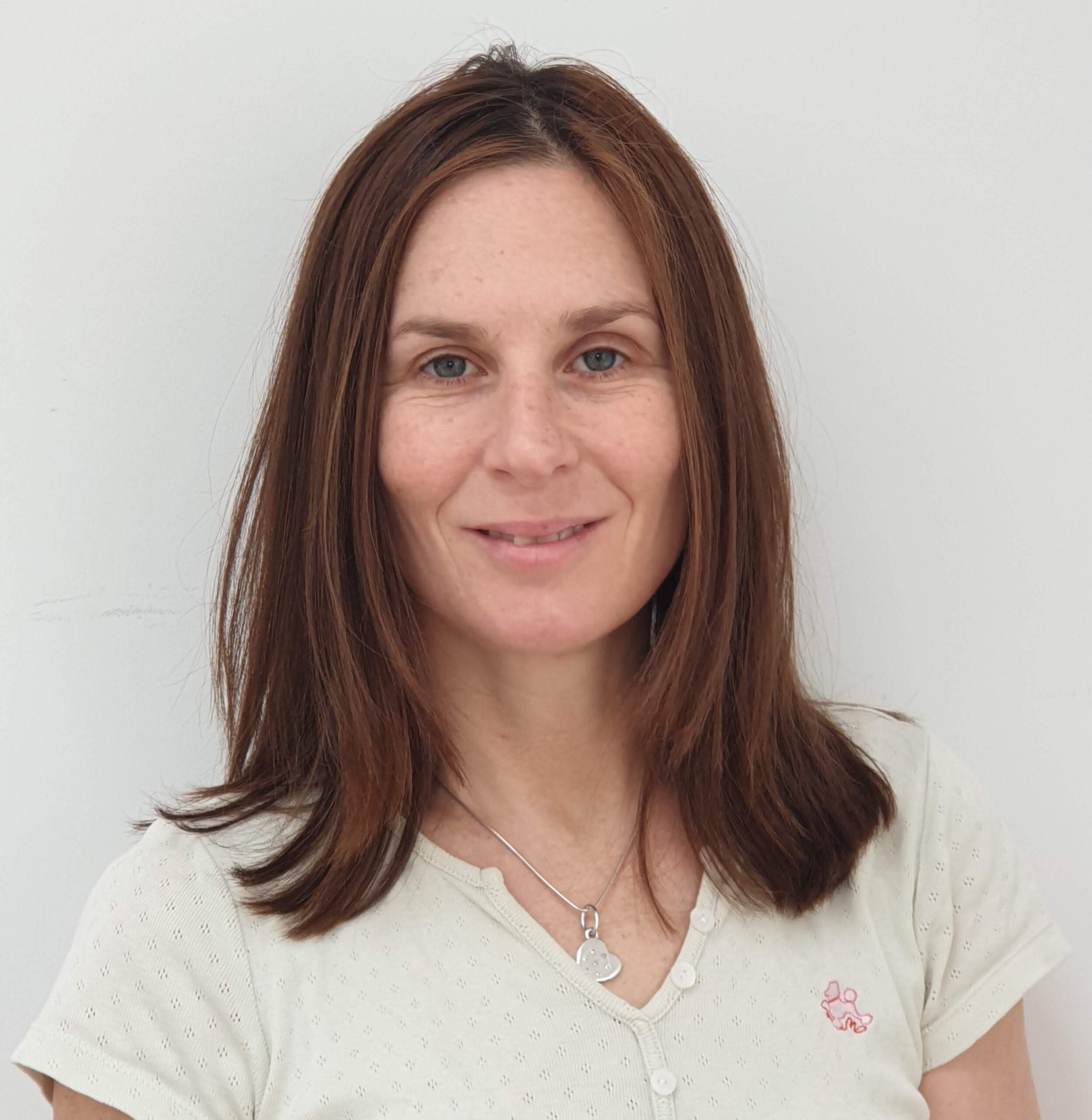
Rosie Evans is currently a Learner Developer in Maths at Birmingham City University, having not long graduated with her PhD in Applied Mathematics from the University of Birmingham in July this year. Her PhD topic was focused on mathematical biology, specifically using differential equations to model hydrocortisone replacement treatment. Born in Shrewsbury, she first studied her BSc at the University of Exeter before returning back to the midlands for her masters and PhD. She has been an advocate for equality, diversity and inclusion throughout her career, acting as a committee member and then co-lead of the Piscopia Initiative from the years 2021-2024. Alongside this, she co-founded the “How to Train your Allies” group in 2022 during her PhD. Her goal is to help researchers not only understand why the gender gap exists in mathematical research, but to be empowered and equipped to help reduce it.
Ashleigh Ratcliffe is a current final-year PhD student and Graduate Teaching Assistant at the University of Leicester. Her research is in number theory and involves solving Diophantine equations, these are polynomial equations with integer coefficients for which we are trying to find integer solutions. Originally from Leicester, she studied a BSc in Mathematics at the University of Leicester. She is passionate about outreach and inclusion in mathematics and is a co-lead of the Piscopia Initiative and regularly writes for and edits Chalkdust magazine.

References
[1] Evans, Rosie, and Ratcliffe, Ashleigh. What can you do? – A practical guide for those wishing to improve gender diversity in mathematical research [Booklet], 2025. Available at: https://how-to-train-your-allies.github.io/what-can-you-do/ and https://piscopia.co.uk/what-can-you-do/
[2] Babcock, Linda, Brenda Peyser, Lise Vesterlund, and Laurie Weingart. The no club: Putting a stop to women’s dead-end work. Simon and Schuster, 2022.
Published on November 26, 2025.
Credit graphics of the women on the header image: Meg Evans (Instagram: @megserplet_artist)









Recent Comments