

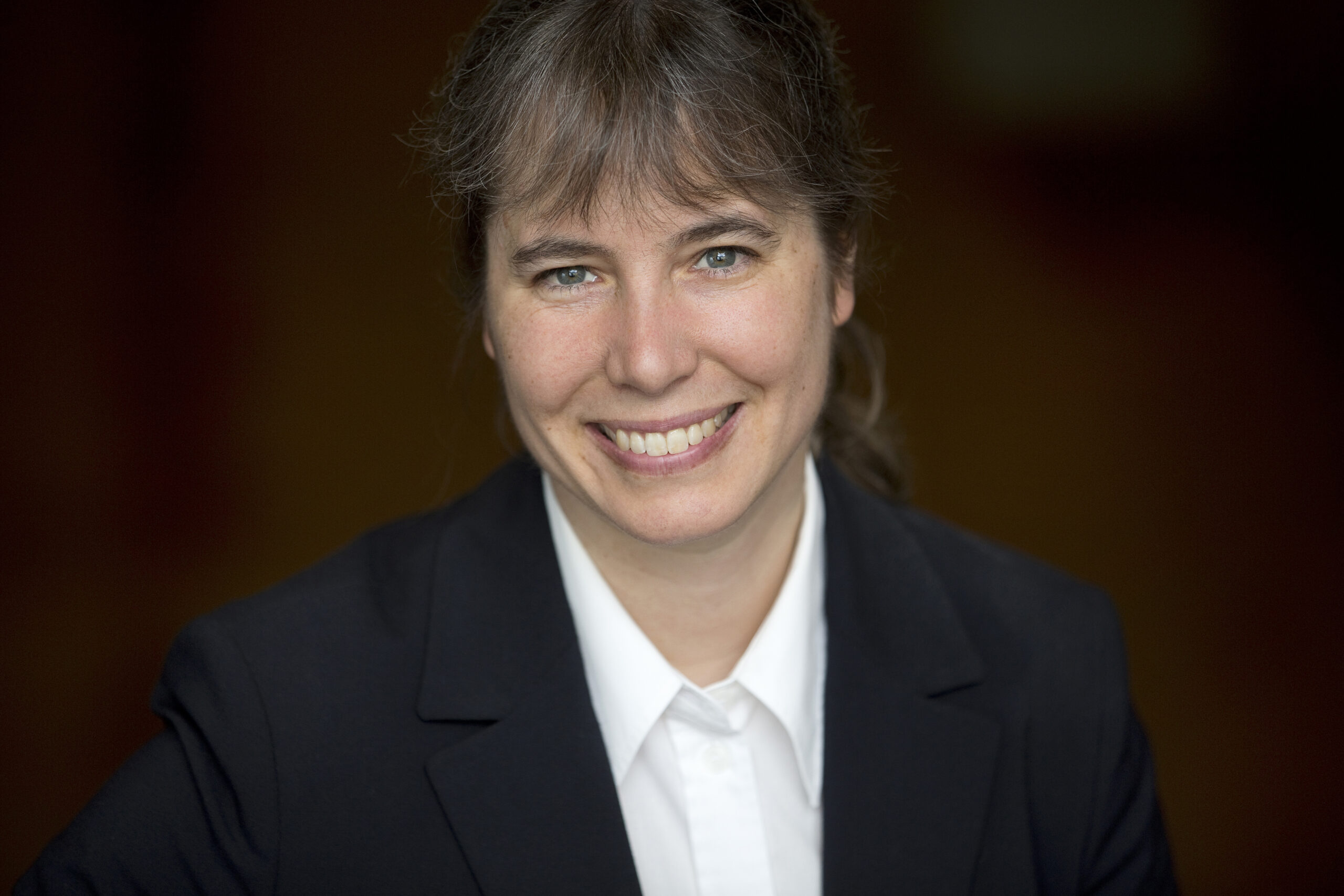
Born in Neuwied, Germany • Studied Computer Science at Cooperative State University Mannheim • PhD in Mathematics of Information at the University of Cambridge • Lives in Oslo, Norway • Postdoctoral Research Fellow at University of Oslo
My interest in mathematics started as a young child and stayed with me throughout my school years. I remember particularly enjoying maths in the final years of school because of our very friendly and motivated teacher. He encouraged me to have a closer look at STEM subjects and maths in particular when trying to decide what to study at university. I could not decide between computer science and maths at first, but ended up doing computer science because of a cooperative study programme that allowed me to study and work at the same time; offering financial stability and practical skills. I ended up working at IBM in Germany where I was lucky enough to be able to choose from a large pool of projects for each of the six internships that were part of the Bachelor’s programme. While mostly focusing on IT consulting internships in my first year, I got the opportunity to work on a research project in a research lab in California in my second year – where I helped to develop new machine learning methods for chat bots – which encouraged me to go more into research for my final two internships, too.
During my Master’s it then became very obvious to me that I really enjoyed doing research and was mostly interested in the maths courses and aspects, which is why I decided to switch to applied maths for my PhD.
While really enjoying the internships that were part of my Bachelor’s programme at the Cooperative State University in Mannheim, I quickly realised that I wanted to get a deeper insight into the „traditional“ student life. My Bachelor’s programme was very structured with little opportunity to choose courses and attendance at lectures was compulsory and I always envied my friends at other universities who had a lot more freedom. Due to the tight connection of my Bachelor’s programme to companies, the curriculum was very applied with little opportunity to do any research. When deciding on a Master’s programme, those ended up being the two main motivations for me to switch to studying a regular computer science degree. During my Master’s it then became very obvious to me that I really enjoyed doing research and was mostly interested in the maths courses and aspects, which is why I decided to switch to applied maths for my PhD.
Throughout my PhD I always most enjoyed going to workshops and conferences.
Having had the opportunity to combine my Master’s thesis with a research visit in the Cambridge Image Analysis group at the Department of Applied Mathematics and Theoretical Physics in Cambridge, I got a better understanding of the PhD system in the UK and decided to move to England for my PhD. While most PhDs in Germany are tied to a specific project, the prospect of being part of a doctoral training programme which allows for a lot of freedom sounded very convincing to me. Having been funded by a departmental studentship, I got to work on several projects from a broad range of topics like machine learning theory, privacy and security in machine learning, inverse problems and operator learning. Throughout my PhD I always most enjoyed going to workshops and conferences. I was lucky enough to be able to travel to conferences all over the world like Singapore, Japan, the US, Italy and Germany.
Coming to Cambridge as an international student, I particularly enjoyed being part of a college community with the opportunity to meet people from all over the world and different subjects. While my friend group in both my Bachelor’s and Master’s mainly consisted of people studying computer science, maths and physics, my friend group during my PhD was much more diverse. This is also due to the fact that I started rowing as a new sport when coming to Cambridge which facilitated meeting even more people including undergraduate students of all years.
While I was not interested in image analysis yet at that time, the professor’s enthusiasm for the topic rubbed off on me and motivated me to choose a computer vision project for a one year project that was mandatory as part of my degree.
Thinking about the most memorable moments of my studies, it was the people who motivated and inspired me most. If it was professors speaking very passionately about a certain subject during lectures or PhD students supervising projects – seeing other people’s interest for the subject always motivated me to keep looking into different fields of maths. I still remember walking into one of my first lectures in my Master’s which was part of a deep learning course. While I was not interested in image analysis yet at that time, the professor’s enthusiasm for the topic rubbed off on me and motivated me to choose a computer vision project for a one year project that was mandatory as part of my degree.
I also was fortunate enough to have been surrounded by supportive and inspirational people all throughout my Master’s and PhD who encouraged me to go for the next step and believe in myself. Especially as a woman in a very male dominated field, being surrounded by female role models and being supported by both male and female peers and professors made a big difference for me. When starting my PhD, I tried to pass some of this on by being part of mentoring programmes for female and non-binary undergraduates and students. I was both a mentor at the Faculty of Mathematics in Cambridge where we had termly in-person coffee meetings with the mentees and for pupils in Germany via the Cybermentor programme, which offers the opportunity to mentor female and non-binary pupils remotely. Becoming part of a mentoring scheme is also some of the advice I would give to my 18-year-old self too — to look out for networking opportunities and mentorship programmes; to find people who have chosen a similar path.
I am now very excited to start my new position as a Postdoctoral Research Fellow at the University of Oslo where I will be continuing to work on developing new methods for machine learning research.
Published on February 11, 2026

Recent Comments