
Month: May 2026

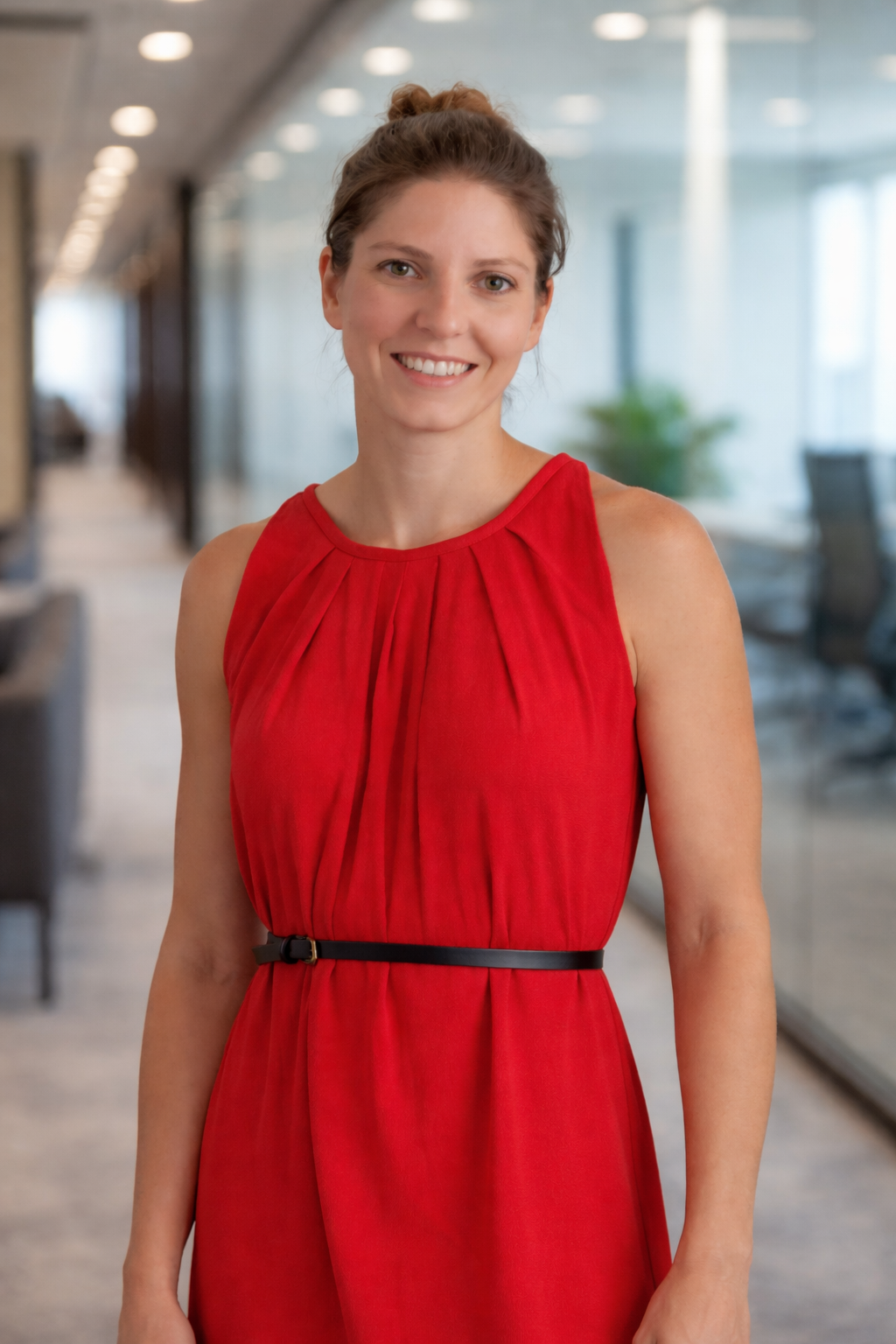
Johanna Grames

Johanna Grames

Born in Lower Austria • Birth year 1989 • Studied Mathematical Economics at TU Wien in Vienna, Austria • PhD in Mathematical Economics from TU Wien in Vienna, Austria • Lives in Vienna, Austria • Team Lead Global Governmental Affairs & Patient Advocacy, AOP Health

Mathematics has always felt like the most fascinating language to me.
You can express so much, so precisely, in just a few lines.
I was motivated by describing relationships and implications — understanding how things influence each other and getting closer to some form of truth. At the same time, I always wanted my work to have a positive impact on the world: grounded in evidence, but guided by empathy.
When I discovered optimal decision-making in a special course at school (Sommerakademie Semmering), I realised mathematics could do both. It offered beauty and challenge, while also helping to solve real-world problems.
During my PhD, I worked on socio-economic models combining natural systems and human behaviour. I developed equilibrium models and optimal decision frameworks to understand how people interact with their environment — and how decisions shape outcomes.

The questions were no longer theoretical — they influenced whether patients would eventually receive treatment

I enjoyed research, but I wanted to see decisions happening in reality, not only as policy recommendations presented at scientific conferences.
Almost by coincidence, I moved into the pharmaceutical industry — a place where passionate smart people work together towards meaningful progress: therapies for patients.
As a child, I had already been fascinated by the human body and even dreamed of becoming a brain researcher.
Instead of modelling societies, I started modelling decisions inside a company:
Which therapy should be developed?
How do we allocate resources under uncertainty?
What is the value of a treatment for patients and healthcare systems?
Using tools such as risk-adjusted net present value calculations (the “gold standard”  to calculate a complex business case for investment decisions for research and development), mathematical thinking is part of research and development decisions. The questions were no longer theoretical — they influenced whether patients would eventually receive treatment.

Today, I work at the interface of science, policy and society, bringing together companies, patient organisations and institutions

Over time, my role evolved.
I combined my passion for enabling others and creating societal impact with my experience in healthcare decision-making, moving into governmental affairs and patient advocacy.
Today, I work at the interface of science, policy and society, bringing together companies, patient organisations and institutions.
My mathematical background helps me translate between perspectives:

  • researchers think in mechanisms
  • policymakers think in systems
  • companies think in strategies
  • patients think in lived realities

Mathematics trained me to structure complexity — but empathy makes solutions work.

Projects are very different. One example was e.g. to train journalists and policy makers on how companies make investment decisions for rare disease research. Based on rare disease prevalence, existing knowledge, alternative therapies and probabilities of success for different stages of clinical studies and pharmaceutical development we outlined the complexity and challenges to foster public private partnerships on national and European level to kick off research for the 95% of rare diseases without any treatment.

Diverse perspectives improve models, research and innovation, both in academia and industry

Outside work, I stay close to people: sports, music, dialogue initiatives and mentoring.
These activities may seem unrelated to mathematics, yet they rely on the same skills — listening, understanding structures and connecting ideas.
My vision is simple: equitable access to opportunities leads to better decisions.
Diverse perspectives improve models, research and innovation, both in academia and industry.
I am always happy to exchange experiences, because role models matter. Often, seeing a possible path is the first step to imagining your own.

You do not need to know where mathematics will lead you.
Curiosity and the courage to follow it are enough.
And choose your mentors wisely. There are many inspiring people in academia and industry who can strengthen your skills and help you grow along exciting paths.

Published on March 25, 2026.

Photo credit: private, background with DALL·E
Posted by HMS in Stories
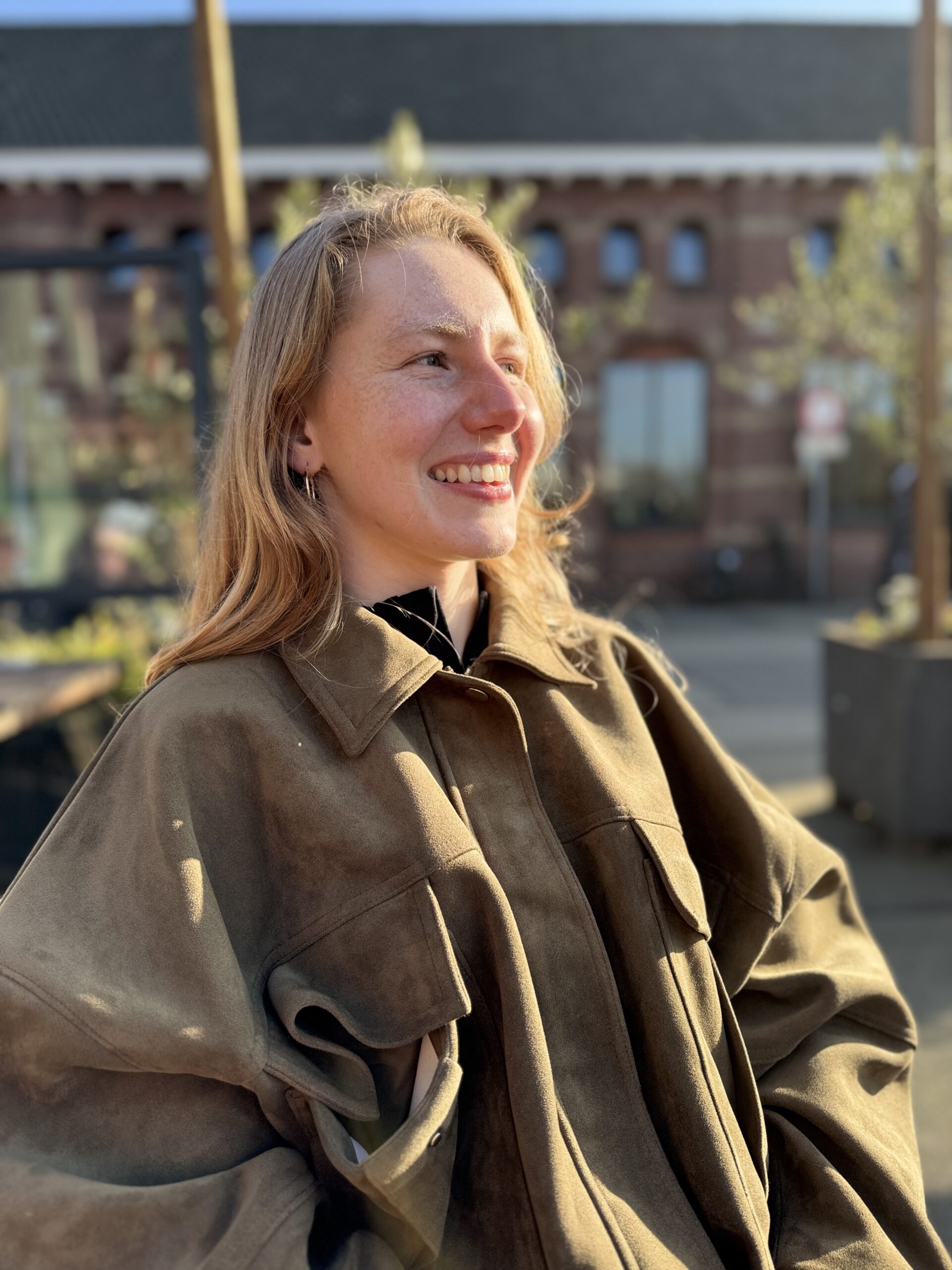
Aleksandra Brodowy

Aleksandra Brodowy

Born in Poland • Birth year 2000 • Studied Mathematics at Vrije Universiteit in Amsterdam, the Netherlands • Bachelor of Science in Mathematics from Vrije Universiteit in Amsterdam, the Netherlands • Lives in Amsterdam, the Netherlands • Account Manager at the LEGO Group and currently doing a Master of Science in Mathematics from Vrije Universiteit in Amsterdam, the Netherlands

I have been drawn to mathematics throughout most of my education. It was always my favourite subject, I spent a lot of time studying it, and I even participated in various mathematical competitions during secondary school. Despite all of this, somehow I never had the courage to do it “for real”. Math is not an easy subject, so most of the opinions that I heard about it growing up were that it’s dull, hard, and “you anyways cannot do anything with it”, so why would I even bother pursuing it?

The first time I started seriously considering studying mathematics, I was in the first year of a completely different degree. I was in a new country, I had just started a part-time job at a store to be able to pay for university, and I did not particularly enjoy the study I was enrolled in. Then one day, while I was at work, I started a conversation with one of the customers who eventually started telling me about a degree in mathematics she was doing. I was so intrigued by the things she said that a few days later we ended up talking about ring theory over ramen. Her excitement about the subject and the topics she was explaining were so fascinating that I finally decided to give it a try, this time for real. Fast forward two years from that moment, I was in the second year of a mathematics bachelor’s degree doing the same course she told me about that day.

Ever since I started studying mathematics, I never looked back, and until now I have not been able to find another discipline that would be nearly as compelling.

Ever since I started studying mathematics, I never looked back, and until now I have not been able to find another discipline that would be nearly as compelling. For me, one of the best things about mathematics is the wide range of disciplines it touches – there is always another topic that can intrigue you.

At the beginning of my academic journey, I was primarily interested in the theoretical field of mathematics and spent a lot of time studying abstract algebra. I found it particularly appealing because it was something completely new and a type of math that I had never previously seen in school. At the same time, understanding group and ring theory was relatively difficult, and the fact that I could do it gave me a lot of satisfaction.

Later on, I started pursuing more applied subjects within mathematics and realised that the intersection of academia and real-life problems is something I would like to explore further. I switched gears and started focusing on data analysis and statistical modelling. I ventured into the world of profile hidden Markov models, which I ended up researching for my thesis.

If there is one thing I have learned while navigating the twists and turns of this discipline, it is that not limiting yourself to a single field allows you to discover unexpected connections and directions.

After graduating from the bachelor’s degree, I landed a data analysis internship working for the LEGO Group, where I could not only put the mathematical skills to practice but also explore the areas of business and optimisation. I had the opportunity to continue at the company in a commercial role, where I am currently still working as an Account Manager. The shift from academia to a commercial position took my mind off theoretical mathematics for the past three years. The role was a chance to work in a new environment, interact with completely different challenges, and develop a new set of skills. I realised that I quite like getting out of my comfort zone and having difficult business discussions with clients.

Nevertheless, from the beginning, I knew that the bachelor’s degree was not the end of my academic journey. Last September, after nearly three years away from university, I started a master’s degree in mathematics alongside my professional work. I am very privileged to be in a position where I get to interact with two groups of people who have completely different mindsets – one very academic and rigorous, the other very business and results-oriented. My work definitely deepened my mathematical interests. In my current role, I do a lot of sales forecasting, which, in my opinion, is a very natural bridge between mathematical modelling and uncertainty quantifications. And so my academic focus once again shifted, this time from statistical models to studies of uncertainty and risk analysis.

My math story is far from over—it is a continuous learning process. If there is one thing I have learned while navigating the twists and turns of this discipline, it is that not limiting yourself to a single field allows you to discover unexpected connections and directions.

Posted by HMS in Stories