
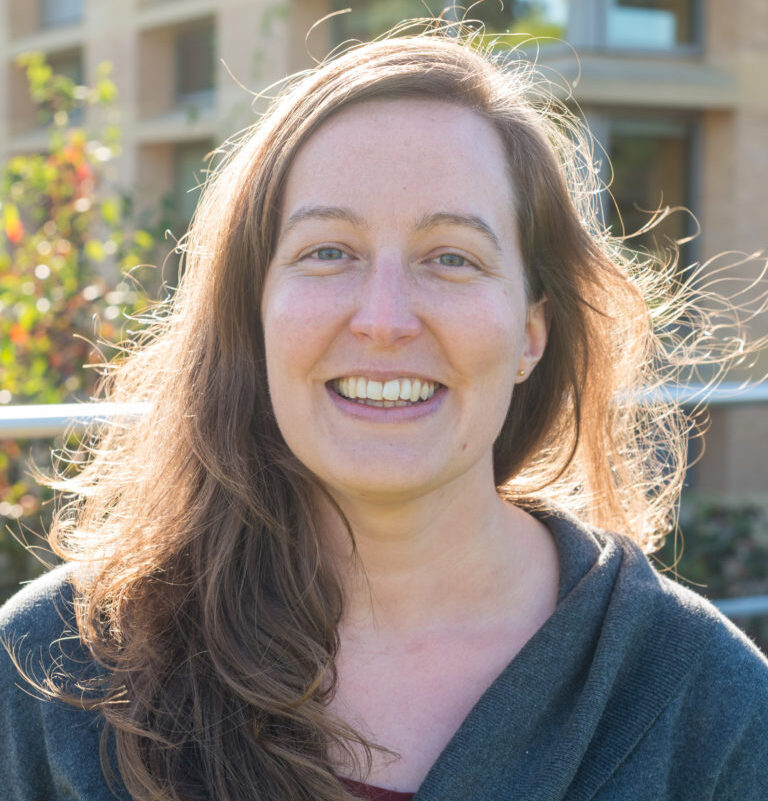
Born in Plymouth, UK • Birth year 1985 • Studied Mathematics at Oxford University, UK • Currently studying for a PhD looking at using machine learning in oceanography, based at Cambridge University and the British Antarctic Survey
My grandma heavily influenced my love of mathematics – as a child she let me have as many sweets as I could count, so I began school with excellent counting abilities! She was also an avid fan of maths and logic puzzles and would do these with me, as a child she had me working on puzzles aimed at adults. As I went through school, I began to appreciate the reality of maths, how it was so much more than counting and arithmetic and instead more closely related to all these puzzles and problems I had loved solving.
I especially enjoy the way maths can be used to understand so much of the world around us and see it as a brilliant language to describe and understand physical processes.
I don’t recall ever deciding to study maths, it just felt like a given. For me it was such an obvious pathway that it never needed to be stated or chosen. And the more I learnt about maths the more I loved it. I especially enjoy the way maths can be used to understand so much of the world around us and see it as a brilliant language to describe and understand physical processes. For me, one of the most enlightening moments of my career was learning about fluid dynamics at university. I had already learnt a lot about standard mechanics (how forces act to move objects etc), but the idea that we could also understand things like the way the ocean changes and moves in an incredibly detailed and definitive way was incredible!
I finished my undergraduate keen to start ‘doing’ something rather than carrying on learning, and my interests led quite naturally to a job building computer models of the ocean for forecasting weather and climate. I loved the work; it was such a great application of the maths I had enjoyed so much. Sadly though, over time I found that being female in this environment was challenging. Many small but persistent issues grew to become more than just tiresome and got in the way of my love for my job. Little things like women being talked over, or not given as much credit as the men we worked with, and people asking questions of my male colleagues in areas where I was the expert. I then moved teams and went from having an incredibly supportive and encouraging manager, to one where I felt there were notable gender issues, and this coincided with a time where the senior leadership’s approach to gender issues were really in the spotlight, and I didn’t feel supported enough by their actions. Eventually I realised I dreaded going to work, and the time had come that I needed to change things. I looked at other jobs, and decided to leave research altogether, but my love of maths was clearly still influencing my decisions, and I started working as a coordinator for two mathematical research centres. It was the perfect tonic after a difficult time. I refound my love of going to work and the sense of satisfaction from it. I remembered how exciting and interesting maths was. And most importantly I had two incredible managers. They supported and encouraged me, reminding me of my skills and abilities. They asked whether I’d considered doing a PhD, and, while I had often thought about it in an abstract way, their remarks gave me the confidence to seriously consider it.
I quickly realised that while I might not be the ‘average’ student, I was far from old, and that there are so many people who don’t follow the traditional academic pathway.
At 33, feeling like this was a foolhardy thing to begin at such an age, but also super excited about the chance to spend 4 years absorbed in something for the pure interest of it, I began my PhD looking at using machine learning to model the ocean. I quickly realised that while I might not be the ‘average’ student, I was far from old, and that there are so many people who don’t follow the traditional academic pathway. Really, there is no average student. We all come to this with such a different perspective and history, and so many individual advantages and disadvantages. I found (as I’d hoped) that my background meant I have many relevant skills that have made things easier. But also, my fundamental knowledge was rusty, and my brain felt so slow at times when trying to pick up new things. Alongside this, it feels my life is much more complicated now than it was in my early twenties, and a number of difficult things in my personal life have impacted my work, and I’ve really struggled at times. Throughout this though, I try to remind myself of the privilege of being able to sit at my desk and spend my time thinking about something which I still find so incredibly cool – the way we can use this brilliant language of mathematics to understand the world around us.
I’m lucky to have had some incredible people support and inspire me along the way, helping me to get to this point – thank you to them all!
Published on January 20, 2021.
Recent Comments