Germany

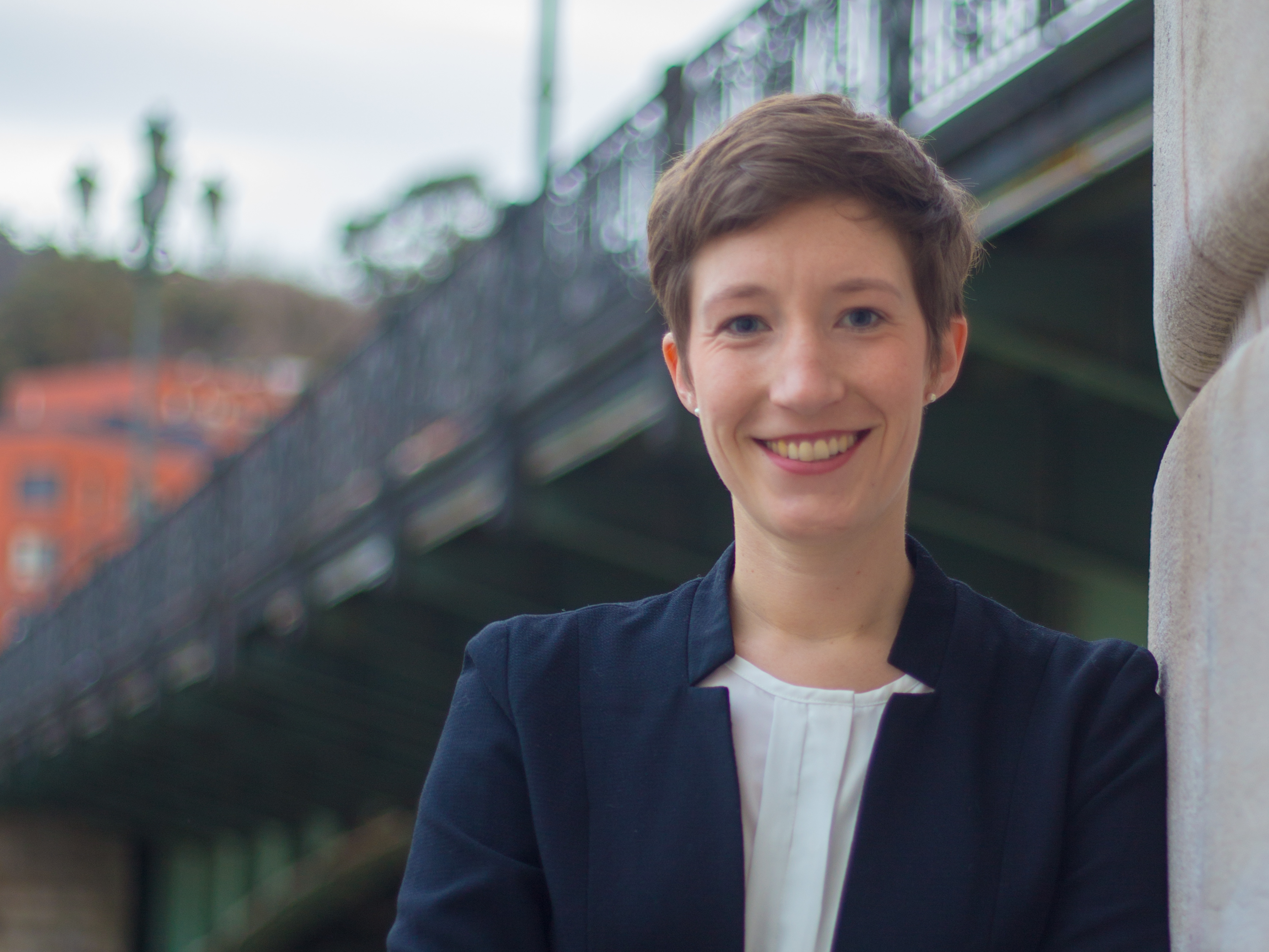
Lena Frerking

Lena Frerking

Born in Münster, Germany • Birth year 1988 • Studied Mathematics in Münster, Germany • Highest Degree PhD in Mathematics • Lives in Hamburg, Germany • Occupation Research Scientist in Medical Imaging

The decision of what to study was not clear to me for a long time. I always liked math, but I could not really imagine what a job as a mathematician could look like. Only after discussing with family and friends at the end of my high school time, but especially with my godfather who very convincingly told of his positive experiences of working with mathematicians and of the usefulness of their skills, I discovered the diversity of applications.  Being a person who had always been struggling a bit with making decisions, I immediately liked the idea of not limiting my future job perspectives in industry by the choice of the subject. I probably made my final decision during one of the annual university events where high school students can attend different university lectures for one day. Since I was quite undecided, I prepared a schedule and planned to attend lectures in different departments, amongst others in the medical and pharmaceutical department. I had seen some math lectures before and I liked them a lot, so I wanted to explore other options and focus on subjects other than mathematics to try and see if I would like those even more. So, I decided to attend a pharmaceutical lecture, but I knew immediately that this was not going to be my profession. I left 10 minutes after the lecture started and just went over to the math department again to yet attend another lecture. As soon as it started, I realized that the only reason I went there was to treat myself at the end of the day, because I knew I would enjoy it. That insight finally led me to the conclusion that I did not need to continue searching for anything else. I had already fallen in love with mathematics, especially the logic and the fact that everything makes sense if one just follows every single step in calculations or proofs accurately.

In the end, it did [work out], and I am more than happy that I took the risk to fail.

In the beginning of my math studies, I was surprised about the speed of the actual lectures and how different they were from the classes taught in school. I never regretted my decision, but the first two or three semesters were not easy for me to master. However, things became easier once I was able to specialize further in my studies. Even though I always thought I wanted to stay away from numerical mathematics, I eventually ended up putting the entire focus on applied mathematics and I also specialized in this field during my Master’s. Despite my previous hesitation, I quickly realized how much I liked the lectures and that they suited me more than the purely theoretical ones. The question about whether to do a PhD or not was a tough one again. I was doubting myself, but I already knew deep down that I had to give it a try. Otherwise, I would have always regretted not trying and wondered whether it would have worked out. In the end, it did, and I am more than happy that I took the risk to fail.

(…) I am happy that I still need many of the concepts and techniques that I learned at university.

After finishing my PhD, I left academia and I am now working in industry. I feel lucky that I still work in the same field I researched when I was at the university with similar applications in medicine. Therefore, the transition from academia to industry was quite smooth. Even though mathematicians are often in high demand on the job market for their way of thinking, but not necessarily for the direct knowledge obtained in math lectures, I am happy that I still need many of the concepts and techniques that I learned at university. I work in medical image computing and contribute to different aspects of enhancing CT and MRI acquisitions. Hence, I still apply some learned algorithms and I can also still be creative in the way of optimizing and adapting them to be suitable for specific applications.

Published on January 20, 2021.

Posted by HMS in Stories
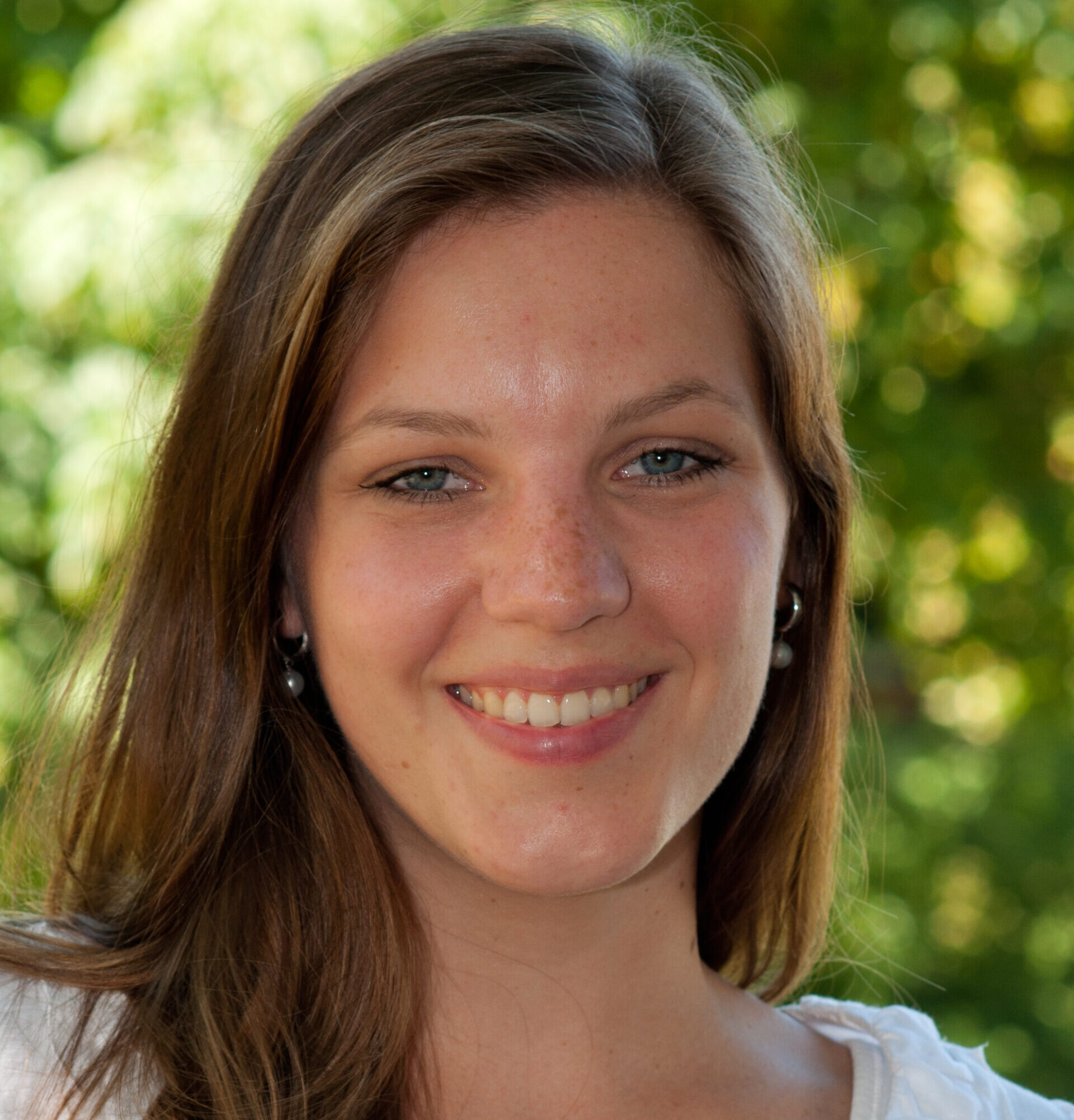
Kristina Thurmann

Kristina Thurmann

Born in Lippstadt, Germany • Birth year 1988 • Studied Mathematics in Münster, Germany • Highest degree M.Sc. in Applied Mathematics • Lives in Friedrichshafen, Germany • Occupation software developer (automotive sector)

I have always been fascinated by mathematics, to be precise by calculations and computations. My parents first noticed my interest in maths at the age of 5. We often played a game called Kniffel/Yahtzee where at the end all points had to be accumulated and that was my favourite part of the game. I just loved adding up all these numbers.

My interest got even stronger during high school: in the year book one of my descriptions by class mates was „i = √(-1)“. This expression summarised pretty well my time in high school. I adored mathematics and I never had any problems in studying and understanding the subject and its concepts. But then I decided to study mathematics in university and the problems began…

We motivated each other and I slowly started to love mathematics again especially the beauty of mathematical proofs.

In the beginning, I struggled a lot in how to study. I know that sounds weird but in school I never had to study to get good grades. In school we never proved any theorem, we just used all these formulas resulting from them. However, in university I learned why these formulas are correct. In the first years of studying mathematics, I learned the basics of analysis, linear algebra, stochastic, logics and numerical analysis. I failed a lot of these exams and at some point, somewhere around the fourth semester, I even thought about quitting and doing something else. Fortunately, at this point I realised that most maths students struggled with the same or similar problems. This common issue and uniting quest created a strong sense of community among the students and that was one of the best parts of studying mathematics for me. Everybody, even the professors, were very helpful and supportive and I never felt alone. We motivated each other and I slowly started to love mathematics again especially the beauty of mathematical proofs. At the beginning of the master studies, I attended courses in applied mathematics with practical applications in the field of biomedicine, e.g. image processing in MRI, PET and CT; in numerical analysis classes I learned to write code and implement algorithms. That was my first experience in coding but to be honest I was not expecting to be a software developer one day.

I also conducted job interviews and I have learned that it is not important what you did, it is important what you love and where you want to be in the future.

After finishing my master thesis, I did not have any clue about where to go or what to do, it was hard to find job advertisements where mathematicians are mentioned. So, I signed up in several job portals and got job offers as a software developer. First I started in a consulting and engineering company and gained work experiences as a developer and a project manager. I also conducted job interviews and I have learned that it is not important what you did, it is important what you love and where you want to be in the future.

At the moment, I am working for a company which is a worldwide supplier of driveline and chassis technology for cars. Specifically, I am responsible for shifting strategies. That means I am getting a so called “change request”. Within this change request I get a specification about the functional change of the software. For example, the customer (automotive manufacturer) wants the car to behave in a certain way, like shifting to second gear only when engine speed is above a defined threshold. My task then is to understand the request, to change the software/code, to test the new software and to document everything I did. Of course this is an easy example and the reality is much more complex but the complexity and the diversity of my job is what I like.

Looking back, I am so happy that I studied mathematics because it got me where I am right now. If I could tell my 20-year-old self a piece of advice: “Just do it, you will learn so much about yourself, about logical thinking. It is a long way, be patient with yourself, surround yourself with like-minded people, they will help you to stay on track and enjoy your time at university. Do whatever you like and makes you happy.”

Published on January 20, 2021.

Posted by HMS in Stories
Julia Kroos

Julia Kroos

Born in Münster, Germany • Birth year 1988Studied Mathematics in Münster, Germany • Highest degree PhD in Mathematics and Statistics from the University of the Basque Country in Bilbao, Spain • Lives in Cologne, Germany • Current Occupation: Applied Mathematician at Bayer

It started all in 4th grade. After being really bad at mental arithmetic, I started to enjoy mathematics for the very first time when concepts became a bit more complex. When I was 9 years old I decided not only to study but also do a PhD in mathematics. So after finishing the A-level, this was exactly what I did. Of course it was hard and different from the maths they teach in high school but I got to appreciate the pure and perfect way of mathematical proofs. However, it was not before the end of my Bachelor that I learned about the diverse applications of mathematics in Biology and Medicine. I never grew very fond of the theoretical part but just saw it as a tool you need to understand and master in order to apply the theory to real world problems. Even though I always had the dream of doing a PhD in mathematics, doubting my skills and abilities made me question this dream. What finally convinced me to continue research and start a PhD in maths was a very honest talk by a female professor at a meeting of women in maths. By coincidence I found the PhD position in Bilbao (Spain) in computational neuroscience and directly knew that this was my topic. 

The most exciting part of research for me was and is solving a problem. It is like a scavenger hunt: you follow traces, read instructions and do trials, which surprisingly involves a lot of creativity.

With the focus on personalised models for a phenomenon related to migraine, I got the opportunity to learn a lot of different strategies from numerical methods to solve differential equations, to curvature approximations and data processing. I worked with neurologists, physicians and medical doctors and learned a lot about interdisciplinary communication. The most exciting part of research for me was and is solving a problem. It is like a scavenger hunt: you follow traces, read instructions and do trials, which surprisingly involves a lot of creativity. Of course it is not all fun, running the simulation for the umpteenth time and writing papers is never going to be my favourite part.

Right when I started to write my PhD thesis, I fell sick and was all of a sudden experiencing personalised medicine from the patient’s point of view. It totally swept me off my feet because I had to pause my PhD for a while and could not stick to the schedule that I had planned. During this time I got a lot of insights in the diversity of medical treatments and was surprised by the differentiated treatment strategies. However, I also saw the potential for data-based fine tuning in the treatment strategies. After this forced break I focused even more than ever on the things that I really wanted: finish the PhD, see the world and find a job in mathematics with an impact.

The first of these points I tackled as quickly as possible. Even though I enjoyed research I could feel a weight lifting from my shoulders when I finally defended my thesis. The second point, traveling for a year after the PhD had always been a fixed idea in my head but talking to friends and family brought up a lot of doubts: would this look bad in my CV? Would this have a negative impact on my career? Would traveling alone be dangerous? However, after very encouraging conversations with professors and friends who had already travelled alone for a longer time, I just took the leap. I bought the plane tickets and went backpacking from Peru to Patagonia in the very south of Chile and through New Zealand by myself. In the beginning before leaving it was scary but in the end it was one of the best decisions in my life, and I learned so much about different cultures, traditions, people and communication that no book or course could have ever taught me.

After hiking the Patagonian highlands, starting as an applied mathematician in a pharmaceutical company is now my next big adventure.

The question if I want to continue research after obtaining my PhD already haunted me during my PhD studies, but when I got back from my big trip I finally knew the answer. I wanted to use my maths skills to help people in the medical sector. Consequently, I solely searched for maths jobs in pharmaceutics where I have just started as an applied mathematician. Changing from the university to a company opens up a totally new universe which I am still exploring but I am very curious and excited to better understand. So after hiking the Patagonian highlands this is now my next big adventure.

During my studies and my big trip I was very lucky to meet encouraging role models, supportive fellow students and inspiring like-minded people that helped me find my way – thank you all.

Published on January 20, 2021.

Posted by HMS in Stories