
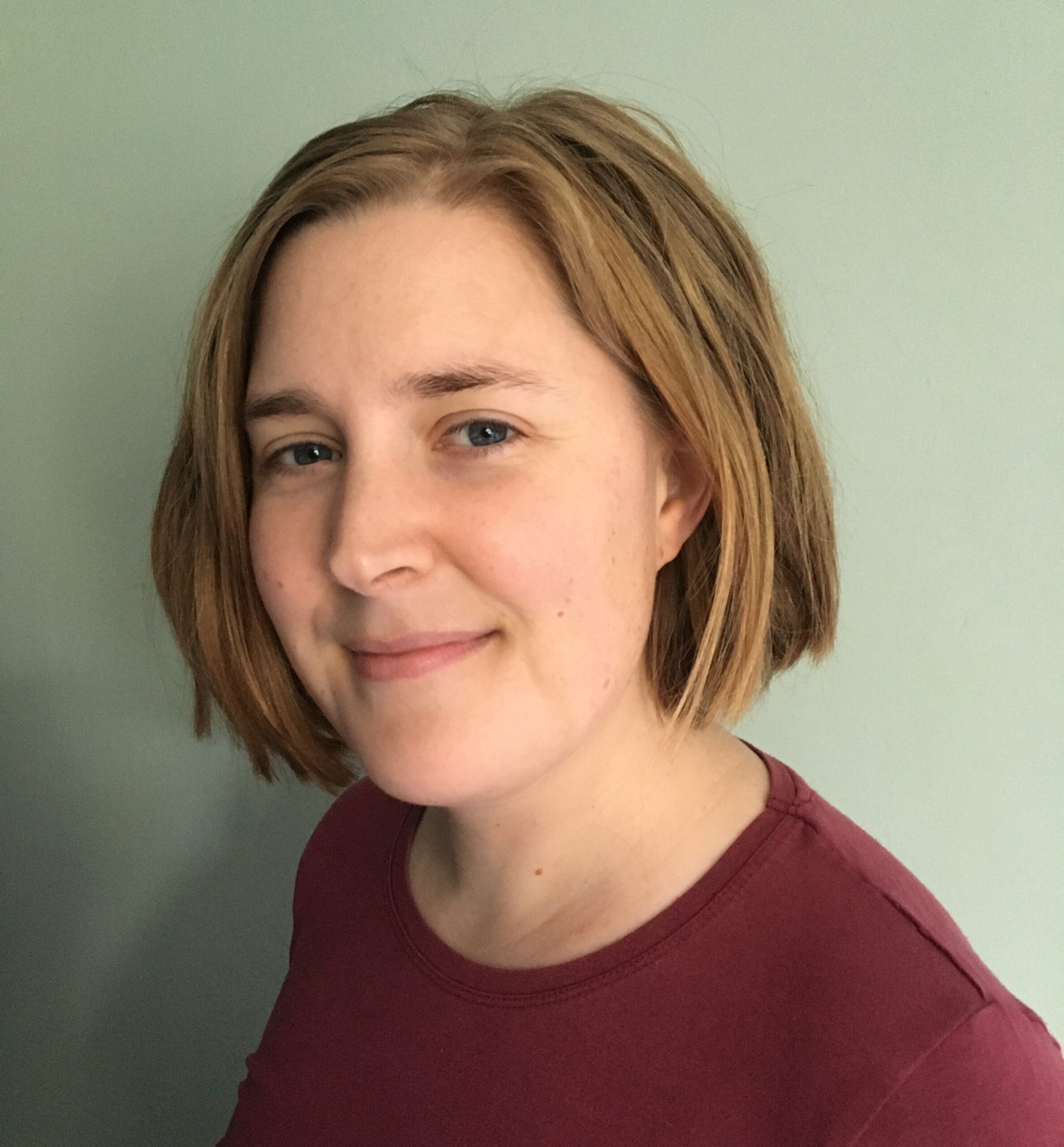
Born in UK • Studied Mathematics at Lancaster University in Lancaster, UK • Highest Degree PhD in Infectious Disease Modelling • Lives in UK • Occupation Director of Equations of Disease C.I.C.
Growing up, universities were always a bit of a mystery to me, my parents didn’t go to university. But I was encouraged by my parents and schoolteachers that going to university would be the path for me. I thought that going to university and studying would help me change the world for the better. I enjoyed maths from a young age, it was a subject which came naturally to me. I found the lessons easy, but then at university, studying maths, I struggled.
Whether it was the format of lectures or the more abstract topics, the subject I loved didn’t come naturally anymore. I worried that I had reached my limit in my understanding of mathematics. After a few disappointing grades, I knew something would have to change if I was going to get a good degree. I had to do something different – I had to learn differently.
I knew with enough time I could figure out most things – or know when it was taking me too long and I should ask for help!
I wasn’t used to having to put effort into learning maths, but now I would attend classes, then practice, read several books, find examples online, until I understood the concept. In those years at university, I learnt how to learn. And it paid off, not just at university, but further down the line as well.
I stayed at my university to do an MSc in Statistics. Although I loved group theory, I wanted to work on something more applied. Following my MSc, I started a PhD in infectious disease modelling. Studying for a PhD was all about learning new things, and now I had learned how to learn. I knew with enough time I could figure out most things – or know when it was taking me too long and I should ask for help!
In universities I had been aware of being a first-generation university goer and of not having been to private school, and also of being White.
After my PhD, I stayed at university to do research applying mathematics to the problems of global health, but I found myself becoming disillusioned with academia. As a postdoctoral researcher I worked on some amazing mathematical problems and with some great scientists modelling infectious diseases. But I found myself reflecting on my place in global health research. In universities I had been aware of being a first-generation university goer and of not having been to private school, and also of being White. But I never really thought about what it meant to be White, British, and working in global health.
My definition of success has changed a lot from starting at university and wanting to change the world with maths.
I was motivated to work in infectious disease modelling to use maths for good, but in my role as a postdoctoral researcher I felt I was not helping to support the decolonisation of global health. I decided to leave academia to set up the social enterprise I run now. I aim to create accessible training opportunities for learners in the Global South.
My definition of success has changed a lot from starting at university and wanting to change the world with maths. And to the aspiring mathematicians, the struggling ‘not a mathematicians’: know that the path to success is not linear, or even constant, but something which keeps changing the more you learn.
Published on October 5, 2022.
Recent Comments