Mathematics

Nishu Kumari

Nishu Kumari

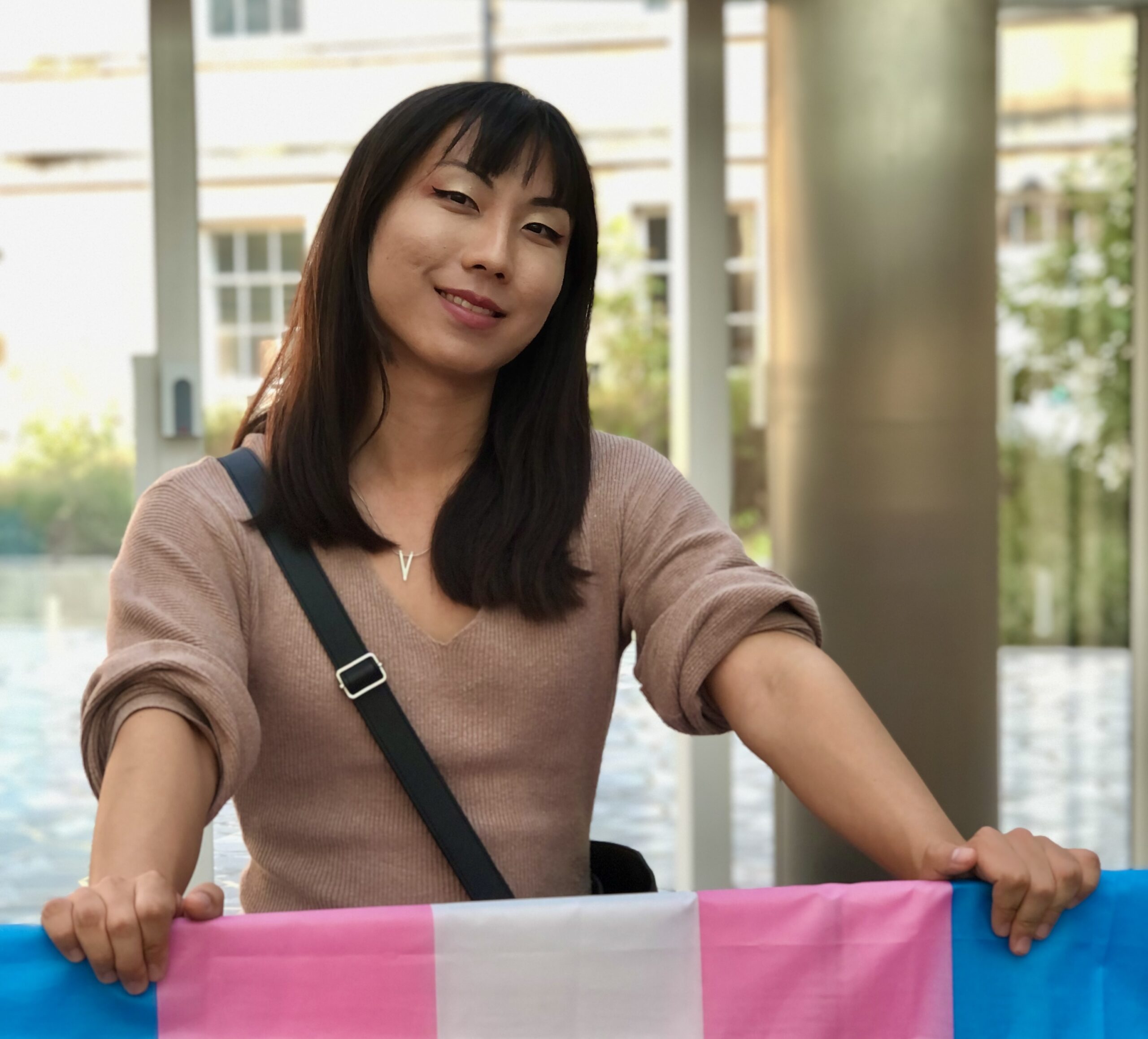
Born in India • Birth year 1996 • Studied M.Sc in Mathematics at the Indian Institute of Technology Kanpur • PhD in Mathematics from the Indian Institute of Science (IISc) Lives in Vienna, Austria PostDoctoral Researcher at the University of Vienna’s Faculty for Mathematics

I grew up in a village of Haryana, a state in Northern India. I was drawn to maths from an early age because I was good at solving maths problems. After completing college education from Haryana, I successfully passed the entrance exam for a prestigious institution in India, IIT (Indian Institute of Technology) Kanpur,  to pursue a Master’s degree in Mathematics. Since the exam is highly competitive, I consider being admitted to this institution as one of my greatest achievements.  

During my stay at IIT, I realised that maths is more about testing your understanding of concepts and less about calculations. That’s when I also realised grasping a mathematical idea gives me immense satisfaction and decided to study mathematics at a higher level.

Before my entrance exam I wasn’t even sure I would be able to rank highly enough to be admitted. It was a very big moment for my entire family when I did as I was the first person in my family to get admission at IIT . We never imagined that this would even be possible.

During my stay at IIT, I realised that maths is more about testing your understanding of concepts and less about calculations. That’s when I also realised grasping a mathematical idea gives me immense satisfaction and decided to study mathematics at a higher level. I joined the Indian Institute of Science (IISc) for my Ph.D.

After completing my doctoral studies last year, I am currently working as a postdoctoral researcher at the University of Vienna, Austria. I am part of a large research group focused on discrete random structures with my personal focus being on algebraic combinatorics. 

Algebraic combinatorics uses tools from algebra to solve problems in combinatorics, thereby acting as a bridge between the tangible world of counting objects and the abstract world of formulas. For instance, by using algebraic combinatorics we can solve everyday problems such as organising wedding seating charts where certain guests must sit together or better be kept apart, drawing up sports schedules where every team plays each other exactly once, or designing music shuffle algorithms that feel truly random by avoiding song groupings from the same artist.

I feel that many women, especially in India, might not know what exactly having a career in maths actually means or even that they can pursue a career in this field. I believe it is important to tell them that this is an option.

In terms of mathematical research, I have encountered a lot of diversity in Vienna. I have found a lot of great people to collaborate with around me, especially since our research group is fairly large with over 20 members. 

As an Indian woman in mathematics, the environment I trained in featured very few women. It was discouraging sometimes. I feel it would have helped me, if there had been more women doing what I was doing at the time.

I feel that many women, especially in India, might not know what exactly having a career in maths actually means or even that they can pursue a career in this field. I believe it is important to tell them that this is an option.

However, there have been some great ideas and steps to bring more women into existing institutions. I can see that the number of women being admitted into Indian maths institutes is increasing.

Women’s education in general is on the rise. In the village I grew up in, people weren’t keen on  women to study when I was young, but now they encourage  their girls to get an education. This is a rather unexpected side effect of the rising cost of living. As a result, women are now encouraged to pursue paid work.  

My dream for the future is to first build a career in academia. In future, I would like to return to India and work to inspire more Indian women to get involved in maths. This is my way of trying to help future generations of Indian women be more represented if they choose mathematics as their career path. 

Published on January 28, 2026.
Photo credit: Shivangi

Posted by HMS in Stories
Surya Mathialagan

Surya Mathialagan

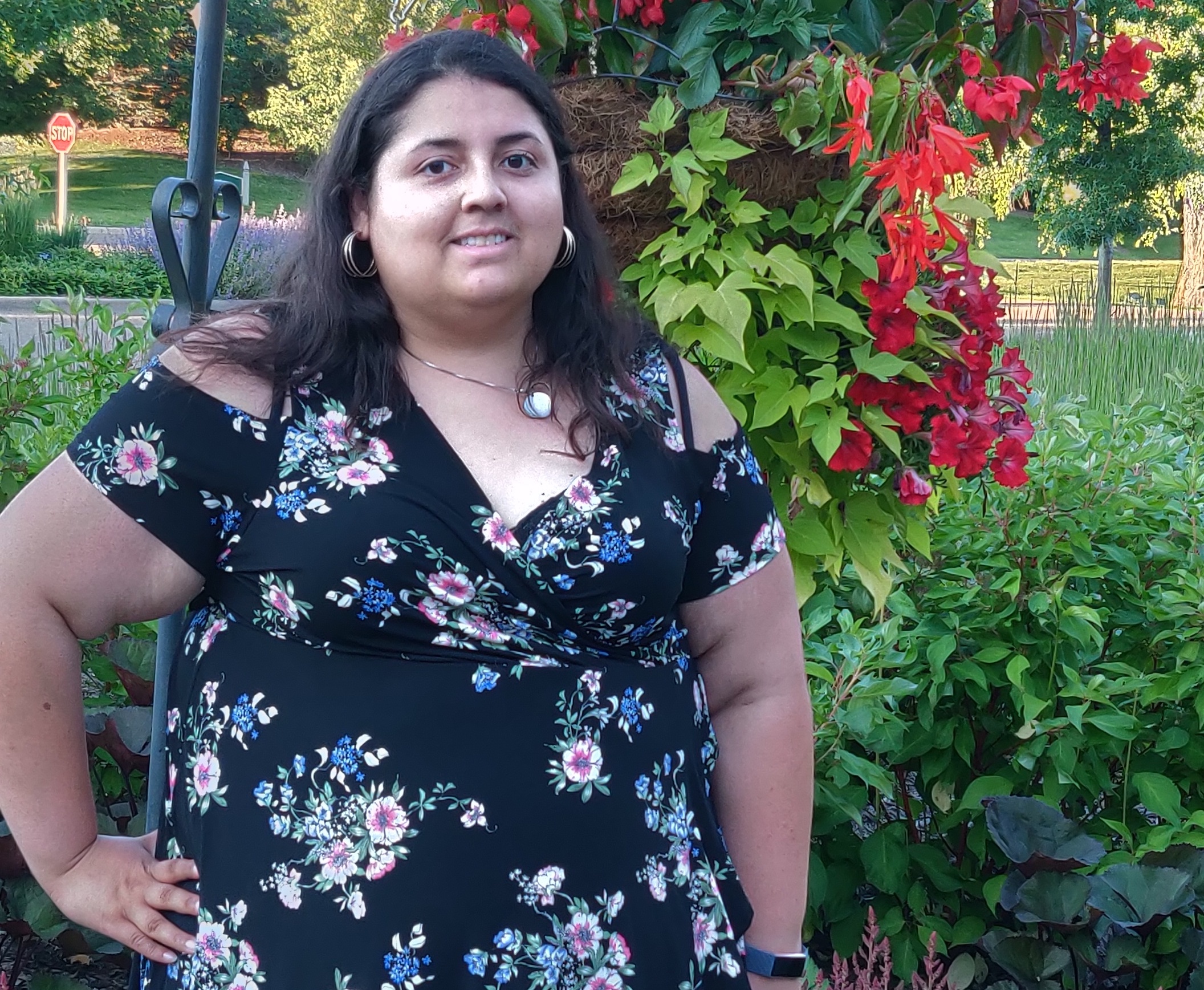
Born in India and Grew up in Singapore Studied Mathematics and Computer Science at Caltech • PhD in Computer Science from MIT • Lives in California, USA Postdoctoral Researcher at NTT Research, USA

What first drew me to mathematics wasn’t numbers or formulas – it was the satisfaction of knowing why something was true. I loved puzzles and logic problems from an early age, and my parents noticed. I was extremely fortunate because they did their best to find the support I needed to keep exploring that interest and progress in the math Olympiad scene. I later represented Singapore several times in the China Girls’ Mathematical Olympiad. Those experiences drew me in. I loved the structure of Olympiad problems – the feeling that, with enough persistence, all the puzzle pieces would eventually fit. But what fascinated me most was the idea of a proof. Proofs were like perfectly tuned explanations: elegant, inevitable, and deeply satisfying. I remember learning how to write one and being amazed that something as human as convincing someone of something could be captured by precise logic.

For example, is solving a Sudoku puzzle as easy as checking that a completed Sudoku grid is valid?

During my undergraduate studies at California Institute of Technology, I learned that the idea of “proofs” also lies at the heart of theoretical computer science. I encountered the seminal P vs NP problem, which asked whether “finding a proof” (NP) is as easy as “verifying a proof” (P). For example, is solving a Sudoku puzzle as easy as checking that a completed Sudoku grid is valid? On the face of it, the former seems much more difficult – but for all we know, both tasks could be equally “easy” (i.e. NP = P). This is one of the biggest unsolved mysteries in theoretical computer science, and it drew me in with the deep mathematical ideas that had been developed to understand it. I soon decided to pursue a joint major in mathematics and computer science to explore that theory more deeply.

I could not stop thinking about this, how much can we push the limits of what a proof can look like?

Later, I took a cryptography class that introduced a concept called zero-knowledge proofs, which changed the way I viewed proofs. Proofs didn’t have to be static write-ups – they could be interactive, even conversational in some sense. With this relaxation, zero-knowledge formalized the idea of convincing someone that something is true without revealing why. For example, you could prove that you know a solution to a Sudoku without giving away the solution itself. It seemed absurd, but it was possible. I could not stop thinking about this, how much can we push the limits of what a proof can look like?

I also had the first taste of pursuing mathematics research during my time at Caltech. It was the first time mathematics felt creative rather than competitive. I had to decide for myself what questions to ask and what counted as progress. It was the first time I’d worked on something where there wasn’t a clear notion of “done.” I enjoyed the freedom that I had to choose where I wanted the project to go. I was motivated to keep doing this, and I decided to pursue a PhD in theoretical computer science. 

During my PhD at MIT, I explored more problems in theoretical computer science, and landed on a problem that I am still obsessed with: constructing succinct proofs. Like zero knowledge, succinct proofs redefine what a “proof” can look like, but in a different way – they capture the idea that you can convince someone of a complex statement using a proof that is much shorter than the statement itself. For example, could we prove that a 100 x 100 Sudoku has a solution by providing a proof containing only 128 bits, instead of 10,000? At first, this seemed completely ridiculous. How could a proof possibly be shorter than the thing it proves? It shouldn’t even be possible. But instead of assuming an all-powerful prover, if we assume the prover has limited resources, say finite time – then it actually might be.

While I was at MIT, I had the privilege of being mentored by several incredible female professors whose sharpness and confidence quietly shifted how I saw myself.

That tension between truth and feasibility made me appreciate the “engineering” side of theoretical cryptography: sometimes the goal isn’t to prove that something exists unconditionally, but to show that it can exist within realistic limits. And one doesn’t need to stop there – one could also ask for a proof to be both succinct and zero-knowledge simultaneously! Indeed, succinct zero-knowledge proofs (sometimes called zk-proofs or zk-SNARKs) are now the backbone of blockchains, allowing large computations to be verified efficiently while maintaining privacy. 

Representation shapes what seems possible, even when no one says it out loud. I feel so incredibly lucky to have crossed paths with these incredible women.

While I was at MIT, I had the privilege of being mentored by several incredible female professors whose sharpness and confidence quietly shifted how I saw myself. Watching them made it feel more plausible that I could be a researcher or academic too. Earlier in my life, during the Math Olympiad or even at Caltech, I was often one of the few girls in the room. At the time, I didn’t think much of it, but looking back, I realize how much visibility matters. Representation shapes what seems possible, even when no one says it out loud. I feel so incredibly lucky to have crossed paths with these incredible women.

Perhaps my favourite thing about doing research is that unlike Olympiad math, it doesn’t exist in a vacuum – research is deeply conversational. I’ve learned that sharing half-formed thoughts – defending, revising, and rebuilding them – is often how the most enjoyable mathematics happens. Each discussion shifts how you see the problem, and sometimes that’s enough to move it forward. I’ve also come to enjoy the part that happens after the proof is done. I enjoy giving talks, explaining the ideas to others, and seeing how they react. Good talks feel like an extension of research itself: a chance to start a conversation about mathematical ideas. 

I am now a postdoctoral researcher at NTT Research, a research lab based in California. I still work on constructing zero-knowledge succinct proofs and other related cryptography problems. Even though I work on theoretical computer science, by an ironic turn of events, much of my recent work uses traditional mathematical proofs to construct succinct proofs in the cryptographic sense. I am excited to see where else my research leads me. I hope to go into academia, where I can study these problems further. I hope that being here and doing this work helps make the field feel a little more possible for others who might not have seen themselves in it before.

Published on December 10, 2025.
Photo credit: Asaf Etgar

Posted by HMS in Stories
Reflecting on “Counted Out”: A Conversation About Maths, Power, and Inclusion

Reflecting on “Counted Out”: A Conversation About Maths, Power, and Inclusion

by the Her Maths Story team

On October 17th, we hosted a digital screening of the documentary Counted Out. This would not have been possible without the generous support of the Counted Out team and we would especially like to thank the director Vicki Abeles for this opportunity.

About the Film

Counted Out explores the invisible yet powerful role of mathematics in shaping our society. In today’s information economy, maths determines so much of our world — from who we date and the news we see, to the elections we vote in and the jobs we get. Through a blend of personal stories, expert interviews, and classroom scenes, the film asks a crucial question: What happens when only a small fraction of society feels confident engaging with maths and what could change if everyone did?

The documentary challenges the idea that being “a maths person” is an innate trait. Instead, it invites us to see maths as a language of empowerment — one that should be accessible to all, not reserved for a select few.

The film highlights a number of influential educators and the remarkable initiatives they have brought to life. A full list of contributors can be found here. Among those featured is civil rights activist Bob Moses, founder of The Algebra Project, an organisation that uses mathematics as a vehicle for social change and advocates for high-quality education for every child in the United States. Karim Ani is also profiled for his work on Citizen Math, a programme that offers immersive, real-world mathematics lessons for students in grades 6–12. The documentary further highlights Math for Love, an initiative created by Dan Finkel devoted to transforming mathematics teaching and learning through engaging games and innovative curriculum design.

The Screening

Before the screening began, we gathered briefly on Zoom to welcome participants and introduce the film. There were participants with various backgrounds, including a PhD student, a science communicator, and a maths educator. Then, everyone went on to watch the documentary. After the screening, our group came together again for a 40-minute discussion. All participants agreed that they enjoyed the film a lot.

Although it focuses primarily on the U.S. education system, its themes felt universal: from the early division of students into “maths” and “non-maths” categories to maths teaching at school being very different from maths taught at university level.

Several ideas stood out in our conversation: Math is for everyone. All children are mathematically talented; it’s the environment, not the individual, that determines how that talent develops. Good teachers make the difference. The challenge of finding and supporting teachers who can teach math effectively and empathetically was a recurring topic. Belonging matters. Especially for women and underrepresented groups, it can take years to feel accepted at the “maths table”. We need to keep that table open, and keep pulling up more chairs.

As one participant noted, “teachers should not judge maths students but focus on teaching them on different levels”. It’s a reminder that inclusion begins in the classroom but must also extend into workplaces, communities, and beyond.

What We Can Do

So what can each of us do to contribute to change?

We can support and uplift others, especially those from minority backgrounds. We can challenge stereotypes about who belongs in maths. And we can continue to create spaces for open conversation about how mathematics shapes our world and who gets to participate in that shaping.

Join the Movement

If you missed this screening, there are more opportunities to engage:
🎬 Join an upcoming screening: countedoutfilm.com/screenings
🎥 Host your own: countedoutfilm.com/host-a-screening

And, most importantly, take some time to reflect on the film’s core message:
Maths is not just about numbers — it’s about power, access, and inclusion.
When more of us see ourselves as “maths people,” we can shape a world that works for everyone.

Published on December 3, 2025.

Posted by HMS in Blog
Ilse Fischer

Ilse Fischer

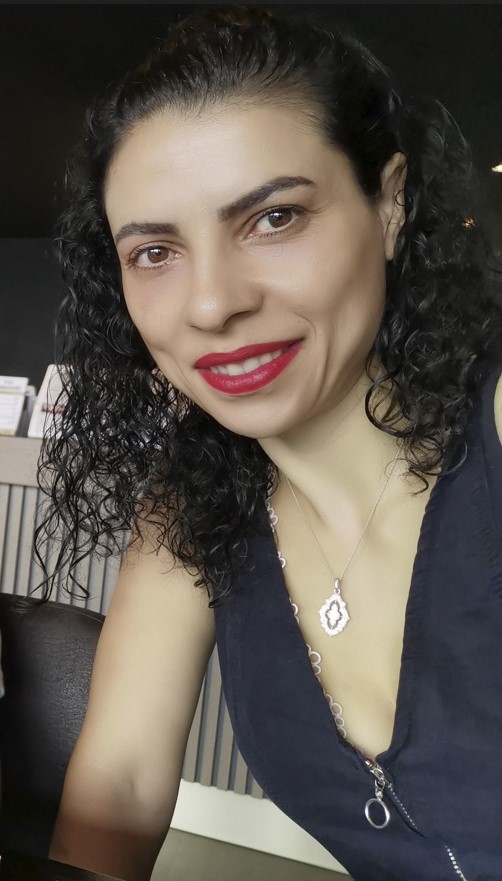
Born in Klagenfurt, Austria • Birth year 1975 Studied Mathematics at the University of Vienna in Austria • PhD in Mathematics from the University of Vienna Austria • Lives in Vienna, Austria Professor of Mathematics and Vice-Dean, Faculty of Mathematics, University of Vienna

I was drawn to maths not because of my background, but because it came naturally. I loved being good at maths. Even though my father was a university professor in math education, he never pushed me into this field.

My inspiration instead came from the simple content we learned at school. I enjoyed mathematics as a creative process with very strict rules and gained immense satisfaction from overcoming these rules to achieve success. If I am perfectly honest, another reason was that I was just really good at maths in school, which boosted my ego. I enjoyed it when my peers asked me for help.

My Career Path – Between Klagenfurt and Vienna

After studying mathematics for 5 years at the University of Vienna, I returned to my hometown, Klagenfurt. I really appreciated the relaxed pace of living in Klagenfurt compared to Vienna. The position was in applied mathematics, with a focus on optimization. Optimization in mathematics refers to calculations identifying the best solution among a set of alternatives, such as the quickest route via train from Vienna to Paris if one transfers at a third train station. This was quite different from my original focus on pure mathematics.

To me this offer in pure mathematics was akin to winning the lottery, which is why there was no question that I would return to Vienna.

During my time in Klagenfurt, my mathematical taste was strongly shaped by my professor, who, like me, really enjoyed mathematical problems that are easy to state but hard to solve.

After a few years in Klagenfurt, I ended up back in Vienna having an offer for a postdoctoral position. To me this offer in pure mathematics was akin to winning the lottery, which is why there was no question that I would return to Vienna. Here, I returned to my initial field of pure mathematics. My specialty now is enumerative combinatorics. In enumerative combinatorics, our job is to count possibilities such as how many ways can you shuffle a deck of cards or how many different routes exist between two points in a grid.

Why Combinatorics?

Combinatorics used to be a bit of an underdog in mathematics.

What I love about combinatorics is that the problems are very easy to state, but hard to prove. Furthermore, it’s a very accessible field that does not require extensive reading in order for doctoral students to start working in it.

Combinatorics used to be a bit of an underdog in mathematics. However, it is valuable for applications in diverse fields such physics and statistics, and therefore now seems to have become a rising star, which I find really satisfying to witness.

Some people, not least my father, ask why I chose pure mathematics over applied mathematics. What drives me particularly in pure mathematics is the aesthetic aspect, the desire to do something nice. I also really enjoy working on blue skies research (where the immediate applications are not yet known) and chasing deep discoveries. This can lead to revolutionary and useful outcomes in the long run that we can’t even predict at the time of doing the work, which feels very inspiring.

My Advice to other Mathematicians

My advice to others would be to always follow your own taste and concentrate on your chosen field. I believe success comes from motivation rather than pressure.

Yet over time, I started to appreciate that a very satisfying aspect of mathematics is establishing intellectual connections with other people.

My second piece of advice is to forge intellectual connections and work collaboratively. I started out working alone, partially because, when I was applying for positions in the early 2000s, people looked closely at whether you had single-authored papers. It was also what suited me best at the time, probably due to the fact that I was a woman in a male-dominated field. Yet over time, I started to appreciate that a very satisfying aspect of mathematics is establishing intellectual connections with other people.

My Thoughts on Women in Mathematics

When it comes to the struggles of women in mathematics, I do believe a contradiction exists. I am on a lot of hiring committees, and I have observed that if women publish with other people, the committee members often end up saying, “Well, she didn’t do it.” And I find it incredibly frustrating that this still happens.

This is why I would say as a female mathematician, a smart choice is going for a balance of single-author papers and collaborations. But maybe more importantly, you should do what you think suits you best.

I hope that we will get to a point in the future where a woman can be an excellent mathematician without it being remarked upon as something out of the ordinary.

Another aspect about being a woman in mathematics that frequently causes me irritation is that people feel very surprised when they find out that I am a mathematician. When they hear this, they usually assume that I’m a high school teacher. Then they find out that I’m a professor and are even more surprised. I don’t think that’s good news, and I do think that this is just down to my gender.  While it creates some funny situations, it shouldn’t be the case in 2025.

I hope that we will get to a point in the future where a woman can be an excellent mathematician without it being remarked upon as something out of the ordinary.

Published on November 12, 2025.
Photo credit: Joseph Krpelan

Posted by HMS in Stories
Mihyun Kang

Mihyun Kang

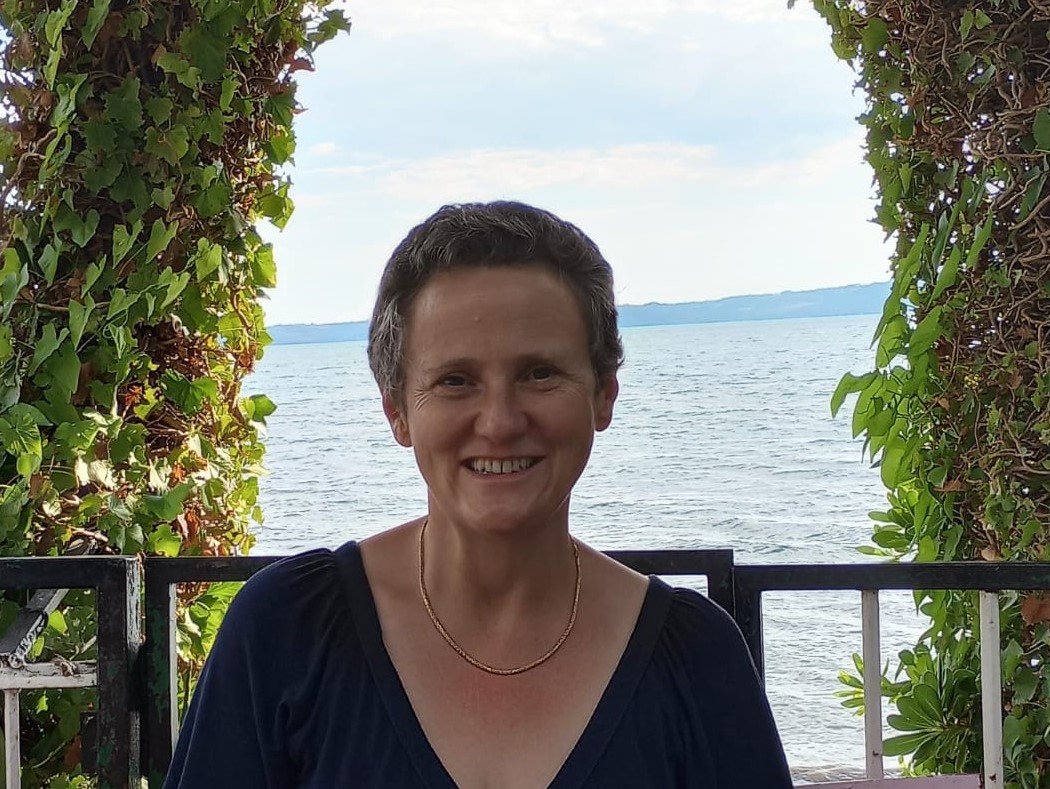
Born in Jeju, South Korea • Studied Mathematics Education at Jeju National University in Jeju, South Korea • PhD in Mathematics from Korea Advanced Institute of Science and Technology (KAIST) in Daejeon, South Korea  • Lives in Graz, Austria • Full Professor at Graz University of Technology (TU Graz)

In a way, becoming a Professor of Mathematics was probably always on the cards for me. Even as a child, the only subject I remember enjoying at school was mathematics and so pursuing higher education in this field felt natural.

I had both my parents’ support and encouragement to pursue this path in life. My father, a professor himself, gave me an early insight into the profession and all it entails. What I saw was mostly positive and so it was maybe no big surprise that I ended up in academia as well.

After finishing my PhD in 2001, I made my way to Berlin, Germany, to become a Postdoc at Humboldt University. Almost everything there – maths, academic culture, language, people’s attitude, as well as everyday life outside the university – was new and sometimes challenging to me, but I loved it. In this new world I could be what I was, without feeling the need to try to overly adjust myself to the standards and expectations of society.

I spent ten years in Germany, managing to progress from a postdoc to Heisenberg Fellow and then to Acting Professor at the University of Munich. I also used this time to learn the German language, which I now speak fluently. But I must say it took quite a few years to be able to teach in German, because the language of maths research is English and I taught only small Master’s courses, also in English.

Only later, when I started to teach Bachelor’s courses in German for engineering students and took part in academic administration as a Senate member of TU Graz, did I become more confident in using German in teaching and daily discussions.

I believe my approach of bridging multiple fields has contributed greatly to my career success, as it allows me to be more inventive and recognise patterns among seemingly different objects and mathematical behaviours that can only be discovered by thinking in an interdisciplinary manner.

For the past 13 years I have been a full professor at TU Graz in Austria, where I lead the Combinatorics Group. In my work, I draw inspiration from many neighbouring disciplines. My main research is centered around the phase transition phenomenon, partly because it appears in many different disciplines, including combinatorics, discrete probability, computer science, statistical physics, and network sciences. In fact, this phenomenon is almost everywhere including daily life, e.g., the change from ice to water and then to gas. 

I believe my approach of bridging multiple fields has contributed greatly to my career success, as it allows me to be more inventive and recognise patterns among seemingly different objects and mathematical behaviours that can only be discovered by thinking in an interdisciplinary manner.

Doing research in mathematics involves a lot of collaboration with mathematicians from all over the world. I greatly enjoy discussions with mathematicians from different mathematical and cultural backgrounds.

Although mathematics may appear too abstract and detached from real life to most people, everybody has been exposed to hot topics such as digital security or artificial intelligence, which, in fact, rely heavily on progress in mathematics.

In addition to being part of this international network, my participation in the SFB (Research Network) “Discrete random structures: enumeration and scaling limits” – supported by a science and research funding organization in Austria – gives me a rewarding opportunity to forge closer collaborations with mathematicians coming from top universities in Austria. This research network brings together researchers from the fields of combinatorics and probability and even touches on areas such as quantum physics.

Although mathematics may appear too abstract and detached from real life to most people, everybody has been exposed to hot topics such as digital security or artificial intelligence, which, in fact, rely heavily on progress in mathematics. I therefore strongly believe that maths is invaluable to our society and a field worth pursuing a career in.

Published on September 3, 2025.
Photo credit: TU Graz

Posted by HMS in Stories
JoAnne Growney

JoAnne Growney

Born in rural Pennsylvania in 1940 • Studied PhD in Mathematics at University of Oklahoma, United States • Lives in United States • Occupation Taught mathematics at Bloomsburg (PA) University (now part of Commonwealth University); now retired

Before I was a math girl, I was a farm girl – the oldest of three children growing up on a farm in Pennsylvania —  the one who went to the barn with her father while her mother took care of the little ones.

Math (often numbers and counting) was an inconspicuous but central part of farming – counting eggs as I collected them from beneath the hens, counting the sheep as they came into shelter at night to make sure that none had drifted away.  Geometric quantities also were important – the volumes of harvested grains and fruit, the distances between parallel rows of corn, the gallons of milk expected from our Guernsey cow which I milked morning and evening.

My teacher, a graduate of an elite college and unashamed of her math ability, was an energetic and supportive example of “girls can do math.”

Perhaps my farm experience helped me to be good at math – and that skill seemed fine in elementary school years but as my classmates and I moved through high school my female math ability seemed to make people turn away from me.  In my senior year, I was one of only three girls in my math classes.  BUT that year I also had an inspiring experience.  My teacher, a graduate of an elite college and unashamed of her math ability, was an energetic and supportive example of “girls can do math.”

Receipt of a scholarship from Westminster College in New Wilmington, Pennsylvania, enabled me to go away from home to continue my education.  (To my dismay, at Westminster I had several “only girl in the class” experiences.)  I started out as a chemistry major but, during my sophomore year. I learned that my “science scholarship” could be used toward a math major and then (preferring math to chemistry) I switched, combining studies of math with secondary education. AND I took creative writing courses and had work published in the campus literary journal. In those days (early 1960’s), many jobs were not available to women – but teaching was.

Graduation from Westminster led to marriage, to secondary school teaching in the Philadelphia area, to evening graduate classes at Temple University – from which I obtained an MA in Mathematics.  My husband (Wallace/Wally) – who had studied physics and math and a bit of computer science – took a job at Susquehanna University in Selinsgrove, PA.  I did some part-time teaching at Susquehanna and at nearby Bucknell – but soon we moved to Norman, Oklahoma where Wally would pursue a doctorate so that he could qualify for tenure at Susquehanna. While we were in Oklahoma, with lots of time on my hands, I was able to attain a teaching assistantship and continue my studies also. 

One of the requirements for mathematics professors at Bloomsburg University was to teach “general education” courses for non-majors and this experience led me to write and publish a textbook entitled Mathematics in Daily Life – a book containing material that engaged students in mathematical reasoning related to counting, voting, travel, decision-making, and other frequent concerns. 

Graduate school brought complications to our marriage. In our earlier studies, I had gotten better grades but we credited it to his sports and fraternity activities – AND, I studied more carefully. But at The University of Oklahoma, it became evident that I was the better student and, eventually, that caused stress for both of us. I became his helper. We studied together. During our work on dissertations, I became pregnant. When our doctoral studies were completed, we returned to Pennsylvania, bringing with us a baby daughter.  I secured a tenure-track position at nearby Bloomsburg State College (now part of Commonwealth University).  AND I was able to keep my on-campus schedule to three days per week and to find excellent child care; our care-giver, Erma, was loving and dependable. Our family grew with another childbirth and two adoptions.

Keeping busy helped our marriage survive but over time we began to recognize that things weren’t working and weren’t repairable. This eventually led to divorce and to me and the kids moving to the town of Bloomsburg (and to me avoiding the 30-mile commute).  My time in Bloomsburg involved congenial colleagues, a great neighborhood – a safe place for my children even if I was not with them and walk-to schools.  When my children grew up – and left home for college and marriage and  . . . I found time to revive my childhood interest (begun as a child reading Robert Louis Stevenson’s A Child’s Garden of Verses) to poetry.

One of my favorite poems celebrates the mathematician, Amalie Emmy Noether;  it’s title is “My Dance is Mathematics”

One of the requirements for mathematics professors at Bloomsburg University was to teach “general education” courses for non-majors and this experience led me to write and publish a textbook entitled Mathematics in Daily Life – a book containing material that engaged students in mathematical reasoning related to counting, voting, travel, decision-making, and other frequent concerns.  Work on this project and — even more so — my interest in poetry drew me into connections with other colleagues (in English and Philosophy and . . . and I gradually began to participate in poetry events and publication in addition to my math-related activities.

Writing poetry was an activity that I much enjoyed – and many of my poems incorporate mathematical ideas.  One of my favorite poems celebrates the mathematician, Amalie Emmy Noether;  it’s title is “My Dance is Mathematics” and it is available online at this link:   https://joannegrowney.com/ChapbookMyDance.html ;  here is its opening stanza:

They called you der Noether, as if mathematics

was only for men.  In 1964, nearly thirty years

past your death, at last I saw you in a spotlight,

in a World’s Fair mural, “Men of Modern Mathematics.”

Once my kids were grown – and using some funds inherited from a great aunt – I began to engage in travel-related math-and-poetry activities.  Via “Teachers for Tomorrow” – a non-profit organized by one of my high school friends – I spent part of several summers teaching (math and poetry and English conversation) – in India and in Romania. 

A few years into retirement, I moved south to the Washington, DC area where three of my four children were living with their young families.  And I am still here!

More can be learned about me at my website: https://joannegrowney.com. In 2010 I began to write a blog entitled “Intersections – Poetry with Mathematics” (found at   https://poetrywithmathematics.blogspot.com/) – and, with more than 1600 posts so far, my blogging continues.  My own thought processes seem to follow the rule that “everything connects” – and this article shares some related ideas:  https://joannegrowney.com/Everything-Connects–JMA-Growney-26June2020.pdf

THANK YOU for reading!  I hope you also enjoy math and poetry and their connections!

Published on April 9, 2025.
Image credit: Diann Growney Harrity

Posted by HMS in Stories
Uzu Lim

Uzu Lim

Born in Seoul, South Korea • Birth year 1993 Studied Mathematics at Postech in South Korea • Highest Degree PhD in Mathematics from University of Oxford, UK • Lives in Oxford, UK • Currently a postdoctoral researcher in mathematics at the University of Oxford; soon to start a postdoctoral researcher position in Queen Mary University of London

I am a mathematician working on geometric data analysis, and I am a transgender woman. The interaction of mathematics and gender in my life is non-trivial, and I thought seriously about this for the first time while writing this piece. While my gender identity slowly crystallised over my life, it was only 4 years ago that I declared myself as transgender. Mathematics has been at the centre of my life for a long time, and I mostly regarded it as a genderless activity. However, I’ve recently started recognising the effects of male socialisation in my mathematical practice, and started exploring how my femininity could interact with my mathematical practice.

In the end I got a PhD in mathematics in Oxford, but the voices whispering “I am not enough” never stopped.

I grew up in a fairly typical “Asian male math nerd” culture, although it was one of those turbo-charged versions appearing in science high schools and Olympiads. Born in South Korea, I went to an international boarding school when I was 13, and moved alone to Singapore when I was 15 to attend a prestigious science high school. That was not enough for me, because I constantly complained that this school wasn’t teaching me enough advanced mathematics. In the end I got a PhD in mathematics in Oxford, but the voices whispering “I am not enough” never stopped. I attribute this to the nerd-machismo in male STEM culture, coupled with the distinct Asian workaholism. I could not settle for anything that may actually give comfort and nurture, for once.

With the help of my transgender boyfriend, I reflect that it’s time to stop and look back. I have done enough to show that I am worthy of love. It doesn’t have to be a constant screaming and scaling a higher mountain. I look back at my love of shapes and structures, and I look back at the delicate theorems and programs I sculpted over the course of my mathematical life. I say: I love all of you, and I will care for all of you, because you are a dear part of me. And I do this with a form of feminine, motherly love.

(…) I sense a harsh masculinity in how many scholars think of mathematics.

The heart and soul of mathematics lie in the expanse of the fluid framework of ideas created by people. Important theories are supported by soft intuitions, and the network of deep thinkers brings gradual yet certain progress to mathematics. I sense much femininity in this smoothness of ideas. On the contrary, I sense a harsh masculinity in how many scholars think of mathematics. While learning pure mathematics, there was a persistent self-loathing along the lines of: “You will never dream of staying in academia if you can’t even finish Hartshorne’s Algebraic Geometry.” There’s always a higher tower to climb, and a grander theorem to learn. It reminds me of phallic architectures that trace the city skylines. Mathematics is also often made into a sterilised toolbox that is wiped clean of blood and sweat in the creative process. I performed this sterilisation in writing my doctoral thesis, where the anxiety and obsession in my contrarian approach to geometric data analysis were sanitised before I presented them cleanly in theorems and algorithms. This is good in some sense, but there is a lingering unexplored emotional dimension that could have been shared more deeply with other mathematicians.

So here onwards, I dream of cultivating a more feminine mathematical culture. Partly, that means to be honest with all sorts of emotions that arise from mathematical practice. Even though I see mathematics itself as a genderless activity, the gendered culture brought by mathematicians is real. I dream that mathematicians will someday open up more of our human, emotional elements into research papers and talks. To play my part, I will start to look deeply into my colleagues’ mathematical practices to share our woes, obsessions, hopes and dreams. As I rise higher in the rank, I will have more chances to usher in the strength in emotional openness in supervision, papers, and seminars. Someday we will be climbing the celestial mountains of abstraction as a team, not in the misguided spirit of nerd machismo, but rather in the spirit of nurturing yet powerful femininity.

Published on September 18, 2024.

Posted by HMS in Stories
Liliana Esquivel

Liliana Esquivel

Born in Toledo, Norte de Santander, Colombia • Birth year 1991 Studied Mathematics at the University of Pamplona in Colombia • Highest Degree PhD in Mathematics • Lives in Cali, Colombia • Occupation non-tenure track Associate Professor at the University of Valle, Colombia

I never really thought I would become a mathematician. Although I enjoyed solving maths problems in my early years of high school, my first love was dance. I wanted to become a dancer. I finished high school when I was 14 years old. At that moment, while deciding what to study in college, a scholarship opportunity for Mathematics came up, and I thought, ‘Why not?’. That ‘why not’ has turned into a career of almost 18 years.

My passion for mathematics truly awakened with mathematical analysis. For me, the concept of approximation is one of the most refined in mathematics. Currently, I am continuing on the path that my undergraduate and graduate advisors helped shape for me. Staying on this professional path is thanks to them and the spark they ignited in me, which makes me want to keep learning every day, as learning is one of the things I enjoy the most.

Although I may have never told her, [my PhD advisor] has always been my role model in this field. My aspiration is to be a source of inspiration and guidance for my students, just as she was for me.

This career has given me the chance to visit unimaginable places, immerse myself in diverse cultures, and have unforgettable experiences. I’ve pushed myself beyond my comfort zone, tackling challenges I once believed were insurmountable, and somehow, I have succeeded each time. Along this journey, I have met incredible, inspiring, and talented individuals who have contributed to my growth both professionally and personally. Resilience and tenacity are two qualities that develop over time in this job.

I was fortunate to have an exceptional PhD advisor—an intelligent, inspiring, strong, and determined woman. Although I may have never told her, she has always been my role model in this field. My aspiration is to be a source of inspiration and guidance for my students, just as she was for me.

Being a mom has put me in the same boat as many others, trying to stay on top of my maths game while being fully present for my kids.

In recent years, my academic perspective has evolved. I wish to remain active in research, but more than teaching, I want to share my passion. My passion is mathematics—its structure, its theorems, and ultimately, its beauty. I believe that by sharing this passion, I can inspire others to appreciate the elegance and depth of mathematics. I aim to create an engaging and stimulating learning environment where students can explore, question, and develop a profound understanding of mathematical concepts. My goal is to ignite their curiosity and foster a lifelong love for the subject, just as my mentors did for me.

One of the most challenging aspects throughout these years has been balancing my professional and personal life. Being a mom has put me in the same boat as many others, trying to stay on top of my maths game while being fully present for my kids. However, being a mother to a child with special needs has illuminated for me the profound societal needs. Specifically, it’s shown me how we need a kinder, more inclusive academic world, one that’s less about labels and more about understanding and support.

Published on July 10, 2024.

Posted by HMS in Stories
Jenna Race

Jenna Race

Born in Würzburg, Germany • Birth year 1986 Studied Mathematics at Century College in White Bear Lake, Minnesota, USA • Highest Degree Associates of Science in Business Administration • Lives in White Bear Lake, Minnesota, USA • Occupation Associate Communications Specialist at Metro Transit

From an early age I easily understood patterns that baffled my peers. Because of this I gravitated toward Math. In my early years in school, I was a great student with top marks in all my classes. Things changed in tenth grade when I developed bipolar symptoms. My GPA (US grading scale in high school) plummeted. I eventually failed nine classes including statistics and pre-calculus. After that, Math did not seem like the field for me anymore. Still, my heart’s desire was to pursue math, and I have never given up on that dream.

This class changed everything. It was the spark that re-lit the fire. It brought back the childlike wonder and awe I had for the beauty of mathematics.

I started college shortly after high school. My mental health symptoms continued to get in the way and I did not do well. After years of hard work and dialectical behavioral therapy I learned to manage my symptoms and regain control of my life. I decided to resume higher learning with a new-found confidence. I started at Century College in January 2019 as a first-generation, non-traditional student. However, I did not allow those facts to interfere with my progress. Finally, I was the student I always knew I could be. I dove deep into my classes and actually excelled! I decided to study business, having accumulated ten years of corporate work experience in customer service and answering business correspondence. My first two semesters were filled with general classes, but College Algebra came in fall 2019. This class changed everything. It was the spark that re-lit the fire. It brought back the childlike wonder and awe I had for the beauty of mathematics. I poured my heart and soul into that course and maintained a 99% for most of the semester.

With all my momentum and excitement, surely I would succeed again… until I didn’t.

I have heard many people say that math is so stressful to them that it makes them cry. In contrast, I have wept with wonder when recounting how the universe makes sense when math proofs are worked out. Math is the only subject I see myself pursuing for the rest of my life. This led me to update my college major to Mathematics. I made this change in April 2020: the start of the COVID-19 pandemic.

In spite of the pandemic, I continued to excel in classes. I eventually earned my first degree in May 2021, an Associates of Science in Business Administration. It was in fall of 2021 when I was done with business that I took the class that I always dreamed of: Calculus I. I was especially excited to take that class with my College Algebra professor. With all my momentum and excitement, surely I would succeed again… until I didn’t. I studied for hours and devoted myself to class but was not as successful as I hoped. By the end of the term, I earned a grade of 70%. Although I was eligible to take Calculus II the next semester, I took my instructor’s advice and retook the class. I am glad I took his advice because I did much better the second time and was more prepared for Calculus II. I took Calculus II in fall of 2022. With lots of preparation I excelled in the course.

For a time, I considered quitting, but I never let my struggles win.

Knowing how alone I felt as a female, minority, non-traditional, first-generation college student navigating mathematics during the pandemic, I wanted to give back to other students in similar situations. I was able to do that by becoming an organizer for OURFA2M2, the Online Undergraduate Resource Fair for the Advancement and Alliance of Marginalized Mathematicians. This is one of my proudest achievements since starting my math journey.

I wish that I could say that it was all downhill from there, but it was not. My last 3 semesters have been the most challenging of my math journey. That’s when I took Calculus 3 and Differential Equations. At the same time, I changed jobs and experienced significant changes in my personal life. For a time, I considered quitting, but I never let my struggles win. After 5 years, I am about to graduate from Century College and continue my mathematical journey at a four-year university. I know I will struggle in the future, but my experience so far has shown that I am tenacious and can tackle any challenges that come my way.

Published on May 8, 2024.


Elements of the first three paragraphs of this text are based on a book chapter by Jenna Race in “Read and Rectify: Advocacy Stories from Students of Color in Mathematics”, edited by Pamela E. Harris, Ph.D., and Aris Winger, Ph.D., whose permission has been obtained before publication.

Posted by HMS in Stories
Divyanshi Mehrotra

Divyanshi Mehrotra

Born in Sitapur, Uttar Pradesh, India • Birth year 1994 • Studied Mathematics at the University of Lucknow, India • Highest degree Master in Mathematics • Lives in Lucknow, India • Occupation Content Developer of Creative Mathematics at UnMath School pvt. Ltd

When I failed one of my Math exams in 9th Grade, my mother got worried and searched for a home tutor for me. He was around 70 years old, passionate about Math and was hardly concerned about my syllabus. I still remember that he wrote in my notebook the heading “Sridharacharya Formula” – also known as quadratic formula and started deriving it and explaining the concept to me. When I tried mentioning to him that this was not part of my syllabus he told me, ‘If you want to explore Math, you have to forget about your syllabus and enjoy mathematics beyond textbooks.’ Those words deeply touched me.

‘If you want to explore Math, you have to forget about your syllabus and enjoy mathematics beyond textbooks.’

I started cultivating a voracious interest in Mathematics and subsequently it became the central focus of my studies as I scored exceptionally good marks in all the exams. Not satiated by the theories taught in school, I can vividly recollect all the reminiscences where I had the keen urge to delve into the subject. I managed to top the entire district in 10th Grade, with distinction in 5 subjects. I decided thence forth to pursue the subject in higher grade and I started a Bachelor of Sciences in Math at one of the most proficient universities of my native region in India.

I graduated from university with excellent marks and better proficiency than before which also served as an impetus for my further undertaking of a post-graduate program in Mathematics. As Mathematics is more of a practical subject, I paid much attention on the improvement of my mental ability through practice of quantitative reasoning and data interpretation and Experiential learning. I even earned a Baccalaureate in physical education in my bachelor course.

After completing my post-graduate studies in Mathematics, I decided to pursue my double masters in Actuarial Science. With hard work and luck by my side, I got accepted at the University college Dublin in Ireland.

This inspired me to explore ways to bridge this gap and make math more engaging and accessible for the students aged 4-14 years through the use of gamification and hands-on activities.

During my teaching career, I was surprised by the gap between the students’ enthusiasm for games and for hands-on activities and by their lack of interest in math. This inspired me to explore ways to bridge this gap and make math more engaging and accessible for the students aged 4-14 years through the use of gamification and hands-on activities. I dropped the plan of going abroad to pursue my double masters and I choose to educate young minds and have an impact on the educational system in my country.

In order for the students and the teachers to become interested in math, it is important to engage them in a manner that makes them part of the learning process.

In the year 2020, I joined a private organization as a Creative content developer of Mathematics where I create creative lesson plans with resources such as UNO and Lego to transmit mathematical concepts. Ancient India was very rich in STEM, however, in modern day India, it is difficult for the parents to appreciate the importance of these subjects and hence the students are not opting for science and more so for mathematics. In order for the students and the teachers to become interested in math, it is important to engage them in a manner that makes them part of the learning process. In this regard, I started working on pedagogy on how to make Math fun and interesting for the students. As of now my work has had an impact on the syllabus and methods taught in classes for almost 10000 students and 1000 teachers across the Middle East and Asia. The work of my colleagues and me has now revolutionized the way math is taught in these schools, changing from the conventional chalk and talk way of teaching to a more unconventional way of teaching math through hands-on activities. Referring to the feedback we received, the students are taking keen interest in mathematics. I started from the small town Sitapur where I topped the district in 10th grade and today I am supporting teachers and students across the globe.

With luck on my side and with the passion for Math, I even participated in the online competition last year on the occasion of International Mathematics Day, planned by IDM (International Day of Mathematics) with the challenge to click a picture with the theme Mathematics for everyone. Out of 3200 photographs received from 90 countries, roughly 600 photographs were selected out of which 66 were from India with one of my clicked picture as well. 

I believe that lending a hand to children through effective and gentle communication and listening patiently to their concerns and thoughts assures them. This provides them with emotional and mental security which is essential during childhood as it is the basis on which their conduct depends in the future. Hence, I have now decided to pursue a Ph.D. in Creative Mathematics to contribute to the ongoing research in math education and pedagogy. My vision is to become a leading researcher in the field of math education, with a focus on the use of gamification and hands-on activities as a means of enhancing math learning and engagement along with making Math fun and engaging not only for the students but also for the teachers.

Published on April 26, 2023.

Posted by HMS in Stories
Fulya Kula

Fulya Kula

Born in Turkey • Studied Mathematics at Middle East Technical University in Ankara, TurkeyHighest degree PhD in Mathematics Didactics • Lives in Enschede, The NetherlandsOccupation Lecturer at the University of Twente

I actually did not really like mathematics in primary school. I found it difficult to memorize all multiplication tables for example, as I did not really understand the concept behind them. However, during high school, I had a great teacher, who could explain really well. She introduced us to theorems and proofs, and I found this challenging and rewarding.

What prior knowledge is necessary to fully understand the concept of the derivative? And what happens when some of that knowledge is missing?

After that, I did my BSc in mathematics, but I was also very intrigued by the way my professors were teaching, maybe because of my experience in primary school. All were very talented mathematicians, but some of them were not explaining very well, while others were. This motivated me to do my undergraduate and PhD level in the didactics of mathematics. In my PhD for example, I focused on the concept of the derivative. What prior knowledge is necessary to fully understand the concept of the derivative? And what happens when some of that knowledge is missing?

I am now still working in the field of mathematics and statistics didactics. I investigate how we can improve the teaching and learning of mathematical and statistical concepts. This combines my pedagogical skills and scholarly knowledge. I try to gain a better understanding into how people learn, and how this knowledge can improve teaching.

I find this project particularly exciting because it can make a real difference in students’ academic lives, as I often see them struggling in the first year during my teaching.

I am currently working to make the transition from high school math to college-level math easier for students. This means that students should have a better understanding of several mathematical concepts and skills when they are at university. To achieve this, I investigate best practices in curriculum development. I will also create videos and practice material on topics that many students are struggling with. I find this project particularly exciting because it can make a real difference in students’ academic lives, as I often see them struggling in the first year during my teaching.

During my research, I focus on how we can teach mathematics in such a way that students can understand it more easily. I had very interesting results on teaching statistical inference for example. In statistics, you often make probabilistic statements about an entire population while you only investigate at a small sample of it. This concept is often very difficult to grasp for students. Usually, during a course students are first told about the sample (for example the sample mean), and are then told what this sample statistic tells about the entire population. My research shows that it is actually better to start discussing the population first, and how you create a sample from this entire population. After that, you can teach what this then tells you about the entire population that we started with.

I would really like to investigate the most common statistics textbooks to compare their way of explaining to my proposed model. Doing so will help me to slowly but surely change the way statistics is taught.

My research endorsed that this second way of teaching makes students grasp statistical inference more easily. I would really like to investigate the most common statistics textbooks to compare their way of explaining to my proposed model. Doing so will help me to slowly but surely change the way statistics is taught.

My goal is to make sure that research in the didactics of mathematics is actually applied in mathematical teaching. Despite the fact that there is plenty of research that could be useful, the connection between research and practical teaching is weak. I would love to create a course on didactics for mathematics teachers at universities as well. I feel that most people at the university really like their teaching, and are also interested in my didactical research, but it is difficult and time-consuming for them to get a good overview of the existing knowledge. In such a course, we could go over this together, and discuss how we can implement it in practice. In this way, mathematics education research can really make an impact on the way mathematics is taught.

I really enjoy teaching and find it very motivating. My favorite moments are when a student has an “A-Ha” moment and gains a better understanding of a concept. This is also very rewarding for myself, as I managed to make an impact on the student by teaching them a topic that they did not fully understand. It also shows you the beauty of mathematics: if a student understands all single, small concepts, they can understand a much bigger problem.

Published on March 29, 2023.

Posted by HMS in Stories
Susan Whitehouse

Susan Whitehouse

Born in London, UK • Birth year 1971 · Studied Maths at University of Warwick in UK • Highest Degree MSc in Maths from Open University • Lives in Potters Bar, UK • Occupation Maths Education Consultant specialising in A-level Maths and Further Maths

I have loved maths since I was a very young child, and from as early as I can remember I always knew that it was the subject that I would pursue. Maths was my refuge from a world that often seemed confusing and difficult; within mathematics I knew that everything would make sense and obey the rules, even if I had not yet understood it!

(…) I struggled to adjust to studying maths at university. It felt very different, both in content and in teaching style, from the maths I had studied at school.

Despite never having had any doubts about my choice of degree, I struggled to adjust to studying maths at university. It felt very different, both in content and in teaching style, from the maths I had studied at school. Women were under-represented at undergraduate level, and even more so at postgraduate level and among the academic staff, and I did not immediately feel I had a place in this new environment. But, despite my doubts, I continued with my course and successfully completed my studies.

After my maths degree I was not sure what path to take, and I did a teacher training year mainly to buy myself some time. But, although I did not enjoy teaching the younger students much, I found that I loved teaching A-level maths and further maths. This was the stage of maths education that I had most enjoyed as a student, and I wanted to convey that enthusiasm to others. I joined the teaching profession as a specialist sixth form maths teacher.

I (…) found that being in the position of a student again made me a better teacher.

I spent 15 years teaching A-level maths and further maths in London sixth form colleges. I loved watching the “Eureka” moments, when a mathematical idea would fall into place for a student, and it was a great privilege to be able to help students access university, particularly when they were the first in their family to do so. I developed clear ideas about mathematical pedagogy and what I believe good maths teaching should look like.

During my second and third years of full-time teaching, I also completed a part-time Master’s degree in mathematics with the Open University. Although I was finding teaching mathematics very fulfilling, I missed the challenge of learning new mathematics for myself. Partly because of the way the course was structured and partly because of my own greater maturity, I enjoyed this course more than my undergraduate degree. I also found that being in the position of a student again made me a better teacher.

I feel incredibly lucky to have a career working in the subject that I love, and to have had the opportunity to convey that passion to others.

Whilst teaching, I designed a lot of resources to help me in my own teaching, and when I shared these more widely in the teaching community, they proved popular with other teachers too. I was also invited to deliver some professional development for other maths teachers. I realised that I could contribute to the mathematical development of more students by working with their teachers than I could ever do through my own classroom teaching.

I started to do less work with students and more with teachers, and eventually I left the classroom altogether to become a mathematics education consultant. I continue to design teaching resources for A-level maths and further maths lessons, and I have delivered professional development on a wide range of teaching courses, ranging from initial teacher training to courses for experienced teachers.

I feel incredibly lucky to have a career working in the subject that I love, and to have had the opportunity to convey that passion to others.

Published on February 15, 2023.

Posted by HMS in Stories