Mathematics

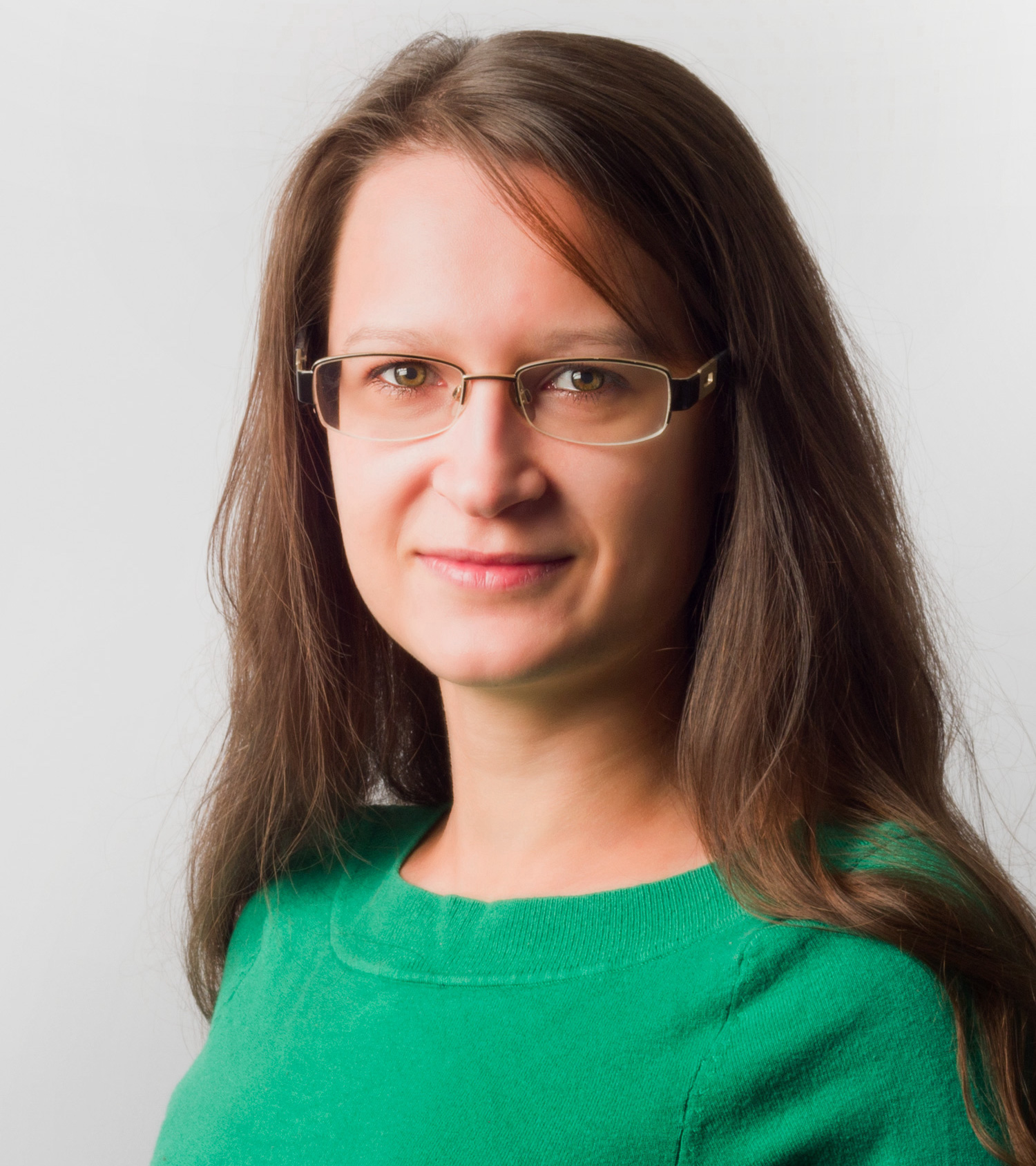
Hanne Kekkonen

Hanne Kekkonen

Born in Helsinki, Finland • Birth year 1987 • Studied Mathematics at University of Helsinki in Finland • Highest Degree PhD in Mathematics • Lives in Delft, Netherlands • Occupation Assistant Professor

I was definitely not one of those scientists who showed exceptional talent from a very young age. As a child I was filled with endless curiosity about everything, but sitting still in front of a desk was not one of my strongest skills. In fact, I was rather bad at school, often arriving late because I had found a frog or wandered off after a hedgehog. I did my very best to study for exams but this did not seem to translate to good grades. I kept trying and by the time I started secondary school I finally got the hang of it. I was warned that when you move from secondary school to high school, and later from high school to university, classes become more difficult but I never really experienced this because I had always had to study for the exams. I had also learned that if I couldn’t solve a problem it just meant that I had to try harder, not that the problem was too hard. I only realised later how lucky I was to have learned proper studying techniques already as a kid.

I like knowing that mathematics has many applications but I have always been mostly interested in the theoretical parts and loved the pureness of mathematics.

I never had anything against mathematics (other than mental arithmetic which I’m still very bad at) but I only really got interested in it at high school. At high school maths problems are like puzzles you have to solve using given rules and tricks. In university the emphasis changed and the weight was more on understanding where those rules and tricks come from and why they are true. I like knowing that mathematics has many applications but I have always been mostly interested in the theoretical parts and loved the pureness of mathematics. It is the only field where questions have indisputably correct answers and where the trueness of a statement can properly be proved.

I have to admit that I didn’t really think too much about what I would do after I got my Master’s degree. Throughout my studies I was told that there was a shortage of skilled mathematicians at the job market but there seemed to be a big gap between what I had learned at the university and what was needed in the real world. Thankfully, my Master’s degree advisor suggested that I should apply for one of the open PhD positions in the Inverse Problems group at the University of Helsinki, where I was doing my Master’s degree.

Starting the PhD was the biggest shock in my studies. Even though the exercises at university were much longer and more complicated than the ones at high school, they always had a clear answer, even if I couldn’t find it. But when I started to do research, I had to get used to the idea that no one knew the answers to many problems I encountered or even if they could be solved. Also, instead of following well-structured courses, where I usually had at least some idea on what was going on, I was now attending several seminars about topics I had hardly even heard of. I was feeling really uncertain about my skills and progress. I was told by several more senior members of my research group that they also used to feel like that and it would get better, but this was only somewhat reassuring. I think the key point they forgot to make was that you won’t stop feeling uncertain because one day you learn to understand all those talks, but because you just get used to the idea that there are so many research topics that you can’t possibly understand them all. 

I really like showing people how mathematics is so much more than just the arithmetic they learned to hate at school.

During my PhD I was part of a great research group with supporting advisors and I really enjoyed working at the university. I decided quite early on that I wanted to stay in academia and so after I finished my PhD I moved to the UK for a postdoc position, first in Warwick and then in Cambridge. As a postdoc I had to learn to work even more independently than as a PhD student and how to combat the ever-present imposter syndrome. I also started to do some outreach, giving talks to the general public and school students. I really like showing people how mathematics is so much more than just the arithmetic they learned to hate at school. Nowadays I work as an assistant professor at Delft University of Technology. My current job is a nice blend of research and teaching, and it also offers me possibilities to do outreach. I’m happy if seeing a woman mathematician, who is excited about the subject, makes some little girl consider a science career as a real possibility.

Published on March 31, 2021.

Posted by HMS in Stories
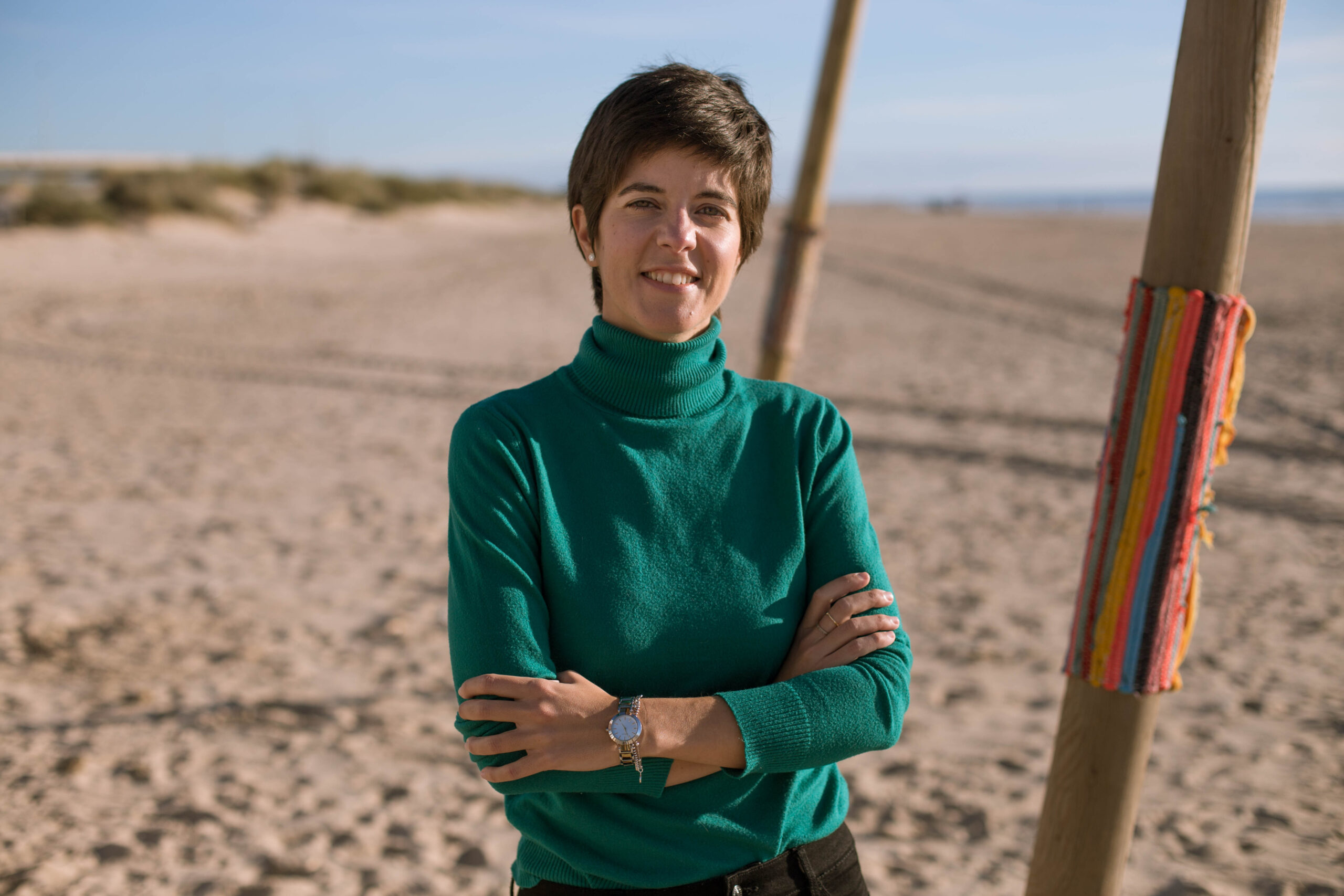
Carmen-Ana Domínguez Bravo

Carmen-Ana Domínguez Bravo

Born in Cádiz, Spain • Birth year 1987 • Studied Mathematics at University of Seville in Spain • Highest degree PhD in Mathematics • Lives in Cádiz, Spain • Occupation lecturer at the Department of Statistics and Operation Research, University of Cádiz

My relationship with mathematics began before I was even born. My father was a high school teacher and so was my grandmother. They both were very enthusiastic about maths and wanted to support our development of mathematical thinking. Despite this, I don’t remember adoring maths when I was a child. What I do remember though is loving books. I spent most of my childhood time reading books, from comics to mystery novels. I devoured every book, and I still do nowadays. As a child I was keen on writing my own stories, I even won a literary contest! But above all, I remember that I wanted to be a teacher. Being a teacher was kind of an obsession, that was enforced by members of my family inspiring my teaching vocation. In addition to my father and my grandmother being high school teachers, my mom was a history, art and geography teacher. My own teachers have always been very inspiring for me too. I have had the opportunity to enjoy a wide variety of excellent teachers that fed that vocation. I would say that I wanted to be a teacher since I was a child but I chose the subject to teach later on. 

Above all, I remember that I wanted to be a teacher. Being a teacher was kind of an obsession, that was enforced by members of my family inspiring my teaching vocation.

My sister and I were both good students before University, very good ones. We stood out in our classes even if we did not want to. I imagine that it was also due to the persistence of our parents by instilling good study habits and the passion for knowledge in us. My father was also very (very) insistent on strengthening our analytical thinking and we spent one hour every day of the week during summer vacation solving maths problems. I was not proud of myself. For instance, I wasn’t as good as my sister at doing quick calculations. Nevertheless, for some reason I chose to study mathematics. It might be because maths seemed difficult to me, or because I was influenced by my grandmother and father, or because I wasn’t good at memorising concepts and I thought that in mathematics memorising didn’t seem that important.

Once at the university, during the first year I discovered that mathematics was something totally different from the maths taught in high school. But I enjoyed that the classes were more theoretical and had less quick calculations! I started loving the theory more than the exercises. Every year, I was struggling with a different subject which I had to study during the summer to pass the exam. I felt frustrated, especially in the first year, but I also started to enjoy living in a different city and making new friends. I remember those years as a very special time in my life and I met professors who inspired me a lot.  

I had a very special female professor. Her way of teaching had a great impact on me. Her classes consisted not only of theory, but of open problems, computer practices and teamwork.

During my junior year (our fourth year), some friends and I decided to apply for an Erasmus and we finished our degree in Paris. At that time, I loved numerical calculus and I chose as many subjects in that field as I could. As a maths student, I remember that year as one of the best years ever. I had a very special female professor. Her way of teaching had a great impact on me. Her classes consisted not only of theory, but of open problems, computer practices and teamwork. At the end of that year I decided to continue studying maths and I started to look for PhD grants.

After several applications, I found a PhD position related to maths and solar energy. The research in this context was very applied, more related with cracking the code, developing and implementing algorithms and analysing results. Thanks to this opportunity I was able to study a wide range of algorithms, methods and programming languages, and I also met a lot of fantastic researchers. 

From that point on I knew that teaching, mathematics and coding were a perfect match for me. This is how my journey as a maths teacher and researcher started. This journey has obviously lights and shadows, but my decision remains the same. Nowadays, I am working as a lecturer at the University of Cádiz, where my family lives.  My passion for knowledge, teaching and maths is the same as once my father and my grandmother passed on to me, even though they passed away.

Published on January 20, 2021.

Posted by HMS in Stories
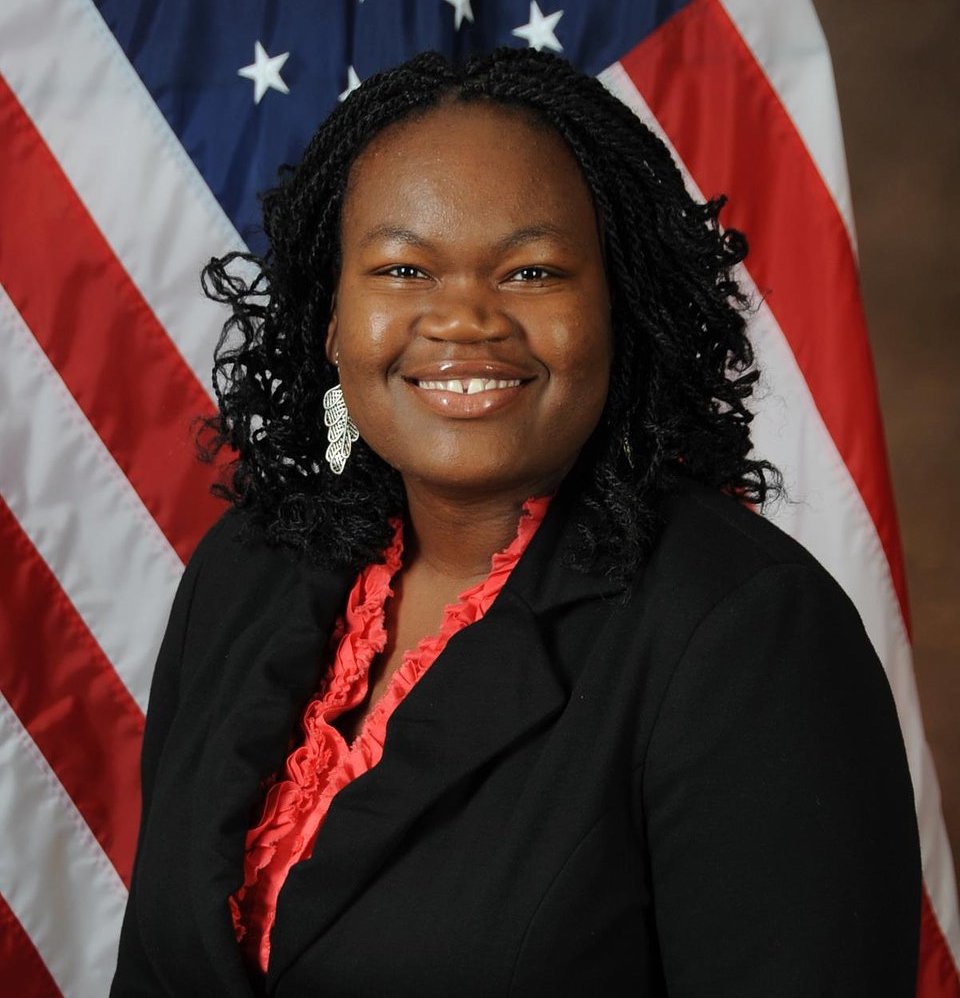
Kristina Thurmann

Kristina Thurmann

Born in Lippstadt, Germany • Birth year 1988 • Studied Mathematics in Münster, Germany • Highest degree M.Sc. in Applied Mathematics • Lives in Friedrichshafen, Germany • Occupation software developer (automotive sector)

I have always been fascinated by mathematics, to be precise by calculations and computations. My parents first noticed my interest in maths at the age of 5. We often played a game called Kniffel/Yahtzee where at the end all points had to be accumulated and that was my favourite part of the game. I just loved adding up all these numbers.

My interest got even stronger during high school: in the year book one of my descriptions by class mates was „i = √(-1)“. This expression summarised pretty well my time in high school. I adored mathematics and I never had any problems in studying and understanding the subject and its concepts. But then I decided to study mathematics in university and the problems began…

We motivated each other and I slowly started to love mathematics again especially the beauty of mathematical proofs.

In the beginning, I struggled a lot in how to study. I know that sounds weird but in school I never had to study to get good grades. In school we never proved any theorem, we just used all these formulas resulting from them. However, in university I learned why these formulas are correct. In the first years of studying mathematics, I learned the basics of analysis, linear algebra, stochastic, logics and numerical analysis. I failed a lot of these exams and at some point, somewhere around the fourth semester, I even thought about quitting and doing something else. Fortunately, at this point I realised that most maths students struggled with the same or similar problems. This common issue and uniting quest created a strong sense of community among the students and that was one of the best parts of studying mathematics for me. Everybody, even the professors, were very helpful and supportive and I never felt alone. We motivated each other and I slowly started to love mathematics again especially the beauty of mathematical proofs. At the beginning of the master studies, I attended courses in applied mathematics with practical applications in the field of biomedicine, e.g. image processing in MRI, PET and CT; in numerical analysis classes I learned to write code and implement algorithms. That was my first experience in coding but to be honest I was not expecting to be a software developer one day.

I also conducted job interviews and I have learned that it is not important what you did, it is important what you love and where you want to be in the future.

After finishing my master thesis, I did not have any clue about where to go or what to do, it was hard to find job advertisements where mathematicians are mentioned. So, I signed up in several job portals and got job offers as a software developer. First I started in a consulting and engineering company and gained work experiences as a developer and a project manager. I also conducted job interviews and I have learned that it is not important what you did, it is important what you love and where you want to be in the future.

At the moment, I am working for a company which is a worldwide supplier of driveline and chassis technology for cars. Specifically, I am responsible for shifting strategies. That means I am getting a so called “change request”. Within this change request I get a specification about the functional change of the software. For example, the customer (automotive manufacturer) wants the car to behave in a certain way, like shifting to second gear only when engine speed is above a defined threshold. My task then is to understand the request, to change the software/code, to test the new software and to document everything I did. Of course this is an easy example and the reality is much more complex but the complexity and the diversity of my job is what I like.

Looking back, I am so happy that I studied mathematics because it got me where I am right now. If I could tell my 20-year-old self a piece of advice: “Just do it, you will learn so much about yourself, about logical thinking. It is a long way, be patient with yourself, surround yourself with like-minded people, they will help you to stay on track and enjoy your time at university. Do whatever you like and makes you happy.”

Published on January 20, 2021.

Posted by HMS in Stories