Switzerland

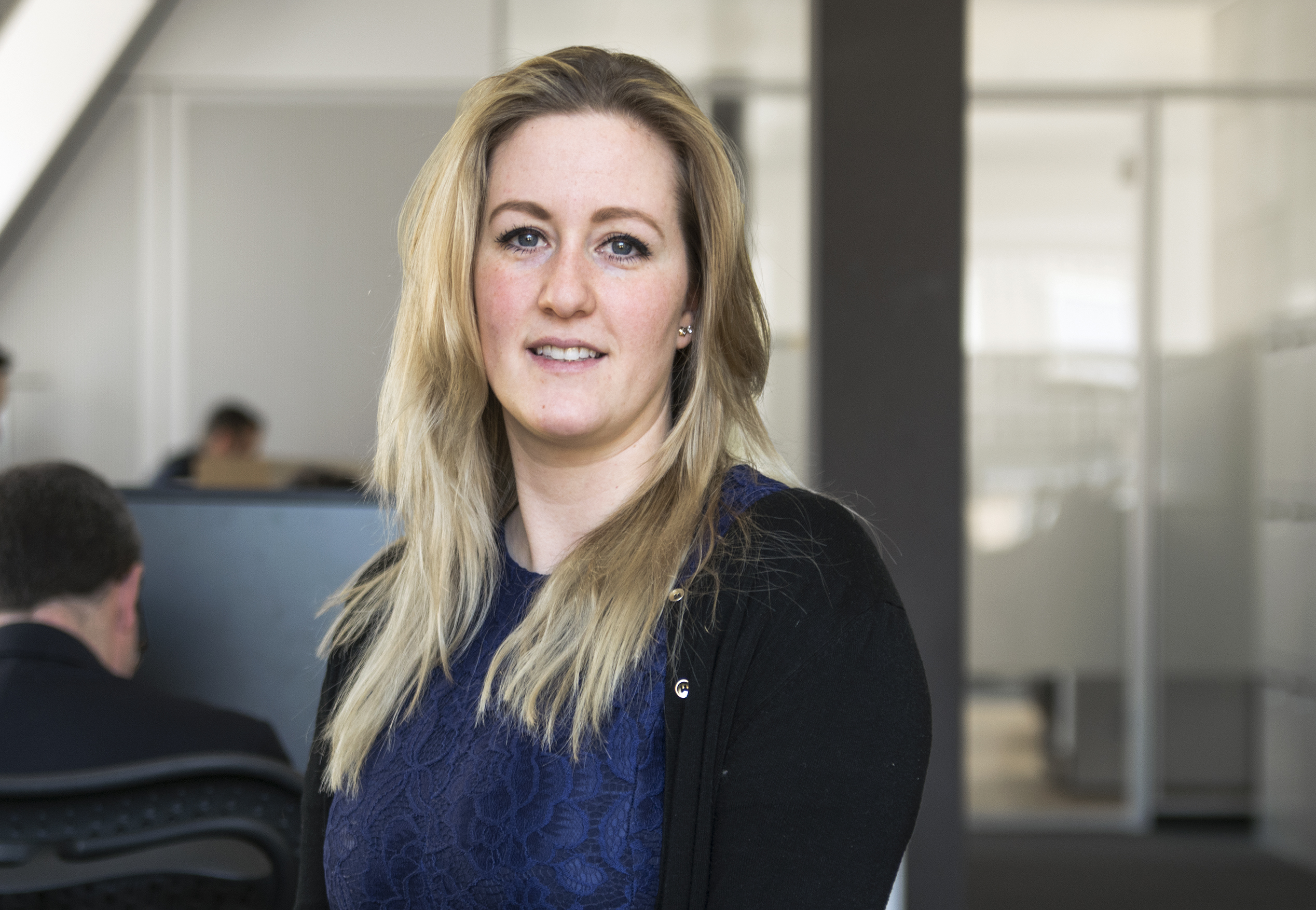
Mikaela Iacobelli

Mikaela Iacobelli

Born in Giulianova, Italy • Birth year 1987 • Studied Mathematics at Sapienza University of Rome, Italy • PhD in Mathematics from Sapienza University of Rome and École Polytechnique in Paris • Lives in Zürich, Switzerland • Associate Professor of Mathematics at ETH Zürich

I was born in a small town on the Adriatic coast, Giulianova (Italy), where I lived with my family until the end of high school. As a child I was very curious and I loved reading; at school I enjoyed many subjects, without feeling particularly drawn to mathematics. Outside school, however, my real passion was figure skating, and for years I was completely absorbed by sport.

During high school, while I was changing my mind many times about what I wanted to study at university (from humanities to engineering to medicine), I also had a bad injury that made me stop figure skating, and this forced me to think seriously about what I could do if I could no longer be an athlete. Around the same time, at the beginning of high school, I encountered my first proofs in Euclidean geometry, and the very concept of proof fascinated me immediately.

Then, in my last year of high school, a teacher lent me the books by Henri Poincaré on non-Euclidean geometry, and that was decisive for me, because it made mathematics feel much larger than the standard school programme; it showed me that one can develop concepts with strong internal coherence and genuine beauty even when they are not tied to something directly visible, and study them for their own sake, not because of immediate utility.

(…) I became truly passionate about algebra, especially representation theory, because I was attracted by the beauty of symmetry and by the feeling that, once you find the right structure, complicated objects become understandable

Long story made short, I moved to Rome and started a Bachelor in Mathematics at Sapienza University, and it is there that I became truly passionate about algebra, especially representation theory, because I was attracted by the beauty of symmetry and by the feeling that, once you find the right structure, complicated objects become understandable. During my Bachelor and Master I specialised in algebra, although at the same time I was also fascinated by mathematical physics, which remained, for a while, a parallel interest rather than my main direction.

Towards the end of my Master, I decided to apply for a PhD in a different area, namely kinetic theory and PDEs, and in November 2012 I started a joint PhD between Sapienza University of Rome and École Polytechnique (Paris). Since I had to adapt quickly, both mathematically and personally, I remember that period as intense: you learn new tools, you learn a new language, and you also live with the constant uncertainty that comes with academic transitions, where the next step is never fully guaranteed.

(…) what I like in [Vlasov-Poisson] questions is the interaction between several scales: you start from a microscopic description (many particles), and you try to understand what kind of macroscopic behaviour can emerge, and why

The PhD became even more demanding because I changed topic between the first and the second year, which meant that I started the thesis “for real” only in autumn 2013, while I defended in December 2015. In spite of the stress, I was also lucky, because I ended up working on problems that genuinely interested me, such as quantization of measures and, later, quasineutral limits for the Vlasov-Poisson equation. Even if the technical details are not the point of this story, what I like in these questions is the interaction between several scales: you start from a microscopic description (many particles), and you try to understand what kind of macroscopic behaviour can emerge, and why.

After the PhD my path continued through several moves, and the places I studied and worked in have shaped me in very concrete ways: Paris during the PhD, then Cambridge, then Durham, and finally Zürich, where I am now based at ETH. Before each move there is the application phase, with deadlines and interviews, and with the need to accept that sometimes things simply do not work out; in that period you often do not know in which country, city, or department you will end up next. Then, once you move, the relocation itself is a restart: you build a new routine, you make new friendships, you try to integrate into a new department, and you adjust to a different academic culture. At the same time, I have very fond memories of all the departments where I have worked, and I have kept meaningful contacts in each of those places.

In mathematics, being wrong is normal, because it is part of the creative process, and it is often the only way to understand what is really going on

At times, I also experienced environments that were highly competitive and not particularly welcoming, and, as a woman, I sometimes had the feeling that belonging was conditional; over time I learned not to use that atmosphere as a measure of my value, and to focus instead on good mathematics and collaboration.

Over the years I have also learned something very simple, which I now repeat often to students: in mathematics, being wrong is normal, because it is part of the creative process, and it is often the only way to understand what is really going on. For the same reason, I do not think that speed is a good proxy for depth. What matters more, at least for me, is steady work, genuine curiosity, and the habit of writing and explaining with care, trying to make the argument readable rather than to impress.

(…) I care a lot about creating an atmosphere where asking questions feels natural rather than embarrassing

What I love most about my job is teaching and, more broadly, supporting students and postdocs in their path. I enjoy the moment in which something difficult becomes understandable, and I care a lot about creating an atmosphere where asking questions feels natural rather than embarrassing. When students write to me again after years to tell me about their next steps and their achievements, I feel genuinely fulfilled.

Alongside teaching and mentoring, I also like the research side in a very concrete way: choosing a problem and trying to understand it seriously, reading beautiful mathematics done by others, and writing with care in a way that I would still be happy to read myself a year later. I also enjoy moving between topics and borrowing techniques from different areas, because this often helps me look at a familiar question from a new angle.

Looking back, my path has not been linear, and I changed direction more than once; however, what has stayed constant is curiosity, even when the topics and the places were changing. This is also what I like most about mathematics: there is room for many different trajectories, as long as you keep following questions that genuinely interest you.

Published on February 25, 2026.

Photo credit: Giulia Marthaler Fotografie on behalf of ETH
Posted by HMS in Stories
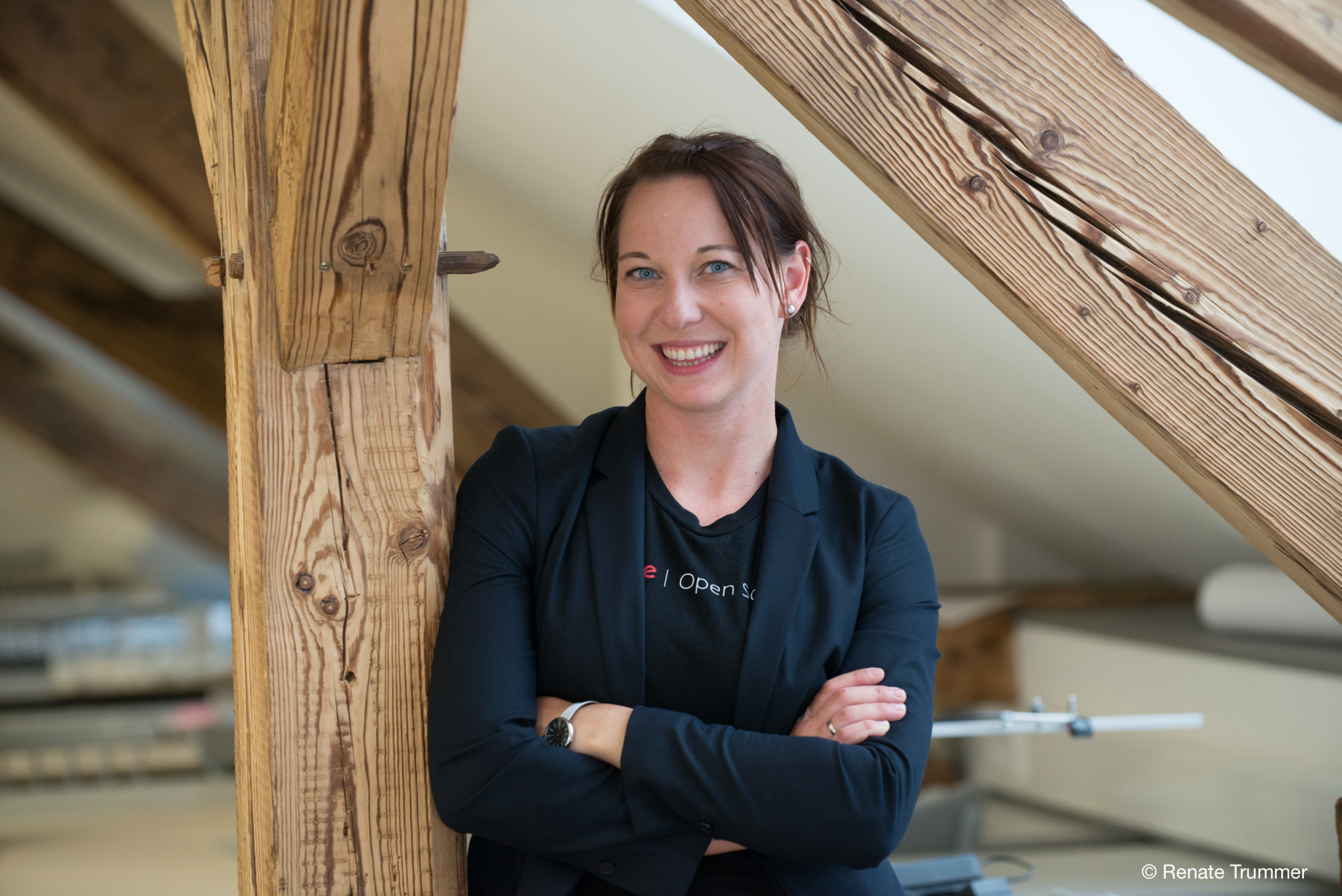
Bernadette Spieler

Bernadette Spieler

Born in Deutschlandsberg, Austria • Birth year 1988 • Studied Information Management and eHealth at Graz University of Applied Science in Graz, Austria • Highest Degree PhD in Engineering Sciences from Graz University of Technology in Graz, Austria • Lives in Zurich, Switzerland • Occupation Professor in Computing Skills in Education, Zurich University of Teacher Education, Switzerland

Since February 2021, I have been at the Zurich University of Teacher Education (PHZH, Switzerland) as a professor for “Computing Skills in Education”. This professorship is located at two centres: the Centre for “Media Education and Informatics” and the Centre for “Education and Digital Transformation.” Previously, I was the Head of the Department of Informatics Didactics and a visiting professor (W2) at the Institute for Mathematics and Applied Informatics at the University of Hildesheim (Germany). I received my PhD in 2018 from the Institute of Software Technology at Graz University of Technology (TU Graz, Austria). At TU Graz, I worked first as a project assistant in the H2020 project “No One Left Behind“, and later as a postdoctoral researcher. I completed my dissertation on the topic “Development and Evaluation of Concepts and Tools to Reinforce Gender Equality by Engaging Female Teenagers in Coding”. For my thesis, I focused on the conception of a framework for a more gender equal classroom setting for inclusive computer science activities. This so-called “Playing, Engagement, Creativity, Creating” (PECC) framework suggests inclusive activities during different stages, considers the gender dimension in different intrinsic and extrinsic motivators, and shows how all students can benefit equally from them. It puts an emphasis on how to foster intrinsic motivators like pupils’ sense of belonging to computing fields, to generate interest for this area, to improve pupils’ self-efficiency towards computing, and finally, to bring fun elements to the classroom. Second, I developed different apps to engage girls in game design, e.g., “Luna&Cat” and Embroidery Designer.

(…) The focus in education is changing; it is less about imparting knowledge and more about enabling competence acquisition that is independent, reflective, and cooperative.

With its multitude of facets, computer science (CS) offers many exciting topics for children and young people. Girls in particular often do not have the opportunity to take an interest in such topics, or are quickly depreciated as a target group. For future generations, it is crucial not merely to use these technologies, but to understand and apply them. At the same time, the focus in education is changing; it is less about imparting knowledge and more about enabling competence acquisition that is independent, reflective, and cooperative. Education in a culture of digitality ensures the participation of all learners with their different prerequisites and equal opportunities. This requires the promotion of digital competences in a level-appropriate delivery (from school to teacher education to vocational training).

At the PHZH, I have the opportunity to reach teachers as multipliers in training and education. Various concepts such as game design, Maker-Education, or playful CS with quizzes and analogue activities enhance both inspiration and motivation. Furthermore, it is essential to dispel misconceptions that computer science is “not creative” or “too difficult”. Playing and creating games on smartphones are both popular activities for the new generation of digital natives, and therefore are a perfect match for the development of creativity, problem solving, logical thinking, system design, and collaboration skills. Particularly in my current project “Making at School“, we show exciting possibilities for interdisciplinary project work in various Maker activities. Making as a method for free experimentation, exploration, or (digital) tinkering enables new learning formats for education. Thus, Making facilitates open learning spaces with problem-solving tasks, interdisciplinary connections, and transversal competencies. For instance, technical understanding, creativity, craft skills, or concepts of sustainability and entrepreneurship are promoted.

In order to significantly influence future developments in CS didactics, I am involved in various expert groups. For example, as a product owner in the Catrobat Association, I am responsible for the development of apps to support children and young people in learning programming, as a member of the Swiss steering committee of the Informatics Beaver team, we create informatics riddles for the annual Bebras competition, as a member of the steering committee of digital switzerland (education and skilled workforce), we support the next generation of STEM students, and finally, I am a member of the working group for the curriculum development for informatics at the high school/secondary level.

The number of women in [computer science] is still very low, but there are promising ways to encourage and support more women to be deeply interested in [computer science] (…).

In my research, I address the aforementioned issues of equal opportunities in education, and highlight the importance of CS didactics within the context of education. Thereby my aim in this is to ensure greater diversity in technology. In my research, it is particularly important to empirically verify a positive effect on pupils. The extracurricular level should not be underestimated either. Since I have been offering courses specifically for girls in game design and programming for years, it was always a great wish to establish our own programming club in Zurich. With the help of the Manava-Foundation, we were able to realise our idea in March 2022 and proceeded to found the CoetryLab. From Summer 2022, we offer informatics and media courses for children and young people aged 10-20. This is intended to effectively support children in these subjects precisely where their needs are greatest.

By researching new concepts and standards in the field of gender-sensitive CS education and training, I hope to seek out and implement improvements in CS curricula, different CS-topics and to support girls and female adolescents in particular to gain CS skills. The number of women in CS is still very low, but there are promising ways to encourage and support more women to be deeply interested in CS and I am confident that gender-conscious pedagogy, especially in areas of CS education, is particularly useful and necessary!

Published on October 19, 2022.

Posted by HMS in Stories
Patricia Egger

Patricia Egger

Born in Zurich, Switzerland • Birth year 1990• Studied Mathematics at EPFL in Lausanne, Switzerland • Highest degree Master’s in Applied Mathematics • Lives in Lausanne, Switzerland Occupation Information Security Officer

I would love to say that my decision to study math was well thought out, but the truth is it really wasn’t.

At the end of high school, I knew I wanted to study a scientific subject at university and set my sight on chemistry. I think I was attracted to the experiments with cool colors, incredibly fast temperature changes and the idea of learning how to create little explosions. However, about 2 months before the first day of university, I changed my mind and signed up to the math department instead. I’m still not sure I know why I changed my mind; I had done well in high school but had no long-term plan or idea of what kind of math I wanted to do or even what type of job I might be interested in. In any case, it seemed like a good idea at the time.

My first year in math was a wake-up call; high school did not prepare me for mathematical reasoning. But I kept studying hard and after the first year and many hours spent in the library, it clicked. I felt like there was no class I couldn’t ace (with enough effort, of course). From there on, it was relatively smooth sailing until I graduated with my Master’s degree a few years later.

I looked for inspiration in the news; who doesn’t want to be working on a topic that gets regular media coverage?

It was at that point that my lack of long-term thinking caught up with me. In fact, as much as I enjoyed studying math, I couldn’t seem to find a math-related job that tickled my fancy. Instead of taking a job that I didn’t want, I decided to look for an entirely different field and career path where my math skills could be used indirectly. I looked for inspiration in the news; who doesn’t want to be working on a topic that gets regular media coverage? Similarly to today, cybersecurity, particularly cyber incidents, came up often. That’s when I remembered a basic cryptography class I had taken in middle school and that I thoroughly enjoyed. Because cryptography is essentially math, it seemed like it would be my opportunity to shift into cybersecurity. So I went back to university for a semester to take all the security-related courses I could. 

Fast forward a few years and I now work as an information security officer. In my current role, my main goal is to manage cybersecurity risks: understand what might go wrong and how, and ensure we are allocating appropriate resources accordingly. As these risks are present throughout any organization, I interact with many different people on a regular basis, be they developers, lawyers or Top Management.

In fact, I have been very fortunate to meet amazing women and men along the way from who I’ve learned a lot, but I most definitely would not be where I am now if I had tried to base my career on theirs.

Although I don’t use much of my math background in my daily work today, it allowed me to get to where I am today and I don’t regret any of it. On the contrary, I believe my studies gave me some great transferable skills and the confidence to navigate all of the changes and decisions I made along the way.

Although many people influenced and supported me throughout this process, I’m glad I never took anyone’s opinion more seriously than I did my own. In fact, I have been very fortunate to meet amazing women and men along the way from whom I’ve learned a lot, but I most definitely would not be where I am now if I had tried to base my career on theirs.

Published on March 17, 2021.

Posted by HMS in Stories