HMS

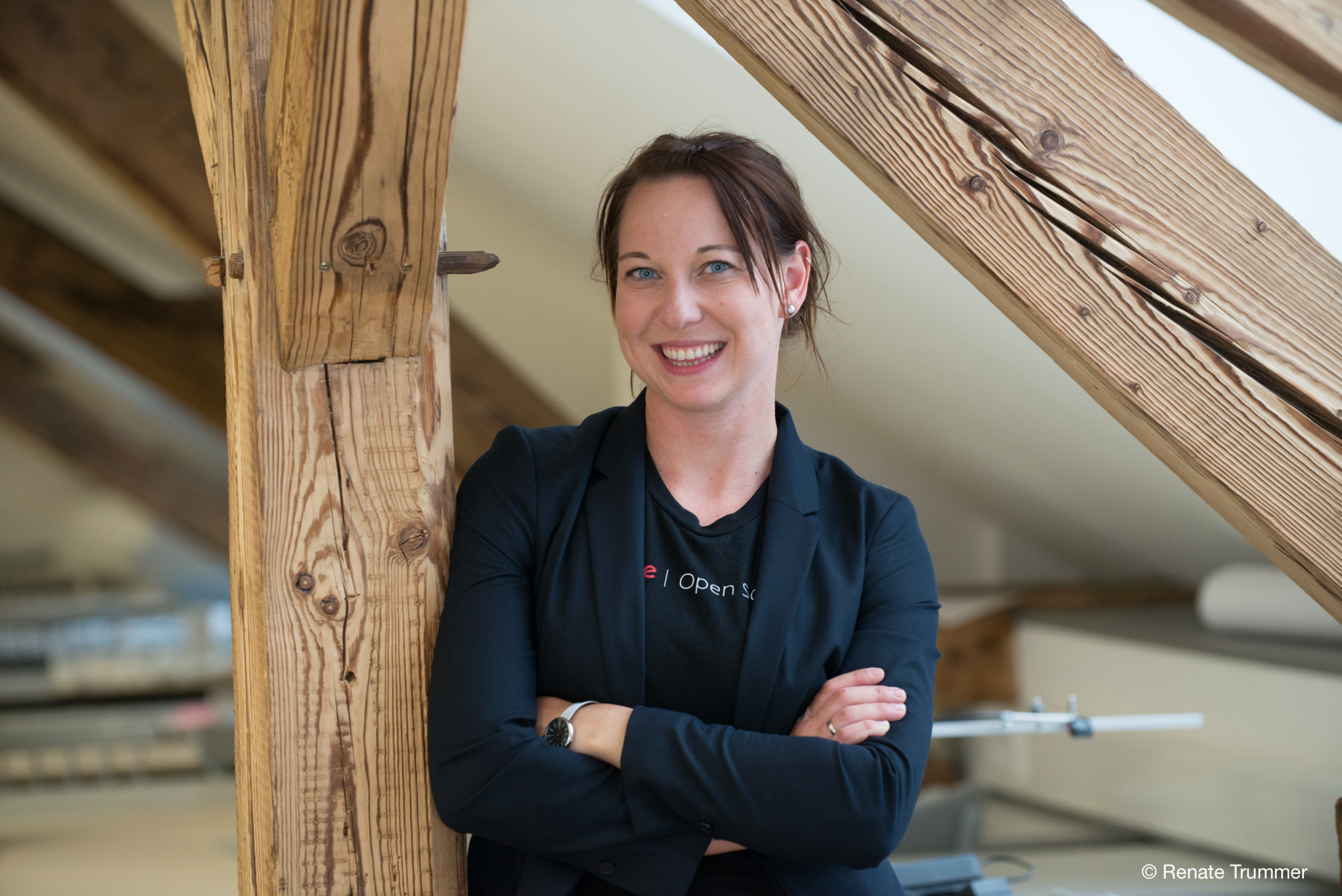
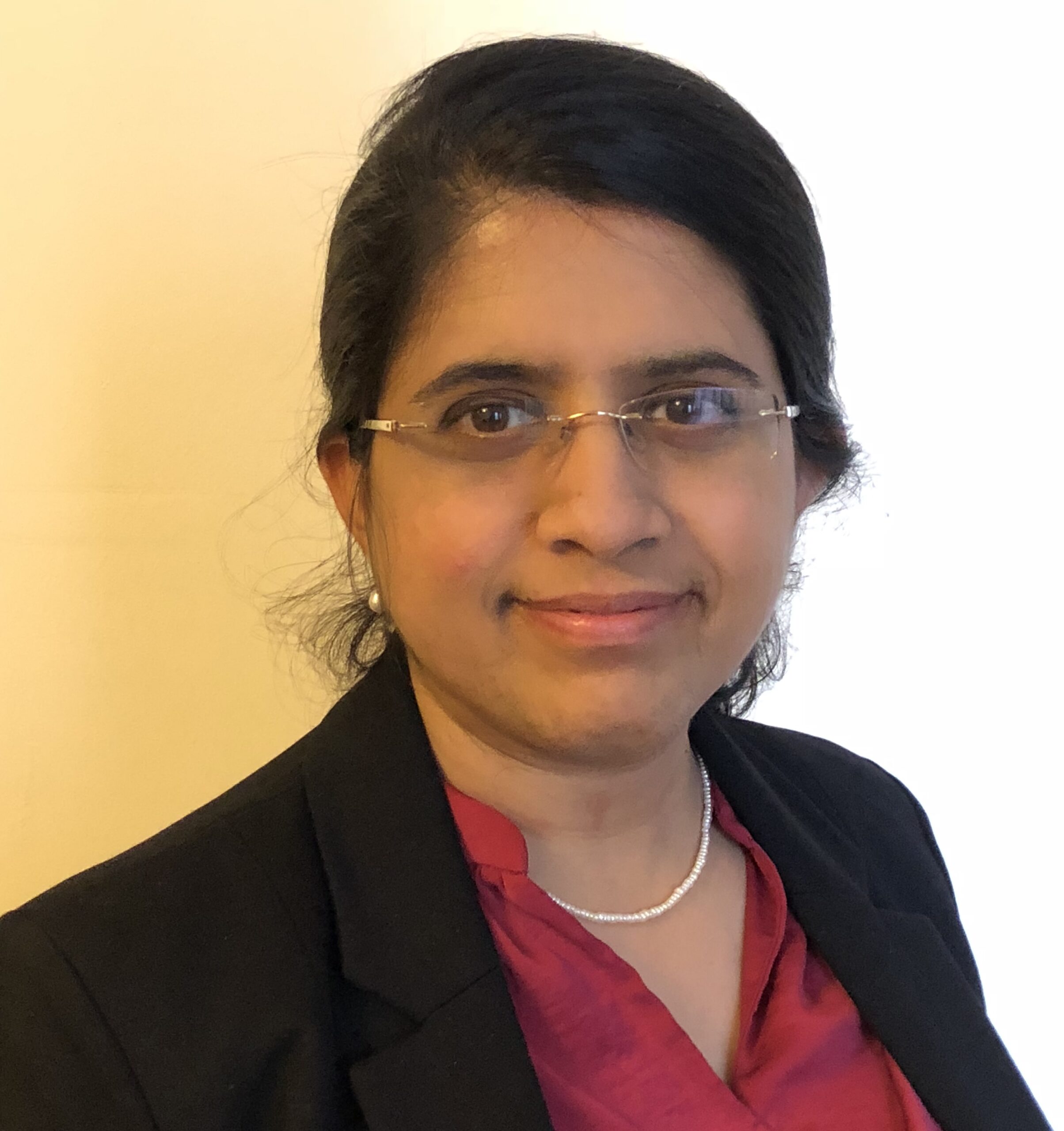
Bernadette Spieler

Bernadette Spieler

Born in Deutschlandsberg, Austria • Birth year 1988 • Studied Information Management and eHealth at Graz University of Applied Science in Graz, Austria • Highest Degree PhD in Engineering Sciences from Graz University of Technology in Graz, Austria • Lives in Zurich, Switzerland • Occupation Professor in Computing Skills in Education, Zurich University of Teacher Education, Switzerland

Since February 2021, I have been at the Zurich University of Teacher Education (PHZH, Switzerland) as a professor for “Computing Skills in Education”. This professorship is located at two centres: the Centre for “Media Education and Informatics” and the Centre for “Education and Digital Transformation.” Previously, I was the Head of the Department of Informatics Didactics and a visiting professor (W2) at the Institute for Mathematics and Applied Informatics at the University of Hildesheim (Germany). I received my PhD in 2018 from the Institute of Software Technology at Graz University of Technology (TU Graz, Austria). At TU Graz, I worked first as a project assistant in the H2020 project “No One Left Behind“, and later as a postdoctoral researcher. I completed my dissertation on the topic “Development and Evaluation of Concepts and Tools to Reinforce Gender Equality by Engaging Female Teenagers in Coding”. For my thesis, I focused on the conception of a framework for a more gender equal classroom setting for inclusive computer science activities. This so-called “Playing, Engagement, Creativity, Creating” (PECC) framework suggests inclusive activities during different stages, considers the gender dimension in different intrinsic and extrinsic motivators, and shows how all students can benefit equally from them. It puts an emphasis on how to foster intrinsic motivators like pupils’ sense of belonging to computing fields, to generate interest for this area, to improve pupils’ self-efficiency towards computing, and finally, to bring fun elements to the classroom. Second, I developed different apps to engage girls in game design, e.g., “Luna&Cat” and Embroidery Designer.

(…) The focus in education is changing; it is less about imparting knowledge and more about enabling competence acquisition that is independent, reflective, and cooperative.

With its multitude of facets, computer science (CS) offers many exciting topics for children and young people. Girls in particular often do not have the opportunity to take an interest in such topics, or are quickly depreciated as a target group. For future generations, it is crucial not merely to use these technologies, but to understand and apply them. At the same time, the focus in education is changing; it is less about imparting knowledge and more about enabling competence acquisition that is independent, reflective, and cooperative. Education in a culture of digitality ensures the participation of all learners with their different prerequisites and equal opportunities. This requires the promotion of digital competences in a level-appropriate delivery (from school to teacher education to vocational training).

At the PHZH, I have the opportunity to reach teachers as multipliers in training and education. Various concepts such as game design, Maker-Education, or playful CS with quizzes and analogue activities enhance both inspiration and motivation. Furthermore, it is essential to dispel misconceptions that computer science is “not creative” or “too difficult”. Playing and creating games on smartphones are both popular activities for the new generation of digital natives, and therefore are a perfect match for the development of creativity, problem solving, logical thinking, system design, and collaboration skills. Particularly in my current project “Making at School“, we show exciting possibilities for interdisciplinary project work in various Maker activities. Making as a method for free experimentation, exploration, or (digital) tinkering enables new learning formats for education. Thus, Making facilitates open learning spaces with problem-solving tasks, interdisciplinary connections, and transversal competencies. For instance, technical understanding, creativity, craft skills, or concepts of sustainability and entrepreneurship are promoted.

In order to significantly influence future developments in CS didactics, I am involved in various expert groups. For example, as a product owner in the Catrobat Association, I am responsible for the development of apps to support children and young people in learning programming, as a member of the Swiss steering committee of the Informatics Beaver team, we create informatics riddles for the annual Bebras competition, as a member of the steering committee of digital switzerland (education and skilled workforce), we support the next generation of STEM students, and finally, I am a member of the working group for the curriculum development for informatics at the high school/secondary level.

The number of women in [computer science] is still very low, but there are promising ways to encourage and support more women to be deeply interested in [computer science] (…).

In my research, I address the aforementioned issues of equal opportunities in education, and highlight the importance of CS didactics within the context of education. Thereby my aim in this is to ensure greater diversity in technology. In my research, it is particularly important to empirically verify a positive effect on pupils. The extracurricular level should not be underestimated either. Since I have been offering courses specifically for girls in game design and programming for years, it was always a great wish to establish our own programming club in Zurich. With the help of the Manava-Foundation, we were able to realise our idea in March 2022 and proceeded to found the CoetryLab. From Summer 2022, we offer informatics and media courses for children and young people aged 10-20. This is intended to effectively support children in these subjects precisely where their needs are greatest.

By researching new concepts and standards in the field of gender-sensitive CS education and training, I hope to seek out and implement improvements in CS curricula, different CS-topics and to support girls and female adolescents in particular to gain CS skills. The number of women in CS is still very low, but there are promising ways to encourage and support more women to be deeply interested in CS and I am confident that gender-conscious pedagogy, especially in areas of CS education, is particularly useful and necessary!

Published on October 19, 2022.

Posted by HMS in Stories
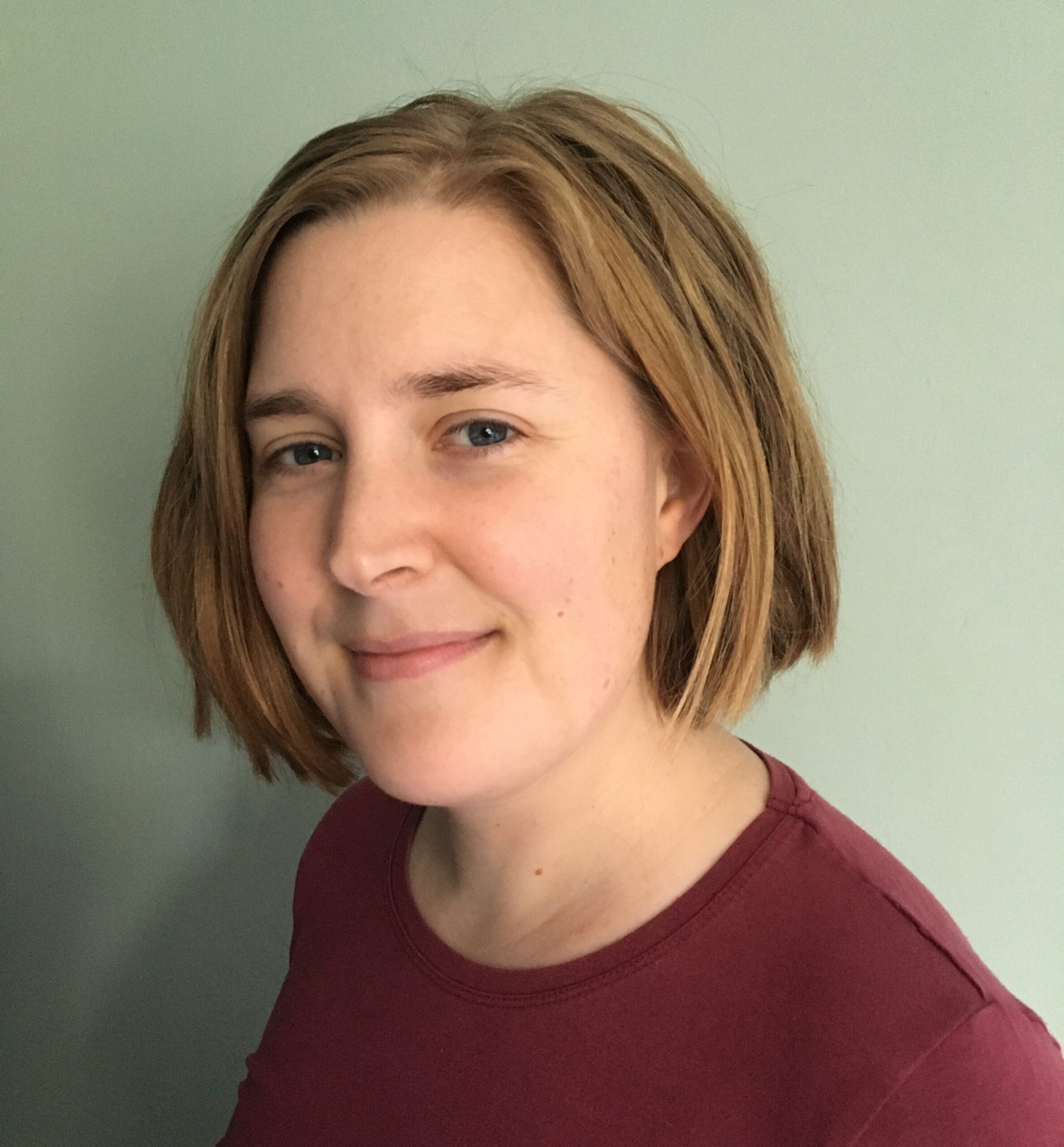
Amanda Minter

Amanda Minter

Born in UK • Studied Mathematics at Lancaster University in Lancaster, UK • Highest Degree PhD in Infectious Disease Modelling • Lives in UK • Occupation Director of Equations of Disease C.I.C.

Growing up, universities were always a bit of a mystery to me, my parents didn’t go to university. But I was encouraged by my parents and schoolteachers that going to university would be the path for me. I thought that going to university and studying would help me change the world for the better. I enjoyed maths from a young age, it was a subject which came naturally to me. I found the lessons easy, but then at university, studying maths, I struggled.

Whether it was the format of lectures or the more abstract topics, the subject I loved didn’t come naturally anymore. I worried that I had reached my limit in my understanding of mathematics. After a few disappointing grades, I knew something would have to change if I was going to get a good degree. I had to do something different – I had to learn differently. 

I knew with enough time I could figure out most things – or know when it was taking me too long and I should ask for help!

I wasn’t used to having to put effort into learning maths, but now I would attend classes, then practice, read several books, find examples online, until I understood the concept. In those years at university, I learnt how to learn. And it paid off, not just at university, but further down the line as well.

I stayed at my university to do an MSc in Statistics. Although I loved group theory, I wanted to work on something more applied.  Following my MSc, I started a PhD in infectious disease modelling. Studying for a PhD was all about learning new things, and now I had learned how to learn. I knew with enough time I could figure out most things – or know when it was taking me too long and I should ask for help!

In universities I had been aware of being a first-generation university goer and of not having been to private school, and also of being White.

After my PhD, I stayed at university to do research applying mathematics to the problems of global health, but I found myself becoming disillusioned with academia. As a postdoctoral researcher I worked on some amazing mathematical problems and with some great scientists modelling infectious diseases. But I found myself reflecting on my place in global health research. In universities I had been aware of being a first-generation university goer and of not having been to private school, and also of being White. But I never really thought about what it meant to be White, British, and working in global health. 

My definition of success has changed a lot from starting at university and wanting to change the world with maths.

I was motivated to work in infectious disease modelling to use maths for good, but in my role as a postdoctoral researcher I felt I was not helping to support the decolonisation of global health. I decided to leave academia to set up the social enterprise I run now. I aim to create accessible training opportunities for learners in the Global South.

My definition of success has changed a lot from starting at university and wanting to change the world with maths. And to the aspiring mathematicians, the struggling ‘not a mathematicians’: know that the path to success is not linear, or even constant, but something which keeps changing the more you learn.

Published on October 5, 2022.

Posted by HMS in Stories
Nancy Reid

Nancy Reid

Born in Niagara Falls, Canada • Birth year 1952 Studied Statistics at the University of Waterloo in Waterloo, Canada • Highest Degree PhD in Statistics • Lives in Toronto, Canada • Occupation Professor, Department of Statistical Sciences, University of Toronto

As a professor my days are busy with teaching, research, and committee meetings. I enjoy all three, but my research time is special, as that’s when I get to do whatever interests me the most at the time, and there is always more to discover. Currently I’m working on some mathematical problems related to the theory of inference, and a colleague and I have been working with some astronomers to help analyse their data.

The research environment at Stanford was so exciting that I became completely hooked, and have made my entire career in academia.

I majored in mathematics as an undergraduate, but my plan was to specialize in computer science, as that was rumoured to be “the future” (in 1970). I did some programming, and realized I had no talent for that at all, but I really enjoyed the statistics courses. That was my first glimpse of using mathematical and statistical ideas for advances in science, medicine, health, social science, you name it!, and I found that fascinating. I was quite unsure about graduate work, so I went to the University of British Columbia for an MSc degree, and then I thought I would look for a ‘real job’. But that degree required a research thesis, and I got hooked on research. I had great advisors at UBC who steered me to Stanford for graduate work. Without their encouragement I’m sure I would not have had the courage to consider this. The research environment at Stanford was so exciting that I became completely hooked, and have made my entire career in academia.

So even if I was the only woman on seven hiring committees in a row, when I went to an international conference, or a small workshop,  I would go to women’s talks, introduce myself to women in groups, and seek out “my people”.

At many times in my career, I was often the only woman in the room and it was sometimes lonely. I got used to it, because there didn’t seem to be many options, but it’s not as nice as having more women in the room. Something that helped me was to make sure to seek out women when I had opportunities, for example at conferences. So even if I was the only woman on seven hiring committees in a row, when I went to an international conference, or a small workshop,  I would go to women’s talks, introduce myself to women in groups, and seek out “my people”. I made some great friends along the way. As I got older, and felt the situation was changing only very slowly, I became more outspoken about the lack of diversity.

The biggest shock to the system though was having children. I was already full professor and relatively old when my first (of two) daughters was born, and even with great support from my partner, and a well-established career, it was a challenge.

I was very fortunate to have very helpful mentors at every stage in my career, for which I am still grateful. I’ve tried to “pay it forward” by being encouraging to students and young faculty. While I never felt actively discriminated against at all, I did notice at some point fairly far along in my career that men were actually listening to me in meetings, and I was so surprised that I deduced this was rarely the case when I was younger. The biggest shock to the system though was having children. I was already full professor and relatively old when my first (of two) daughters was born, and even with great support from my partner, and a well-established career, it was a challenge. When younger colleagues starting families ask me for advice, I always say “Accept as much help as you are offered, and buy as much help as you can afford”.

Published on September 7, 2022.

Posted by HMS in Stories
Pêdra Andrade

Pêdra Andrade

Born in Pedrinhas – Sergipe, Brazil • Birth year 1989 Studied BSc in Mathematics at the Federal University of Sergipe (UFS) in Aracaju, Brazil • Highest Degree PhD in Mathematics at Pontifical Catholic of Rio de Janeiro (PUC-Rio) • Lives in Lisbon, Portugal • Occupation Postdoctoral researcher at IST – University of Lisbon

I decided I wanted to be a math teacher when I was eleven years old. It’s funny to remember that at such a young age, I already knew what I wanted to do with my life. I always had one of my biggest inspirations at home, my mom was a high school teacher and she loves math. I also enjoyed studying math and its accuracy always enchanted me.

Another of my goals was to study math at the Federal University of Sergipe (UFS), the only public university in Sergipe. This was one of the first challenges that I had on this journey. I studied hard to get into university. Fortunately, I got into UFS.

At the beginning of College, everything was amazing, I was living the dream. Even though I had many difficulties with the adaptation process to the university, the new city, and also living far from home, I had the courage and perseverance to tackle each of them. I believe that dealing with our inner selves is one of the biggest challenges we face when studying mathematics. Staying motivated and confident is hard work. This field of science is very beautiful but at the same time very difficult. During this time, I had the pleasure to interact with great professors who inspired me to continue studying mathematics. I’ve always been delighted by the mathematical concepts and the arguments that we use to produce the  beautiful math demonstrations.

Staying motivated and confident is hard work. This field of science is very beautiful but at the same time very difficult.

At this point, I decided to get my Master’s degree in mathematics. At that time, I had no idea what being a researcher was like. Different from my Bachelor’s, I was the only woman in the class. I started to feel like I didn’t belong in that space. I no longer felt comfortable talking and exchanging ideas with my colleagues; it was impossible not to compare myself with the others and I tried to fit in.

Even though I had many difficulties, I got  my Master’s degree. I survived and thanks to my desire to never give up I started my Ph.D. in math at PUC – Rio. As I studied commutative algebra during my Master’s degree, my first thought was to continue studying this subject, but there was no specialist Professor at the time at PUC – Rio. Looking back, I think this was a good thing, as it opened up so many possibilities. Trying to find myself I attended a seminar that focused on partial differential equations (PDEs) with algebra ingredients. I always had this enchantment in studying subjects at the intersection of many fields. I was very glad to see these connections as an example of the magnitude of the study of PDEs and their applications.

Trying to find myself I attended a seminar that focused on partial differential equations (PDEs) with algebra ingredients. I always had this enchantment in studying subjects at the intersection of many fields.

During my doctorate I had the opportunity to attend many scientific events including gender initiatives, give presentations, and I also had the opportunity to study at the University of Central Florida as a Visiting Fellow. After completing my Ph.D., I visited the Centro de Investigación en Matemáticas (CIMAT) in Mexico and held a postdoctoral position at São Paulo University, São Carlos in Brazil. These experiences contributed significantly to my research career, because I learned so much mathematics, but also I got some independence and learned a little bit about how a researcher’s career works. I am extremely grateful for the many special people who supported me throughout this journey.

It is worth mentioning that one of the biggest difficulties I deal with during my journey is the feeling that I have to be strong all the time. I’m not supposed to make mistakes and I do have to know the answers to every question. Nevertheless, the challenges inspire me and arise my curiosity. This is the feeling that moves me to overcome the difficulties that appear to me as a mathematician, such as learning new PDE methods or gender issues. For me, the scientific and human exchange is one of the greatest gifts the profession has given me. 

My research area concerns the study of regularity theory, the existence and the uniqueness of the solutions to elliptic and parabolic equations. Currently, I am a postdoctoral researcher at Instituto Superior Técnico (IST) – University of Lisbon and I am very excited to write this new chapter of my career as a woman in science.

Published on July 20, 2022.

Posted by HMS in Stories
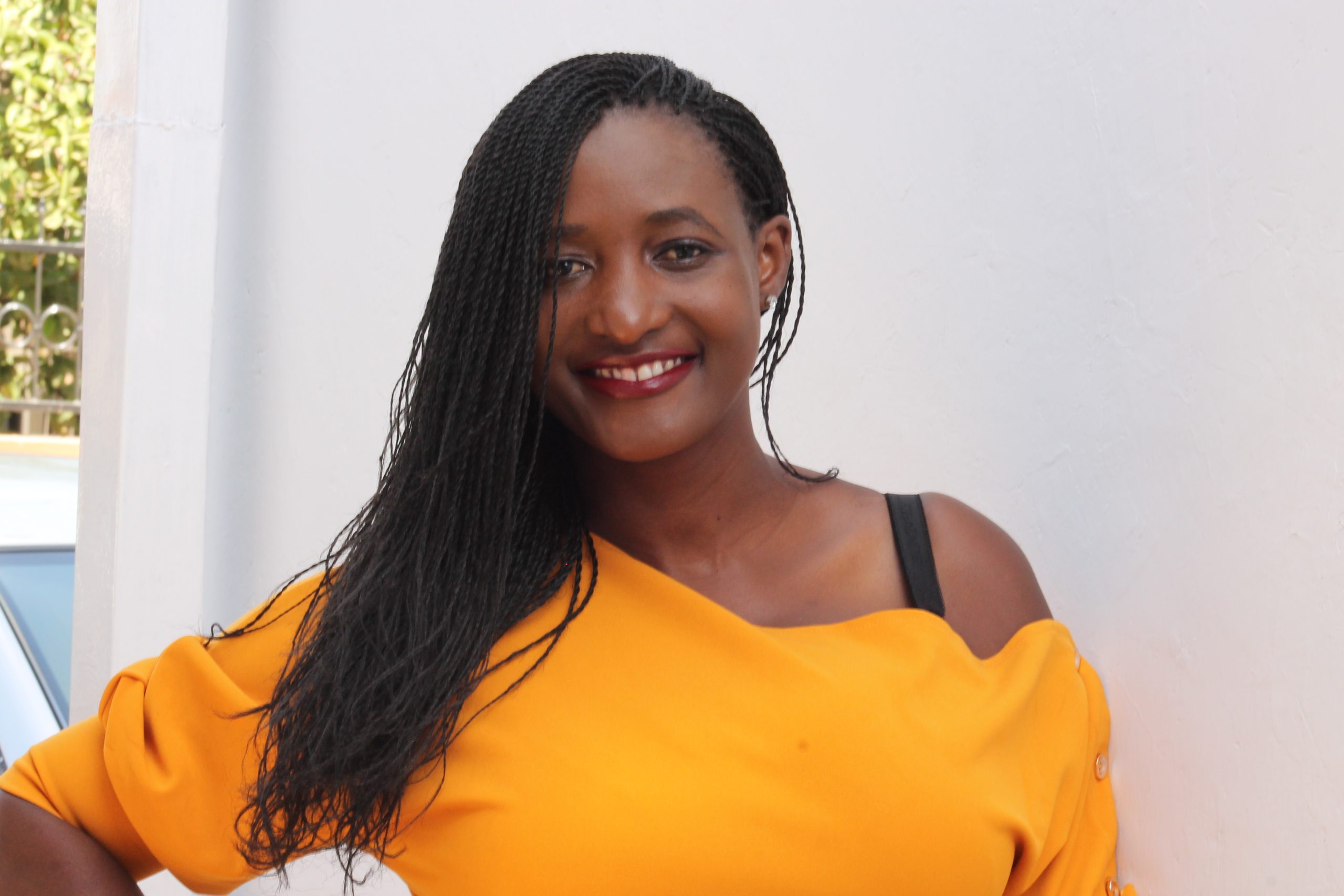
Maurine Atieno Songa

Maurine Atieno Songa

Born in Kenya • Birth year 1986 Studied Mathematics at the University of Nairobi • Highest Degree MSc in Applied Mathematics from the University of Kwazulu-Natal • Lives in Durban, South Africa • Occupation PhD student at the University of Kwazulu-Natal and Assistant Lecturer, Kisii University, Kenya (on study leave)

I am currently pursuing a PhD degree in mathematics at the University of Kwazulu-Natal. My research uses the language of category theory, which is the study of objects and relationships between them, to unpack and understand real-life phenomena. The areas for its application are vast and include engineering, computer science, neuroscience, systems theory, and general relativity. This journey has indeed been a dream come true. I have loved mathematics since grade five, when I surprisingly performed well in an exam that brought together students from the whole district. I hadn’t always performed well before and I hadn’t been remotely aware that I could do well in mathematics. However, once I topped that exam, there was no going back. My mathematics teacher had taken notice that I could do well in mathematics, and he kept me on my toes. With more effort, I found the subject easier and more enjoyable than the rest. I enjoyed calculating sums and rejoiced when I got them right. It was as though a new world had opened up for me and the escape I found within it brought me peace. I also enjoyed teaching my classmates the concepts which they found difficult. In a way, my destiny had been sealed.

At higher levels of study, the main challenges we faced were a lack of resources and scarcity in the woman role models that we could look up to.

I must admit that the journey hasn’t always been easy. Much as the teachers encouraged us and pushed us to work hard, it wasn’t often easy to see the future that they envisioned. It was tough growing up in a village which had been ravaged by HIV/AIDS. Most of us were being raised up by grandmothers who were now frail. As my mother had died when I was eight years old, I had to rely on bursaries and scholarships to get through most of my schooling. It also wasn’t common for girls to love mathematics or to excel in it, and so, negative remarks were often made about mathematics. A narrative was pushed that mathematics was meant for boys, and that girls who loved it were to be feared. But the love, passion, and the escape that mathematics provided, together with the pressure and encouragement from the teachers, was enough to help me push through.

At higher levels of study, the main challenges we faced were a lack of resources and scarcity in the woman role models that we could look up to. We got to learn essential skills like programming so late, and even then, most of what we learned was theoretical. As such, we did not have the full knowledge required to forge forward in mathematics. Our knowledge about possible career avenues was also limited. In graduate school, I have struggled with imposter syndrome, a feeling that you are not worthy. Sharing this experience with a few colleagues has led me to the realisation that most of us struggle sometimes, especially those who came from humble backgrounds. My friends and colleagues have taught me to push back that negative voice and to often remember how far we have come.

To me, knowing these incredible women, and knowing that they, just like me, have overcome so much to get to where they are, is a testament that women are capable of extraordinary achievements in mathematics and other STEM-related areas.

There have been notable influences without which I couldn’t have reached this far. Attending the African Institute for Mathematical Sciences (AIMS) opened my eyes to the vast areas of applicability in mathematics. The networks they provided have proved invaluable. It was great getting to meet other women from Africa and finding out that we all had similar challenges growing up, and yet, with persistence and a little luck in terms of scholarships, we managed to push through. We could now cultivate and find inspiration amongst ourselves. I know that there are many heroes in the world of mathematics, but those who inspired me the most were peers I met during graduate school. I get inspired every day by exemplary woman peers who have gone ahead of me and attained their doctorates in mathematics. To me, knowing these incredible women, and knowing that they, just like me, have overcome so much to get to where they are, is a testament that women are capable of extraordinary achievements in mathematics and other STEM-related areas.

As such, it is imperative to teach our girls from early on that their gender does not prohibit them from excelling in the sciences or any career that has traditionally been set aside for the men. It should be our prerogative to instill in them that they too can be at the core of discoveries in mathematics, physics, chemistry, biology and engineering and that they can become whatever they dream and work hard towards. Girls need to know that there is much more that they can achieve in life if they work hard towards it. I am grateful to forums like Her Maths Story for highlighting our stories and for working towards changing the narrative.

Published on July 6, 2022.

Posted by HMS in Stories
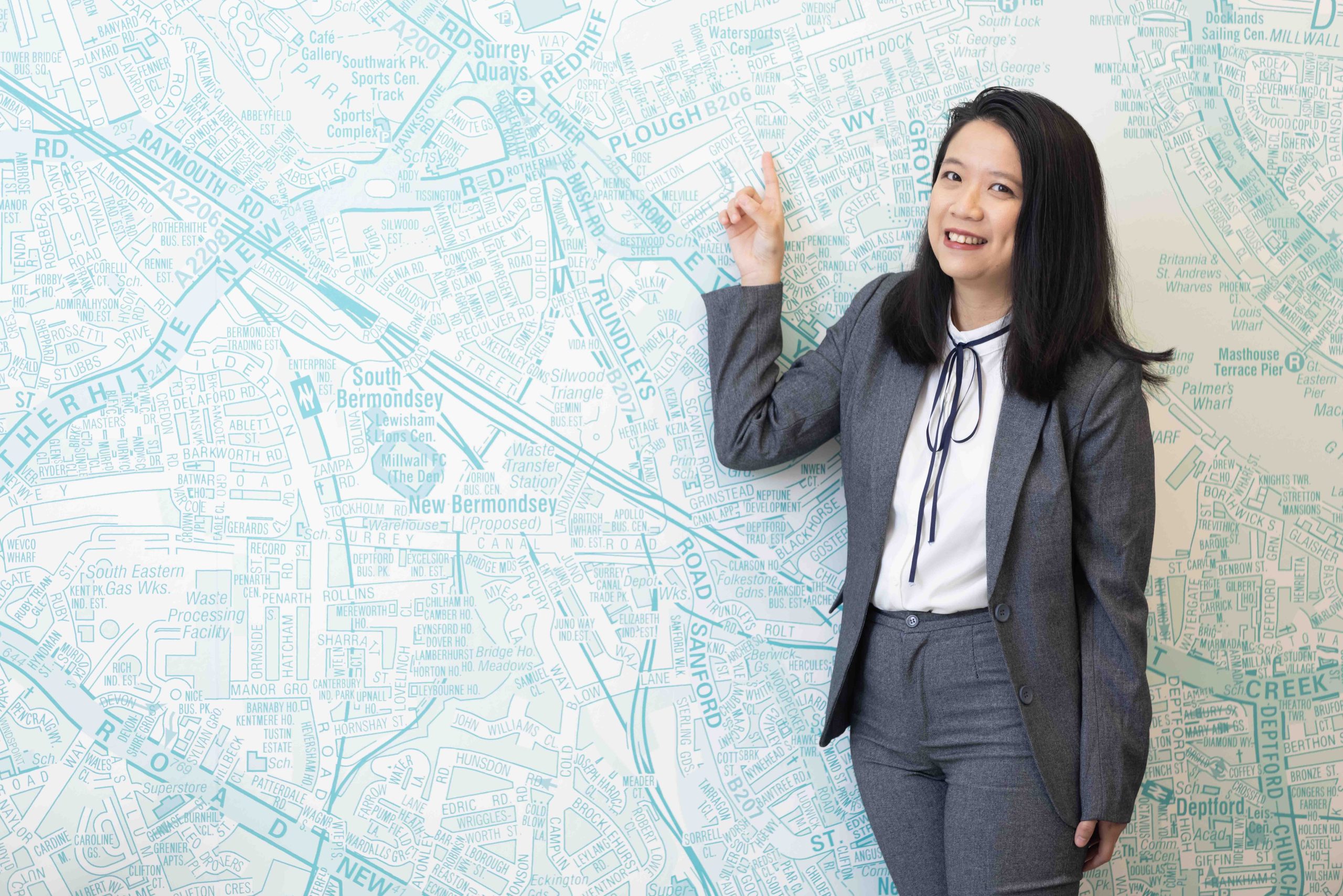
Karrie Liu

Karrie Liu

Born in Hong Kong • Studied Mathematics at University of York, UK • Highest Degree MSc in Applied Mathematics • Lives in London, UK • Occupation Freelance Mathematician / Founder of an analytical advisory company

Growing up in two distinct family cultures (Chinese parents in Hong Kong and “adoptive” English parents in the UK), I noticed that girls weren’t often encouraged in the same way that boys were. Many Asian parents would prefer that their daughters marry and focus on family rather than pursuing studies in higher education. Due to this, I wish to be a role model to younger generations, especially girls, so that they may be inspired and have the courage to follow their dreams. My ultimate goal is to improve the world through maths, data science and technology. Hence, that is why I set up an analytical consultancy company called the analytical advisory company Hypatia Analytics Ltd in 2019, which allowed me to spend more time on different types of charity work.

My ultimate goal is to improve the world through maths, data science and technology.

Since graduating from university, I have been applying my skills to continuously show people how they can use mathematics in healthcare and life sciences. During my tenure at the National Health Service (NHS), I participated in several diversity and equality projects. The NHS lacks information on ethnicity and I noticed that researchers had to use the general label “South Asian Name programme” to gather more details. I headlined a project discovering whether extra details can improve the name-test accuracy and to carry out diagnostics tests using patients’ self-reported ethnicity as the standard compared to test results. The outcome has been widely adopted in the Bradford/Leicester council area, improving NHS data and enabling valuable insights for local health economics planning.

Since data science is a relatively new type of career, many people haven’t yet fully understood why it is needed and how to apply it in the real world. Education is the key for people who want to be specialized professionals, but they also need to make the field accessible to the general population. My role as a trustee at The Institute of Mathematics and its Applications (IMA) allowed me to chair three national conferences to showcase how mathematics can be used with data science and helping others to get more help from the industry. 

My company [..] acts as an analytical advisor for charities providing statistical support for clean water programmes, using data science and technology to improve design and optimise resources needed to implement systems.

Skill-based volunteering is also very close to my heart; with my company Hypatia Analytics Ltd I have had the opportunity to voluntarily lead tech and maths projects engaging with the public and different charity organisations. Hypatia Analytics Ltd acts as an analytical advisor for charities providing statistical support for clean water programmes, using data science and technology to improve design and optimise resources needed to implement systems. The charity’s aim is for people’s lives to improve from having clean water close to their home. Hence, more children have time to attend school and the prevalence of illnesses is decreased.

In the summer of 2021, Hypatia Analytics Ltd in partnership with a charity promoting mathematics set up a Math & Data Summer programme called “Discover Data”. This program is a series of introductory workshops on how applied mathematics with real-world evidence can be used to address the world’s problems to students aged 14-17. However, the program  did not stop there, it had set up a monthly meeting to teach more, and we are now planning Summer 2022 face-to-face workshop.

I believe data and mathematics are at the heart of better decision-making and hope that people can benefit from it.

Published on June 22, 2022.

Posted by HMS in Stories
Susan Okereke

Susan Okereke

Born in Liverpool, UK • Studied Mathematics and Business Studies at the University of Edinburgh, UK • Highest Degree Master’s in Teaching (MTeach) from the UCL Institute of Education, UK • Lives in London, UK • Occupation maths teacher, maths communicator and education consultant

I love teaching maths! I am a maths communicator and teacher and I passionately believe that numeracy is an essential basic skill that everyone should have – like reading and writing – and every student should leave school competent and confident in it. Sadly, I am aware this is not the case for many students in the UK and I am trying to use my expertise and experience to help improve this situation.

I began to understand the importance maths education plays in society and realised that maths teachers have a crucial role in making the world a fairer place

As a teacher, I have a keen interest in teaching and learning. I believe that teachers should be model learners, so a few years ago, I decided to do a Master’s in Teaching (MTeach) at the UCL Institute of Education. The Master’s looked at what is needed for ‘effective’ learning to take place, exploring the complex relationship between learner, teacher and their environment. It opened my eyes to how education can transform people’s lives, especially maths education. I began to understand the importance maths education plays in society and realised that maths teachers have a crucial role in making the world a fairer place, with recent data by the Organisation for Economic Co-operation and Development (OECD) showing a direct relationship between wage distribution and numeracy skills.

My Master’s dissertation analysed the effectiveness of a targeted maths intervention on students’ attainment and reflected on the challenges secondary schools face when implementing interventions. Working on my dissertation clarified the fact that I want to use my expertise to bridge the gap between primary, secondary and further education maths learning, supporting all students to feel confident in maths, especially our most disadvantaged students. I believe the key to bridging this gap is to ensure all students have solid basic maths skills and a positive attitude to maths and this starts with good maths teaching.

Completing my Master’s ignited my interest in finding ways to present maths that are accessible and engaging for everyone, especially people who find it challenging. My work as a maths communicator is an extension of this mission.

Maths has a reputation for being boring, difficult and irrelevant to people’s lives and many people are intimidated by the subject because they believe ‘you are either right or wrong’ and that is all that matters. I’m on a mission to challenge this common misconception. Maths is so much more than the final correct answer, it is about seeing patterns, making connections and solving problems, which is an emotional and collaborative process and can be a lot of fun.

Completing my Master’s ignited my interest in finding ways to present maths that are accessible and engaging for everyone, especially people who find it challenging. My work as a maths communicator is an extension of this mission. Over the years I have been involved in a variety of amazing maths events and projects for students, teachers and the general public. Events that strive to bring maths to life for audiences by highlighting the weird and wonderful places maths can be found, which I share on my blog www.DoTheMathsThing.com. Also, the podcast Maths Appeal I co-host with TV personality and fellow maths teacher, Bobby Seagull, presents maths in an accessible way by including maths puzzles and interviews with maths champions from the worlds of tech, entertainment, comedy and education.

Engaging in this range of maths-based endeavours has made me realise I am on a lifelong learning journey with maths education and I hope to take my students, listeners and readers with me as I try to show that maths is everywhere and for everyone.

Published on June 8, 2022.

Posted by HMS in Stories
Claudia Garetto

Claudia Garetto

Born in Asti, Italy Studies Mathematics at Torino University, Italy • Highest Degree PhD in Mathematics • Lives in London, UK • Occupation Reader in Mathematics at Queen Mary University of London

My love for Mathematics started at an early age. I remember one day in scuola media (middle school in Italy) when my maths teacher sketched the graph of a function on the blackboard. She was explaining linear motion and I was blown away. I saw how maths relates to real life and how beautiful it is to explain maths, which is often considered a difficult topic, to others. I just wanted to be like her: a mathematician solving equations and sketching graphs on a blackboard, and this is exactly what I do now. It has been extremely important for me to see women do the job I am doing now. In Italy it is quite common for girls to study mathematics at university and to have women maths teachers in school: growing up I never thought that maths was a “boy” subject. Later, when I moved to Austria for my PhD studies and then to the UK for my first permanent academic position, I realised how lucky I had been.

Equality, Diversity and Inclusion (EDI) activities are becoming more and more important (I am the EDI lead in my school), so I hope the gender gap will become smaller and smaller in the future but there is still a long way to go…

In both of these countries, women are a minority in STEM and it is unfortunately still common to have almost no women professors in many maths departments. Consequently, it is still a struggle to motivate the best women maths students to take the academic route. Equality, Diversity and Inclusion (EDI) activities are becoming more and more important (I am the EDI lead in my school), so I hope the gender gap will become smaller and smaller in the future but there is still a long way to go…

As an undergraduate at Torino University I loved Mathematical Analysis. I found the formalism of pure mathematics beautiful and reassuring and I got more and more attracted to the idea of proving my own theorem, of constructing my own mathematical theory. That’s how my original plan of becoming a maths secondary school teacher changed into becoming a researcher and to establish myself as an academic.

Every move has meant for me to grow as a mathematician but more importantly as a person. I have learnt to be resilient but also to be flexible, adaptable, and open-minded.

I apparently had a very straightforward career path: PhD, postdoc, permanent position. However, I changed countries twice. In 2002 I moved from Italy to Austria to conclude my PhD studies. After 8 years at Innsbruck University, I moved to Imperial College London as a Junior Research Fellow and in 2012 at Loughborough University as a Lecturer. I have recently moved to Queen Mary University of London where I am currently working on the analysis of hyperbolic equations and systems with multiplicities: an extremely fascinating area of mathematics. Every move has meant for me to grow as a mathematician but more importantly as a person. I have learnt to be resilient but also to be flexible, adaptable, and open-minded. These are in my opinion extremely important qualities in any social and work environment.

I often talk to girls of school age approaching the university world of mathematics. My only advice to them is to follow their passion. If you are passionate about maths nothing will stop you! It will not always be easy. Failure is normal but with your dedication and the support of the right people (colleagues, supervisor, mentor) you will overcome every obstacle.

Published on May 25, 2022.

Posted by HMS in Stories
Shanti Venetiaan

Shanti Venetiaan

Born in Suriname Studied Mathematics at Leiden University, The Netherlands • Highest Degree PhD in Mathematics • Lives in Suriname • Occupation Professor at the Anton de Kom University, Suriname

I think that I have always been interested in mathematics. I was a curious child and I liked puzzling. I always requested puzzles for my birthday, like the Jigsaw ones. At school, mathematics was my favorite subject. Moreover, my father is also a mathematician. So by the time that I had to choose a course of study at university, it was very clear that it had to be mathematics.

I was not actively pursuing an academic career when I started university.

Given that Suriname was a former Dutch colony, it was very common for Surinamese students to study in the Netherlands. So it was almost a natural choice for me to go there as well. All my school mates went to the Technical University in Delft, but I decided to go to Leiden University: the same university where my father had studied. 

I was not actively pursuing an academic career when I started university. I do remember reading the leaflet that described all the steps leading to a PhD and beyond. At that moment, I realized that that was what I wanted for myself. After I did my final thesis in Leiden, my thesis advisor moved to the University of Amsterdam. He asked me whether I was interested in becoming his PhD student. Still, I was not sure what to do at that moment: I had been in the Netherlands for five years already and I was ready to go back home to Suriname. When I discussed this with my parents though, they persuaded me to stay and to take the opportunity, so I did. Now, I can say that I am very happy with my decision!

The academic life here mainly revolves around teaching, and there is no real research environment. But we are working hard to change this.

When I came back from the Netherlands after my PhD there was no mathematics department at the Anton de Kom university and I was hired in the School of Technology instead. The academic life here mainly revolves around teaching, and there is no real research environment. But we are working hard to change this. Our bachelor program in mathematics recently got accredited and we are trying to build a research culture. One of the main difficulties we are facing is the lack of expertise: I am the only person with a PhD in mathematics in the country. Suriname is a very small country with a population of around 500,000 people, so it is common to be the only one with a certain expertise. But it is a nice challenge, and I like it!

My advice to young students who enjoy mathematics is to follow your heart. If mathematics is where your heart is, then do it! It is a beautiful subject.

To overcome this lack of expertise, we are initiating more collaborations with foreign universities. For instance, the pandemic opened new possibilities for our students: they could now follow online lectures from universities all around the world. I hope that similar opportunities will continue after Covid-19 and that they will become official partnerships, as this will provide more opportunities to our students.

My advice to young students who enjoy mathematics is to follow your heart. If mathematics is where your heart is, then do it! It is a beautiful subject. If you like puzzling, it is very fulfilling. Furthermore, mathematics provides you with a training in abstract thinking that you can use anywhere!

Published on May 18, 2022.

Posted by HMS in Stories
Evi Papadaki

Evi Papadaki

Born in Crete, Greece • Birth year 1992 Studied Mathematics at National and Kapodistrian University of Athens in Greece • Highest Degree MSc in Mathematics and Its Applications at University of Crete in Greece • Lives in Norwich, UK • Occupation PhD researcher in Mathematics Education at the University of East Anglia, UK

Either by chance or by choice, I always found maths attractive. My mum is a maths teacher, her sisters, too. So, I was regularly in the middle of casual maths conversations growing up. I was observing my mum teaching sometimes, and I was reading her maths books when I was bored. One of the advantages I had as a child was seeing my mum preparing for her lessons and devoting herself to solving problems, struggling, spending time on them, discussing methods and solutions with her sisters. I never found maths easy, but I knew that dedicating time was part of what made it meaningful, and I was up for it.

I remember when I was about 9 years old, I told my dad that I wanted to become an astrophysicist. He was very excited trying to explain ‘the plan’ to me: I had to finish school and study physics, then I should do a masters and a PhD in Astrophysics. I was shocked by the amount of work that I had to do and that was the moment I decided to become a maths teacher. As naive as it sounds, I thought I was doing well at maths already so I could teach others (!).  Yet here I am, 20 years later and having realised the complexity of the work, doing a PhD trying to understand how a teacher can talk to her students about mathematics.

I felt like I always knew about the Pythagorean Theorem. Before I even knew how to read or write, I could quote it without knowing what that means. I learnt how to use it in secondary school. I learnt what it means in high school and a teacher told us that it has over 300 different proofs.

I started thinking about the possibility of studying for a PhD in Mathematics Education in my final year as an undergraduate. I found it fascinating how all the things I’ve learnt throughout the years connected with each other as a gigantic 3D jigsaw puzzle. For example, I felt like I always knew about the Pythagorean Theorem. Before I even knew how to read or write, I could quote it without knowing what that means. I learnt how to use it in secondary school. I learnt what it means in high school and a teacher told us that it has over 300 different proofs. I learnt a couple of the proofs at university. Finally, I learnt that it can be generalised with other shapes and in more dimensions from a video on YouTube.

For me mathematics was never just a subject in school. It was a process of discovery inside and outside of the classroom and I wanted to study if there was a way to spark the curiosity of my students beyond the boundaries of a curriculum or programme of study.

I met people who thought teaching mathematics is purely applied pedagogy and disregarded my mathematical abilities because of that. I met people that thought I was wasting my potential as a mathematician. […] None of them is true!

When I decided that I wanted to follow a career in Mathematics Education research, I had the full support of my family, my friends and my mentors. Nonetheless, I had to fight a few stereotypes on the way. I met people who thought teaching mathematics is purely applied pedagogy and disregarded my mathematical abilities because of that. I met people that thought I was wasting my potential as a mathematician. I also met people that assumed that I am doing a quantitative study as I must be good in statistics. None of them is true! I am doing a qualitative study of how a teacher can talk to her students about mathematics in ways that are not anticipated in a typical mathematics lesson. For my project, I need to unpack the mathematical meaning of the conversations that take place between teachers and students. So, I challenge what I know about mathematics almost every day and I have learnt a lot more than I ever thought I would. Moreover, I am working at the student services of my University helping students with their maths, so I have the chance to expand my horizons in the variety of applications of mathematics making my interest in teaching and learning mathematics in ways that could aid students in different aspects of their personal and professional life even greater.

Looking back, I am grateful that those comments didn’t bring me down.

Published on May 11, 2022.

Posted by HMS in Stories
Rachel Thomas

Rachel Thomas

Born in Perth, Australia • Birth year 1974 Studied Mathematics at the University of Western Australia in Perth, Australia • Highest Degree MSc (Research) in Pure Mathematics • Lives in London, UK • Occupation Editor of Plus magazine (http://plus.maths.org)

When I started university, I planned to be a physicist or astronomer – I can’t deny I was heavily influenced by a love of scifi! I had a great time working in a gravity wave lab one summer, but the experience also made me realise I didn’t have the patience or practical ingenuity to be an experimental scientist. I found the theory fascinating. But at the lab flanges wouldn’t seal properly and huge niobium bars couldn’t be cooled low enough – I wasn’t as fascinated by the practical experimental problem solving.

I then remembered my other film-influenced career plan of becoming an archaeologist and took courses in Australian archaeology and Greek art and architecture. I had a brilliant time but again, I realised I didn’t have the patience required for the field work and analysis. I spent weeks trying (and not really succeeding) to make sense of tray after tray of very small grubby objects that I had dug up. I loved the ideas behind both of these glamorous careers, but the actual nitty gritty doing of the work just didn’t excite me.

Academia wasn’t appealing to most of the women I had studied with.

In the meantime, I’d been doing maths all along and I loved it. Originally, I took maths because I needed it to study physics. Then I kept studying maths because it turned out to be really fun. I really liked the actual doing of the maths – playing with linear algebra, proving something in group theory – each new area we were taught was so exciting with new concepts and new language or giving familiar ideas an entirely new perspective.

I loved doing research in semigroup theory for my Master’s degree and often couldn’t wait to get back to the desk to move my work forward. Unfortunately though, I didn’t really feel part of the community of my maths department. With hindsight, I’m sure this was partly due to being one of just a few female students when I was at honours and then postgraduate level. Academia wasn’t appealing to most of the women I had studied with. When things didn’t work out with my supervisor I nearly dropped out and left academia to work as a consultant mathematician on projects in government and industry. But fortunately, my generous boss, a brilliant female professor from the department, and my good friends supported me to finish my Master’s dissertation.

(…) it was in this job, and during the writing of my Master’s dissertation, that I discovered how much I loved communicating mathematics.

My work as a consultant was varied, and despite rarely crossing paths with the maths I’d learnt at university my degree had prepared me to learn quickly and to discern the structure of a problem and how I could use available data to answer meaningful questions. My maths training also helped me to communicate with the clients and it was in this job, and during the writing of my Master’s dissertation, that I discovered how much I loved communicating mathematics.

When I moved to the UK, I knew I wanted to write about maths. I was lucky enough to get a job with the Millennium Mathematics Project (MMP), a maths and education outreach initiative based at the University of Cambridge, before I left Australia. I quickly moved into working on Plus magazine, the part of the MMP that enables anyone who is curious about maths and the world to see the maths behind current events and keeping up to date with current maths research.

To see maths so visibly making a difference in the world, and to witness the passion, creativity and dedication of the mathematicians involved has been amazing.

Twenty years later I still love working at Plus, every day learning about new maths and new applications and talking to the mathematicians who make it all happen. My brilliant co-editor of Plus, Marianne Freiberger, and I get to go on all sorts of amazing mathematical adventures. Our work has taken us around the world, we’ve spoken to brilliant mathematicians from academia and industry, we’ve written several popular science books, appeared on TV and radio and worked on documentary series for the Discovery Channel working with our colleagues at the Centre for Theoretical Cosmology. And over the last two years we’ve been lucky enough to work with epidemiologists working on the mathematical front line of the COVID-19 pandemic, helping to explain and communicate their work. To see maths so visibly making a difference in the world, and to witness the passion, creativity and dedication of the mathematicians involved has been amazing.

Things have changed a lot since I found myself as one of only a few female students at the end of my time at university.

Things have changed a lot since I found myself as one of only a few female students at the end of my time at university. Despite no longer being an academic mathematician, I feel firmly part of the maths community today.  And I’m very happy that nearly half the mathematicians and researchers Plus has collaborated with over the last year are women. A new community spirit seems to be rising in many mathematics departments, heavily influenced by the experience and hard work of the female researchers already there. I hope that these networks, and projects including Her Maths Story, are helping women in mathematics find the support and the supporters they need to follow their own maths stories.

Published on April 27, 2022.

Posted by HMS in Stories
Laura Venieri

Laura Venieri

Born in Italy • Birth year 1989 Studied Mathematics at University of Bologna, Italy • Highest Degree PhD in Mathematics (University of Helsinki) • Lives in Helsinki, Finland • Occupation Quantitative Analyst

I have always liked maths, in school it felt easy for me and I loved solving problems. My mother, who used to be a maths teacher, contributed to making it fun for me since I was a kid, and never stopped reminding me how important and useful maths is. In high school my maths teacher always highlighted the more fascinating side of it, not giving us problems to solve following a given template but pushing us to search for a solution, with trial and error, and look for connections.

At university maths felt different, there was a whole new world to discover, and on one side it felt more difficult but on the other side it was also more motivating and rewarding.

When it was time to decide what to study at university I knew that I wanted to get a science or engineering degree, but I was unsure of what the job opportunities for a maths graduate would be, except teaching. In the end, I chose maths anyway, as it was the subject I liked the most. I followed my teacher’s encouragement, who assured me that many opportunities would arise.

At university maths felt different, there was a whole new world to discover, and on one side it felt more difficult but on the other side it was also more motivating and rewarding. During my master’s, I decided to do an exchange and wanted to visit Northern Europe, so I ended up in Helsinki. It was a very fun year, and I enjoyed both the studies and the life outside, as it was the first time for me living in another country and being in contact with people from different parts of the world.

I had some doubts about my skills, but my thesis supervisor was very supportive and encouraged me […]

Until the year in Helsinki, I hadn’t given too much thought to what I wanted to do after graduating: in a way maths was what I liked doing the most, and I started to think about pursuing a PhD. I had some doubts about my skills, but my thesis supervisor was very supportive and encouraged me to contact a professor in Helsinki, who then became my PhD advisor.

The years of PhD were both the most rewarding and challenging in my life so far: there were moments of discomfort when I thought I was not good enough for it and not as brilliant as the other researchers, and moments of deep satisfaction when I realised that I could instead contribute to maths. Now I would tell PhD students who feel discouraged that it is normal, and it helps to talk about it with colleagues and friends. I always felt supported by my advisor, who followed me along the way, helping me when I got stuck but also leaving me the freedom to choose the direction.

I never felt directly discriminated against in my studies or research for being a woman, although at times people showed surprise when they heard that I was doing a PhD in maths, and sometimes commented that I did not look like the stereotypical mathematician. At conferences the great majority of participants and speakers were men, but I met very talented and well-established women academics, who made me feel more like I could belong there too.

I wanted a more stable life than the usual academic career would mean, and Finland was where I wanted to live with my partner.

When finishing the PhD and considering what I wanted to do next, I started to have some doubts that a career in academia would suit me best. Moving to Helsinki had been on one side a life changing experience but it had also shown me the challenges of moving to a new country and starting from fresh, and I did not look forward to doing that again. I wanted a more stable life than the usual academic career would mean, and Finland was where I wanted to live with my partner. I still wanted a job that involved maths, and at a high enough level, but I also felt like I could move to a more applied field.

I had never considered working in finance before, but I got interested after meeting my future employer at a recruitment fair. Financial mathematics relies heavily on measure theory, which I had a solid background in, and uses tools from stochastic calculus, which I began to study when starting my new job, working as a quantitative analyst in a financial company. It was a big change, also a bit scary, but I have not regretted it. It has been three full and intense years, where I have also learned some coding, database design, and data manipulation. The work is more interactive than typically in academia, which I have enjoyed, and I still feel like I have a lot to learn. After all, I realised it was true what my high school teacher had told me: after studying maths there are so many different things you can end up doing, don’t be afraid to find out!

Published on April 13, 2022.

Posted by HMS in Stories