
Month: September 2026

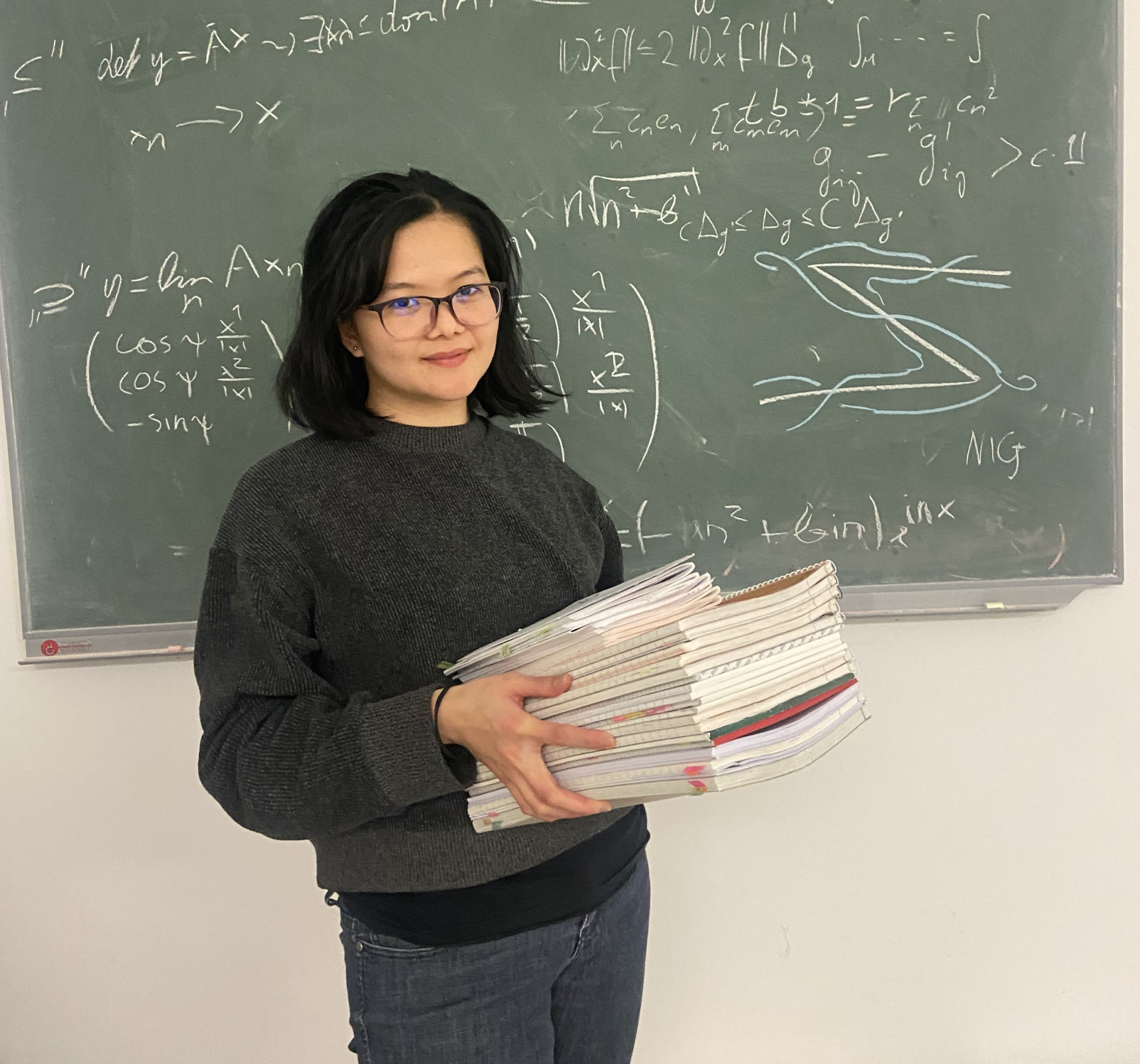
Gervy Marie Angeles

Gervy Marie Angeles

Born in Cabanatuan City, Philippines • Birth year 1993 • Studied Mathematics at the University of the Philippines Baguio in Philippines • Dr. rer. nat. in Mathematics from University of Vienna in Austria • Lives in Quezon City, Philippines • Assistant Professor at the Institute of Mathematics, University of the Philippines Diliman

The very first memory I have of learning mathematics was set one afternoon in our home in the Philippines. I was about five years old, and my dad, hoping to sneak in a nap, decided to turn me into a human alarm clock. He patiently taught me how to read an analog clock, the short hand for the hour and the long hand for the minutes. Counting by fives as the minute hand ticked away, waiting to wake him up, was the first time I became fascinated with numbers and logic. Things just made sense.

Growing up, I always enjoyed math, but I had no idea you could get a university degree in it. When it came time for university admission, people around me suggested engineering for financial security. I ended up choosing a BS in Mathematics purely because of a rumor that it was a strategic backdoor into a highly competitive engineering program. 
I never made that shift.

What kept me were the “Eureka” moments, those instances where a concept you’ve wrestled with finally clicks into place, and the realization that I wanted to teach. I had been deeply inspired by my female homeroom and Sunday school teachers, and I wanted to be the one at the front of the room, confidently sharing knowledge.

Realizing that my life didn’t need to be a classical solution was cathartic.

My academic journey eventually took me far beyond the Philippines. My first plane ride was for a national conference, followed by a school abroad, and eventually a leap to Europe for my doctorate. The world felt suddenly accessible, and simultaneously daunting.

In my research, I work with differential equations, mathematical tools used to model how systems change and evolve over time. When we try to solve these equations, our first instinct is to look for a “classical solution,” a path that is well-behaved and continuously differentiable at every point. But such a solution only exists if your starting conditions are strong enough to support it. When I first moved to Vienna, my own starting conditions felt completely upended. I remember bawling my eyes out. A series of unfortunate events, coupled with the isolation of the 2020 pandemic, shattered any hope for an orderly transition. The hardest moment came near the end of my doctorate, when I had to extend my stay beyond my scholarship, suddenly self-financing, floating, and convinced I didn’t belong in academia. I had started looking for ways out altogether.

But in mathematics, when a classical solution doesn’t exist, we don’t give up on the system. We look for alternatives, “mild” or “weak” solutions, that relax the requirement of differentiability. A mild solution replaces it with integrability; a weak solution goes further, working with generalized derivatives instead. The path no longer needs to be perfectly well-behaved at every point. It just needs to hold together in a broader sense. Realizing that my life didn’t need to be a classical solution was cathartic. What carried me through was realizing I didn’t have to hold everything together alone. I had people in different parts of my life, in different corners of the world, and that was enough to get me to the other side. Eventually, I applied for a position back home, and slowly, things began to fall into place again.

(…) Mathematics is vast, a language, a science, and an art. More people should know this.

By graduate school, the demographics of mathematics had shifted from what I knew growing up. When I was younger, there were just as many girls excelling in math as boys, maybe more. But the ratio had flipped, and it was easy to feel the loneliness of that. It became even clearer when I taught a graduate course and realized the entire class was male. I hadn’t fully noticed the shift until I was standing at the front of it. One day, I hope seeing women in graduate mathematics classes is the norm, not the exception. A recent all-women and underrepresented-genders workshop reminded me that this future is possible. The energy was joyful, with a wonderfully flat hierarchy where nobody was trying to outshine anyone else.

My hope for the Philippines is more visibility of what mathematics actually is. Once, in a taxi, the driver asked what I studied. I said mathematics, and he genuinely wanted to know what that meant, what I actually do, what I would become. I wish more people were like him. People often assume it means being a human calculator. But mathematics is vast, a language, a science, and an art. More people should know this.

If I could give advice to my younger self, and to any early-career woman reading this: don’t take yourself too seriously, and don’t be afraid to make mistakes. Ask questions, and don’t be ashamed to say you don’t know something. Learning starts with curiosity, and if a manong driver can ask without hesitation, so can you.

Published on September 16, 2026.

Photo credit: Gervy Marie Angeles
Posted by HMS in Stories
Flavia H. Santos

Flavia H. Santos

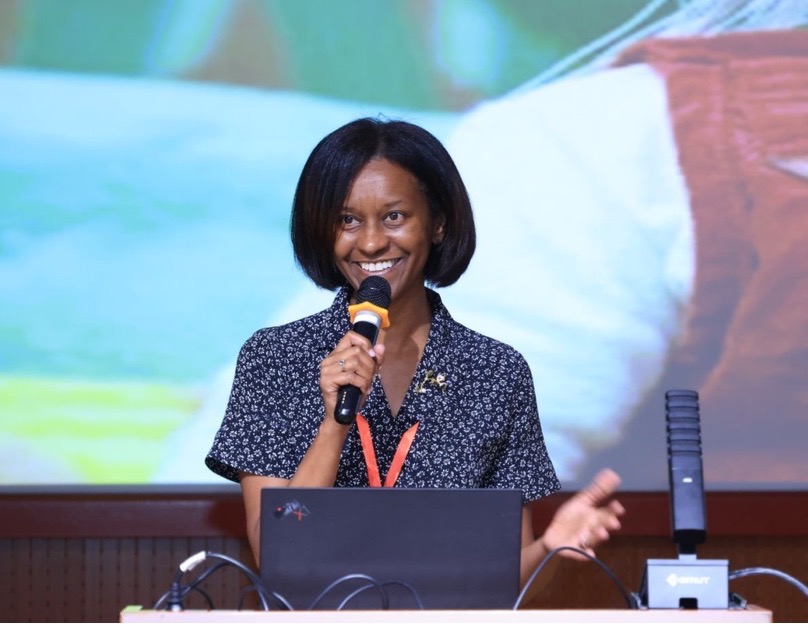
Born in Brazil • Studied Psychology and Neuroscience • PhD in Science • Lives in the United Kingdom • Director of the Music and Math Cognition Lab at University College London, Institute of Education, and Member of the UNESCO Inclusive Policy Lab

As a multiethnic and multilingual woman in cognitive and developmental neuroscience, I have often found it difficult to be encapsulated by stereotypes. I have studied and worked in environments where ethnic imbalances persisted. I often wish I had encountered role models who looked like me in such spaces, although I remain grateful to everyone who inspired and supported me in many ways throughout my journey.

During my residency in neuropaediatrics and PhD in the Faculty of Medicine at the Federal University of São Paulo, I developed a strong interest in translational and experimental approaches, focusing on human cognition and neurodevelopmental conditions. In my PhD I examined working memory in children with congenital encephalopathies using neuroimaging and behavioural tasks to understand brain plasticity patterns.

(…) I have developed experimental interventions such as musical training, digital games, and safe, non-invasive brain stimulation aimed at enhancing learning processes in children who experience difficulties in mathematics

Years later, my research interests shifted towards mathematical cognition, brain mechanisms, and developmental dyscalculia, prompted by noticing a benefit in maths performance in a study conducted by one of my undergraduate students on children’s musicalisation. Since then, integrating neuroscience, psychology, and education has been central to my work, enabling me to examine how mathematical skills develop and how learning can be optimised through evidence-based approaches. For instance, in collaboration with colleagues and students, I have developed experimental interventions such as musical training, digital games, and safe, non-invasive brain stimulation aimed at enhancing learning processes in children who experience difficulties in mathematics.

My career trajectory has been more spiral than linear, spanning positions in Brazil, Portugal, Spain, and Ireland. Working in diverse academic environments has been enriching, fostering malleability, exchange, and awareness of cultural nuances. I am currently in my third academic tenured post. Although each move represented advancement, it often required restarting at a lower rank. Within the status quo, I reflect on the importance of empowering academics to recognise the value of their contributions and to negotiate their working contracts.

My vision is to develop tailored interventions for low-achieving learners, examining neural mechanisms of individual differences in maths attainment and the role of social factors in development and compensatory strategies

Despite personal and professional challenges, my outputs include several edited books and numerous co-authored articles with international collaborators, using diverse methods and samples. Alongside extending my music science research, I aim to build an interdisciplinary team using cognitive, affective, and behavioural neuroscience to address real-world challenges in mathematical cognition across the lifespan. My vision is to develop tailored interventions for low-achieving learners, examining neural mechanisms of individual differences in maths attainment and the role of social factors in development and compensatory strategies. Crucially, interventions must be multilayered; without engaging students, teachers, parents, and policymakers, meaningful improvements in mathematics education are unlikely.

Mathematics has offered many rewarding and memorable moments. One particularly humbling experience occurred at an event organised by the Institute of Physics of the United Kingdom and Ireland, where, during parallel sessions, a physicist cancelled her presentation to attend my talk on mathematics anxiety, enabling a shared discussion across STEM and social science fields. Another honour was being featured in Irish Maths Wall Calendar (2016–2024), published by the Annals of Irish Mathematics and Mathematicians, alongside outstanding contributors to the field.

Most projects I have led or co-led focus on improving mathematics education, supported by the Irish Research Council, the Leverhulme Trust, and Erasmus+. The Arithmós Project, for example, produced resources including a cartoon video, teacher workshops, a digital game intervention, and policy briefs. This work led to my participation in Games for Change, organised by UNESCO and hosted at Rubika in India, where I highlighted the importance of multilayered approaches in game-based learning and the need for collaboration between game developers and cognitive researchers to produce sound content for mathematics education.

I believe careers in neuroscience should be accessible and attainable; most pathways still favour elites and do not globally capitalise on talents

At UCL, I contribute to research and teaching in cognitive and developmental neuroscience. I also serve as an Athena Swan representative, supporting gender equality in academia. I collaborate internationally across East Asia, Europe, and more recently Africa, and support students in developing rigorous, globally relevant research.

I believe careers in neuroscience should be accessible and attainable; most pathways still favour elites and do not globally capitalise on talents. That is why I led initiatives such as Brain and Maths in Ibero América, which freely boosted the visibility of Latin American researchers. I also engaged with mentorship programmes such as Black in Neuro, ALBA Network, and Society for the Improvement of Psychological Sciences, as early career researchers benefit from role models. Furthermore, I have served a two-year term as Chair of the Mathematical Cognition and Learning Society, fostering an inclusive international community of more than 400 researchers grounded in integrity, open science, and pipeline knowledge.

Looking back, I would encourage my younger self to seek advice more often; mentorship helps you to skip unnecessary steps. I would again embrace translational research and remain open to combining different professionals and interests, such as music and maths, as many meaningful advances in my work have emerged from bridging fields. I aspire to build a legacy through a meaningful academic career, contribute to the science of learning, and support and inspire students, particularly those who may not see themselves represented in academia.

Published on September 2, 2026.

Posted by HMS in Stories