
PhD

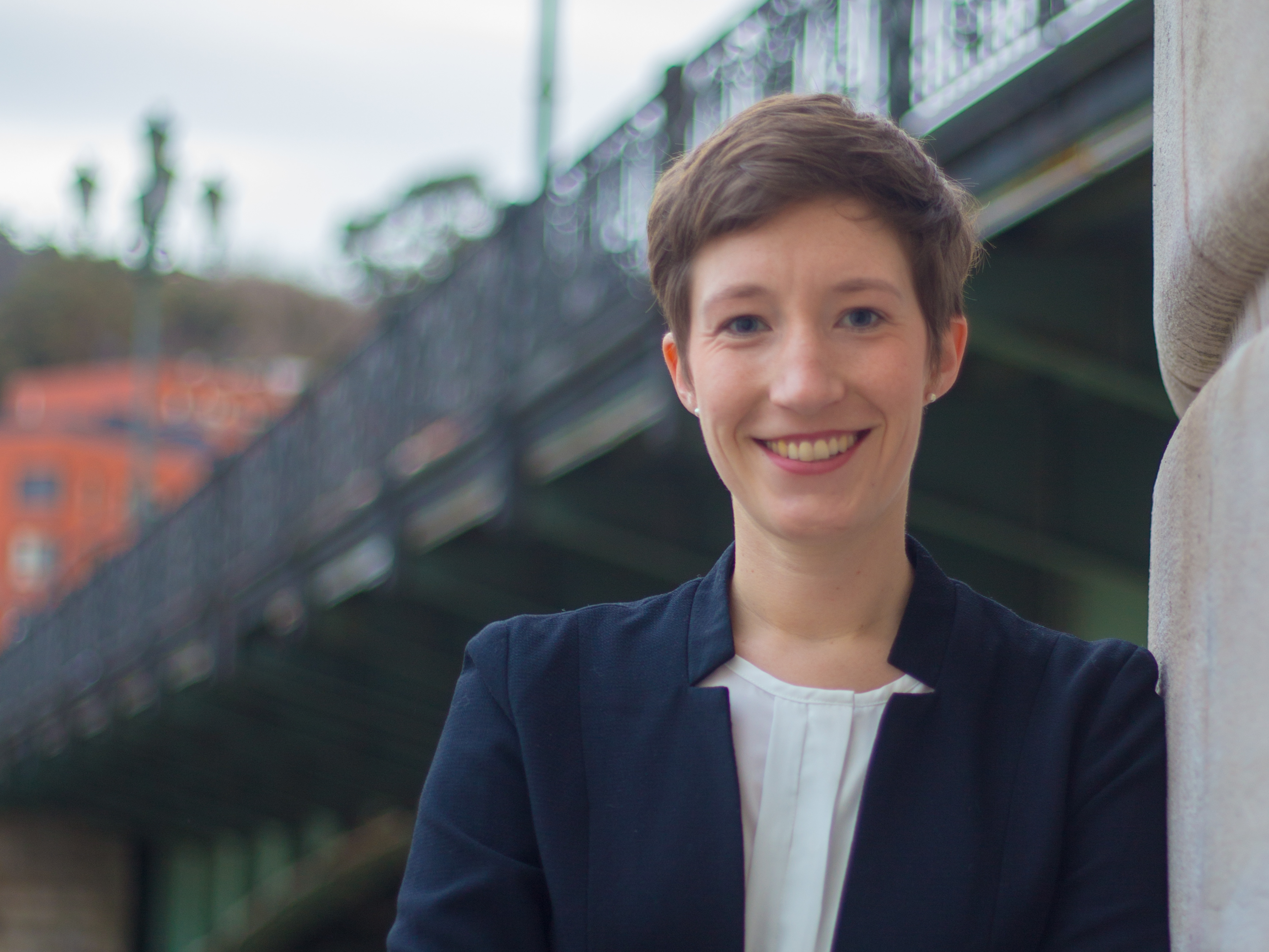
Julia Kroos

Julia Kroos

Born in Münster, Germany • Birth year 1988 • Studied Mathematics in Münster, Germany • Highest degree PhD in Mathematics and Statistics from the University of the Basque Country in Bilbao, Spain • Lives in Cologne, Germany • Current Occupation: Applied Mathematician at Bayer

It started all in 4th grade. After being really bad at mental arithmetic, I started to enjoy mathematics for the very first time when concepts became a bit more complex. When I was 9 years old I decided not only to study but also do a PhD in mathematics. So after finishing the A-level, this was exactly what I did. Of course it was hard and different from the maths they teach in high school but I got to appreciate the pure and perfect way of mathematical proofs. However, it was not before the end of my Bachelor that I learned about the diverse applications of mathematics in Biology and Medicine. I never grew very fond of the theoretical part but just saw it as a tool you need to understand and master in order to apply the theory to real world problems. Even though I always had the dream of doing a PhD in mathematics, doubting my skills and abilities made me question this dream. What finally convinced me to continue research and start a PhD in maths was a very honest talk by a female professor at a meeting of women in maths. By coincidence I found the PhD position in Bilbao (Spain) in computational neuroscience and directly knew that this was my topic. 

The most exciting part of research for me was and is solving a problem. It is like a scavenger hunt: you follow traces, read instructions and do trials, which surprisingly involves a lot of creativity.

With the focus on personalised models for a phenomenon related to migraine, I got the opportunity to learn a lot of different strategies from numerical methods to solve differential equations, to curvature approximations and data processing. I worked with neurologists, physicians and medical doctors and learned a lot about interdisciplinary communication. The most exciting part of research for me was and is solving a problem. It is like a scavenger hunt: you follow traces, read instructions and do trials, which surprisingly involves a lot of creativity. Of course it is not all fun, running the simulation for the umpteenth time and writing papers is never going to be my favourite part.

Right when I started to write my PhD thesis, I fell sick and was all of a sudden experiencing personalised medicine from the patient’s point of view. It totally swept me off my feet because I had to pause my PhD for a while and could not stick to the schedule that I had planned. During this time I got a lot of insights in the diversity of medical treatments and was surprised by the differentiated treatment strategies. However, I also saw the potential for data-based fine tuning in the treatment strategies. After this forced break I focused even more than ever on the things that I really wanted: finish the PhD, see the world and find a job in mathematics with an impact.

The first of these points I tackled as quickly as possible. Even though I enjoyed research I could feel a weight lifting from my shoulders when I finally defended my thesis. The second point, traveling for a year after the PhD had always been a fixed idea in my head but talking to friends and family brought up a lot of doubts: would this look bad in my CV? Would this have a negative impact on my career? Would traveling alone be dangerous? However, after very encouraging conversations with professors and friends who had already travelled alone for a longer time, I just took the leap. I bought the plane tickets and went backpacking from Peru to Patagonia in the very south of Chile and through New Zealand by myself. In the beginning before leaving it was scary but in the end it was one of the best decisions in my life, and I learned so much about different cultures, traditions, people and communication that no book or course could have ever taught me.

After hiking the Patagonian highlands, starting as an applied mathematician in a pharmaceutical company is now my next big adventure.

The question if I want to continue research after obtaining my PhD already haunted me during my PhD studies, but when I got back from my big trip I finally knew the answer. I wanted to use my maths skills to help people in the medical sector. Consequently, I solely searched for maths jobs in pharmaceutics where I have just started as an applied mathematician. Changing from the university to a company opens up a totally new universe which I am still exploring but I am very curious and excited to better understand. So after hiking the Patagonian highlands this is now my next big adventure.

During my studies and my big trip I was very lucky to meet encouraging role models, supportive fellow students and inspiring like-minded people that helped me find my way – thank you all.

Published on January 20, 2021.
Posted by HMS in Stories
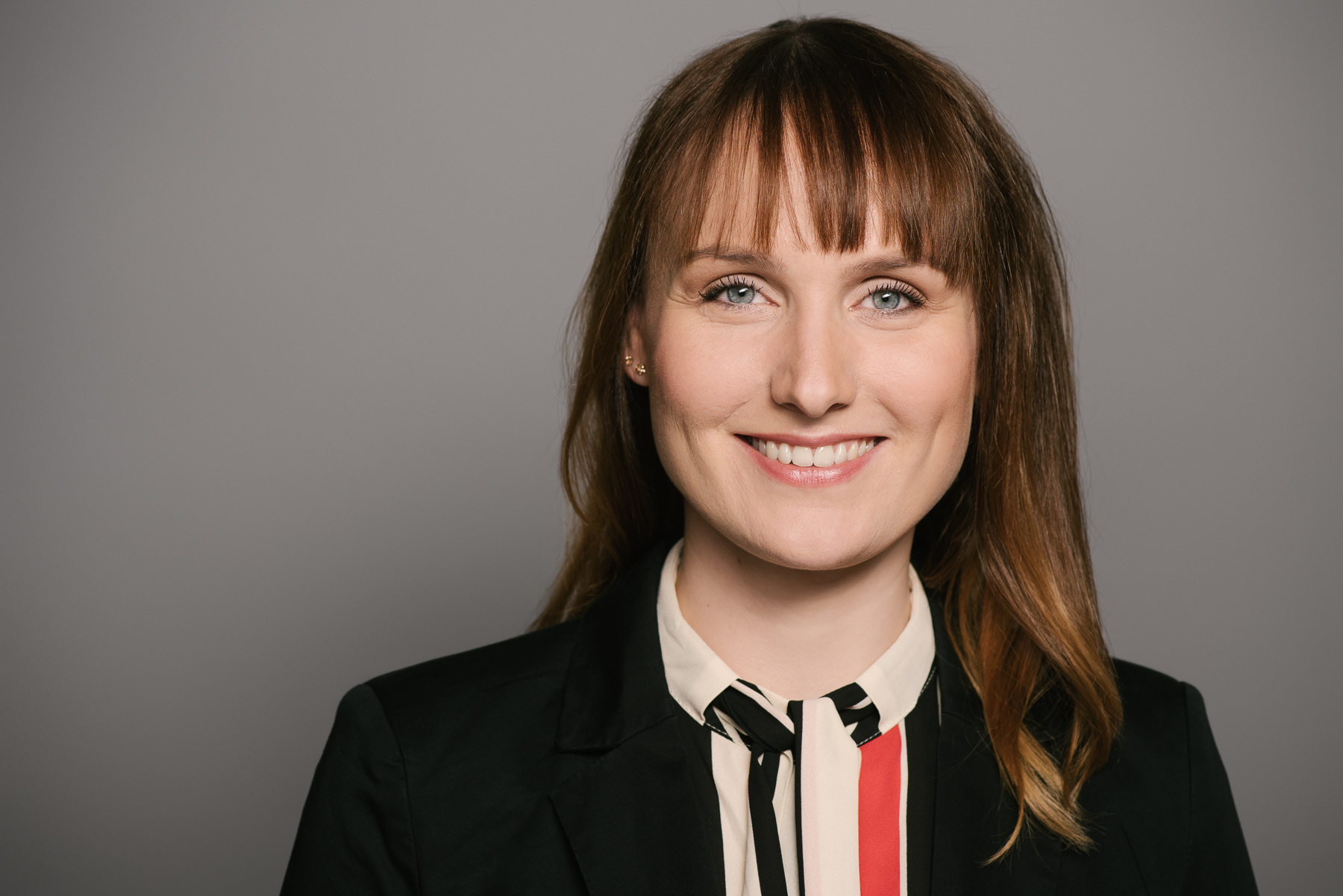
Joana Sarah Grah

Joana Sarah Grah

Born in Germany • Birth year 1987 • Studied Mathematics in Münster, Germany • Highest Degree PhD in Applied Mathematics from the University of Cambridge, UK • Lives in Düsseldorf, Germany • Occupation Scientific Associate

My decision to study mathematics was anything but straightforward. I always enjoyed maths classes throughout my primary and secondary school years. I also have to add that I personally believe this experience was significantly influenced by the fact that I had great maths teachers. Luckily, against a sadly very common (mis)perception of society I never felt that maths was not for girls. Maybe this was unconsciously strengthened by the female maths teachers I had in early school years. Shortly before my last two years of secondary school began, I decided against choosing mathematics as a major (which always seemed to be clear beforehand) because I did not enjoy the maths classes I attended in the preceding year. Nevertheless, I very much enjoyed the following two years of maths classes, which is among other things certainly due to the amazing teacher (and possibly first maths mentor) I had. From the beginning, he made quite clear that he did not really understand why I only chose maths as a minor, but he would motivate, encourage and challenge me even more throughout the two years. He also was one of the few persons I could consult when I was thinking about applying to study maths at university.

In the end, (…) I decided to study maths but was pretty much clueless about how a typical workday of a student even looked.

I was the first family member to attend university, let alone having received a university-entrance diploma, and so my family could not really provide me with a lot of advice or experience in this regard. However, they were incredibly supportive in multiple other ways throughout my studies and without their support I certainly wouldn’t be where I am now.
In the end, after considering other options such as linguistics and language studies, I decided to study maths but was pretty much clueless about how a typical workday of a student even looked. At first, I thought it was sufficient to attend the lectures (like the classes in school) and go home after. This also fit snugly with the hours I had to work in my side-job. The ‘homework’ was surely very similar to the one at school and I would just solve the mathematical problems we were given by myself like I did in school. Preparing for the exams would certainly be similar to schooldays and I would not have to study too hard. It did not take too long until I realised that I was completely wrong. The first unsuccessful exams hit me quite hard and ultimately, I found myself in a situation that I had not known up to this point in my life. It was already pretty late to turn things around completely and after many thoughts and conversations, I decided to start all over again one year later.

It is essential to have role models to look up to from the beginning and ideally to be mentored and supported by experienced and committed persons. I am extremely lucky and thankful to have those people in my life.

The further I got and also the more I was able to specialise in my studies, the more I enjoyed student life. I was lucky enough to have a strong and supportive network of fellow students and friends. What is more, especially in the final year of my Bachelor’s, I had two extremely dedicated, passionate and encouraging advisers, one of which was going to become one of my main mentors throughout my academic career. And this is the main message I would like to convey here. It is essential to have role models to look up to from the beginning and ideally to be mentored and supported by experienced and committed persons. I am extremely lucky and thankful to have those people in my life. In addition to my Bachelor’s and Master’s supervisor, I had two incredibly supportive, heartening and inspiring women as a PhD supervisor and co-supervisor. I believe that my passion for women encouragement was significantly influenced by my main PhD supervisor who herself has given numerous talks on her own experiences as a woman in maths, her career path and her very personal journey to become an excelling mathematician and leader.

We realised that we were not alone with our struggles and doubts and this was extremely liberating and empowering.

Already during my Master’s, I participated in a mentoring programme that was coined by a very committed (male!) diversity officer at our maths department. We had regular meetings in small groups of three mentees and one mentor who was a female PhD student. We were able to informally chat about positive and negative experiences, the decision whether to continue as a PhD student or search for a job in industry and how being a woman in a still male-dominated field poses some challenges. We realised that we were not alone with our struggles and doubts and this was extremely liberating and empowering.

Without all of this amazing support and encouragement I am 100% sure that I would not have continued doing a Master’s respectively PhD respectively post-doc, as I have fairly often thought about quitting at various points in my career. In the end, persevering, listening to my mentors and believing in myself was worthwhile. Nowadays, I try to identify situations in which I observe sexism, female students and colleagues struggling with imposter syndrome, or simply the exhausting and competitive environment that academia sometimes is. Then I try to speak out or even manage to become a mentor myself.

My PhD research was in applied mathematics. More specifically, in one of my main projects I developed mathematical image analysis tools for an application in cancer research. In an interdisciplinary collaboration I worked with biologists that studied the efficacy of anti-mitotic drugs trying to slow down or prevent mitosis, the process of cell division, in cancer cells. I developed a graphical user interface that facilitated the automatic analysis of sequences of microscopy images showing the treated cells over time.

I loved the communication part of post-grad academic life; not only discussions and exchanges, but also communicating my work to others at conferences, workshops and during outreach projects. 

I always liked collaborations in my academic career and I believe that against all stereotypes, at least applied maths is a very team-oriented discipline and it is essential to discuss lectures, papers and ideas with fellow students and colleagues. I loved the communication part of post-grad academic life; not only discussions and exchanges, but also communicating my work to others at conferences, workshops and during outreach projects. Recently, I even quit research and started working as a scientific associate at university focusing on science communication as well as education.

Published on January 20, 2021.

Posted by HMS in Stories